AI Slop and Rage Bait: Why the 2025 Web Feels Broken and Empty


The vocabulary we use to describe our digital lives has shifted. A decade ago, our "words of the year" reflected global anxieties like climate change or political shifts. In 2025, the dictionaries—Oxford, Macquarie, Merriam-Webster—are telling a different story. They chose words like "Rage Bait" and "AI Slop." This isn't just linguistic evolution; it is an indictment of the current state of the internet.
The open web is choking on low-quality, generative garbage. Users are no longer surfing; they are wading through a swamp of fabricated content designed solely to trick algorithms. The core infrastructure of the internet—search, discovery, and community—is buckling under the weight of AI Slop.
Navigating the Sea of AI Slop: A Survivor’s Guide
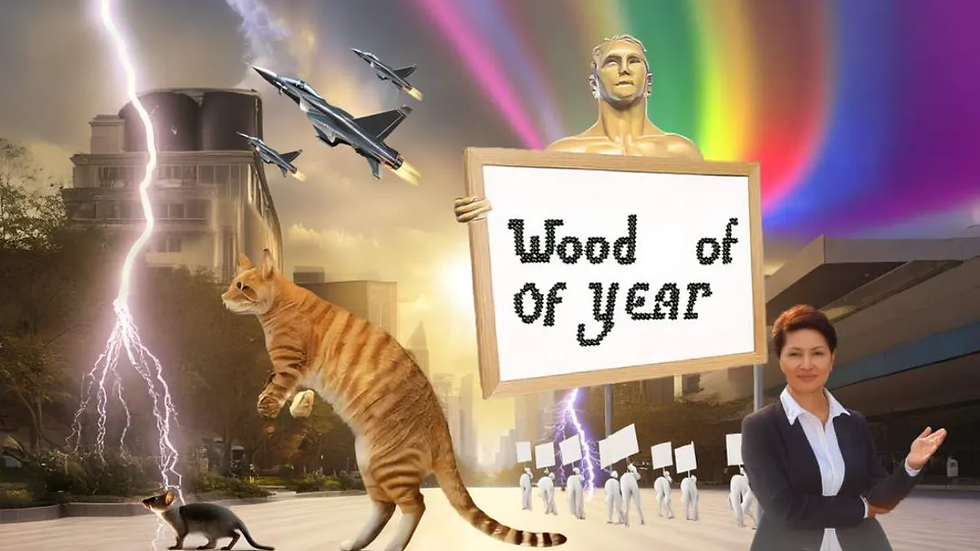
Before analyzing why this happened, we need to address how users are coping. If you have tried to Google a specific technical question recently, you know the frustration. You aren't looking for a "Top 10" list; you are looking for a specific fix for a software bug, a nuanced opinion on a hobby, or a factual historical detail.
The Experience of Broken Search
The modern search experience is defined by obstacles. Let’s say you are looking for information on a niche topic, like vintage model trains or a specific coding error.In the past, a search query would land you on a dedicated forum thread where an expert, perhaps "TrainMaster99," posted a verified solution in 2014.
Today, that same search result is buried. The first two pages are dominated by generic websites with domain names that sound authoritative but are actually content farms. These sites use AI Slop to generate thousands of articles a day. The content is vague, repetitive, and often hallucinates facts. It looks like an answer, but it offers zero utility.
Retreating to Digital Bunkers
Because the public web is polluted with AI Slop, reliable information has migrated. This is the era of the "Digital Bunker." High-quality, human-generated knowledge is no longer public by default. It has moved behind the walled gardens of private Discord servers, Slack communities, and closed membership groups.
If you want the real answer, you can't trust the open web. You have to join the server, get verified, and search their internal history. This survival mechanism works for the individual, but it breaks the internet's fundamental promise: the democratization of knowledge. The expert advice given in a private chat cannot be indexed by search crawlers. It is invisible to the public.
How to Identify AI Slop in Search Results
Detecting this content has become a necessary skill. AI Slop usually carries specific markers:
Vague Authority: The writing makes broad claims without citing sources or data.
Circular Phrasing: The text repeats the search query multiple times in slightly different ways without adding new information.
Generic Imagery: The visuals are glossy, hyper-real AI generations that have nothing to do with the specific subject matter.
Lack of Dates: The content avoids specific timelines to appear "evergreen," often rendering it useless for time-sensitive queries.
The Intersection of AI Slop and Rage Bait

The linguistic choices of 2025 paint a bleak picture. When the Oxford Dictionary selected Rage Bait and Macquarie selected AI Slop, they identified the two engines driving modern engagement. These aren't just slang; they are business models.
From Boredom to Hostility
We have moved past the era of "Clickbait." Clickbait was annoying, but it was usually harmless curiosity. Rage Bait is different. It is content engineered to trigger a negative psychological response. The creators know that anger retains attention longer than joy. Algorithms favor high-engagement posts, and nothing drives engagement like an argument.
This creates a toxic synergy with AI Slop. Bad actors use generative AI to mass-produce content that is factually wrong or deliberately inflammatory. They don't need to write the articles themselves; they set the parameters for the AI to be "controversial" or "divisive," and the machine churns out the material. The goal isn't to inform; it's to hijack your nervous system for ad impressions.
The AI Slop Economic Model
The explosion of AI Slop is an economic inevitability. Producing high-quality, researched, human-written content is expensive and time-consuming. Generating 500 articles about "The Best Toasters of 2025" using an LLM takes seconds and costs fractions of a cent.
The internet has been flooded because the barrier to entry for spam dropped to zero. Web publishers are incentivized to value quantity over quality. If a search engine can't tell the difference—or doesn't care—the publisher who posts 100 AI Slop articles wins over the blogger writing one good post. This trend confirms the cynicism of modern users: the web isn't trying to help you; it's trying to sell your attention span to the lowest bidder.
The Mechanics of Search Engine Decay

The phenomenon often described as the "Dead Internet Theory" suggests that the majority of web traffic is bots visiting bots. While the literal theory has conspiratorial edges, the functional reality is undeniable. We are living through a massive degradation of search utility driven by AI Slop.
SEO Feedback Loops
Search Engine Optimization (SEO) was once about making good content findable. It has mutated into a game of reverse-engineering algorithms. When an algorithm signals that it prefers long-form content with structured headers, AI Slop generators are updated to produce exactly that structure, regardless of the text's meaning.
We see this in "parasocial" content strategies—another key theme of 2025. AI personas are created to simulate human influencers, building fake relationships with real users. These bots interact with other bots, creating a mirage of activity that inflates metrics and tricks ranking systems.
Why AI Slop Defeats Traditional Algorithms
Legacy search algorithms rely on signals like keyword density, backlinks, and dwell time. AI Slop is mathematically optimized to satisfy these metrics. A well-prompted AI can write a piece of content that is technically perfect in the eyes of an SEO crawler but semantically hollow to a human reader.
This has effectively broken the "trust" verification of the web. Users can no longer rely on the first page of results. This distrust forces users back to the few remaining bastions of curated truth, primarily non-profit archives like Wikipedia. The reliance on Wikipedia has skyrocketed because it is one of the few places where editorial oversight still combats the tide of AI Slop.
The Consequence: Information Silos and the End of the Open Web

The ultimate cost of the AI Slop era is the fragmentation of the internet. We are witnessing the end of the "Public Square" era of the web.
The Disappearing Expert
In the 2000s and 2010s, if you were an expert on a subject, you started a blog or posted on a public forum. Your knowledge became part of the global commons. Today, posting publicly is a liability. Your content will be scraped without credit to train the next generation of AI Slop generators. Your site will be outranked by content farms stealing your work.
Consequently, the experts have left. They have retreated to the "Digital Bunkers" mentioned earlier. This creates information silos. The knowledge exists, but it is trapped inside closed databases (Discords, WhatsApp groups, paid Substacks).
The Library is Burning
We are losing the casual utility of the internet. The "Open Web" is becoming a graveyard of SEO spam and Rage Bait. Newcomers to a hobby or field of study can no longer stumble upon great resources; they have to be invited.
This creates a two-tier internet. One tier is for the savvy users who know how to bypass the AI Slop—by appending specific terms to their searches or accessing private communities. The second tier is for the general public, who are served an endless stream of hallucinatory garbage, angry headlines, and meaningless text. The defining words of 2025 don't just describe content; they describe the loss of a shared, verifiable reality.
Frequently Asked Questions
What is the definition of AI Slop?
AI Slop refers to low-quality, mass-produced digital content generated by artificial intelligence. It often contains factual errors, repetitive phrasing, and exists solely to game search algorithms rather than provide value to human readers.
How does Rage Bait differ from traditional clickbait?
While clickbait relies on curiosity or exaggeration to get a click, Rage Bait specifically targets negative emotions like anger and indignation. It is designed to provoke arguments and hostility to maximize engagement metrics.
Why are search engines struggling to filter out AI Slop?
AI Slop is specifically engineered to mimic the structural signals that search engines value, such as keyword optimization and formatting. Because it is generated faster than algorithms can be updated to detect it, it overwhelms quality filters.
What is the "Digital Bunker" phenomenon?
This refers to the migration of high-quality discussions and expert knowledge from the open web to private, unindexed platforms like Discord or Slack. It is a direct response to the pollution of public spaces by AI Slop and spam.
Is the Dead Internet Theory real?
While not literally true in the sense that humans are gone, the core premise—that a vast percentage of web content and traffic is machine-generated—is functionally accurate. The proliferation of AI Slop has created an environment where bots interact with bot-generated content.

