ICE Facial Recognition Scans in Minneapolis: Civilians Labeled Terrorists


The dystopian future isn't a sci-fi movie; it’s a smartphone camera pointed at you on a Minneapolis sidewalk. In January 2026, footage surfaced showing a masked Immigration and Customs Enforcement (ICE) agent utilizing mobile ICE facial recognition scans on civilians. The agent didn't mince words. When questioned, he explicitly stated the data was feeding a "nice little database" and that the subjects were now considered "domestic terrorists."
This incident marks a critical pivot in surveillance. It moves biometric capture from fixed checkpoints into the hands of roving agents, targeting not just undocumented immigrants, but U.S. citizens exercising First Amendment rights. Understanding how these scans work, the administrative penalties that follow, and the few defensive measures available is now a matter of basic civic hygiene.
Documenting the Minneapolis Incident: "A Nice Little Database"
On January 24, 2026, freelance journalist Brian Allen uploaded video evidence that fundamentally changed the public understanding of federal overreach. The footage shows a confrontation in Minneapolis where an ICE agent uses a mobile device to scan the faces of Allen and a couple standing nearby.
The dialogue is chilling in its casual delivery. When Allen notes that filming is not illegal, the agent agrees but counters, "That's exactly what we're all doing." The agent then clarifies the purpose of the ICE facial recognition scans: "Because we have a nice little database, and you guys are looked at as domestic terrorists now."
This isn't hearsay. It is a federal agent confirming on tape that the definition of "domestic terrorist" has expanded to include observers of law enforcement. The technology is no longer bulky or stationary. It is an app-based solution likely running on government-issued smartphones, allowing agents to capture biometric data instantaneously in the field. The psychological impact is immediate—if you watch them, they catalog you.
Real World Consequences: Losing Global Entry and TSA Pre-Check

The threat of being added to a "database" sounds abstract until the administrative penalties kick in. Users on Reddit and reports from Futurism have highlighted a specific, non-judicial consequence of these encounters: the revocation of Trusted Traveler programs.
The Correlation Between ICE Facial Recognition Scans and Travel Bans
A compelling case emerged alongside the Minneapolis footage. A woman in Minnesota reported that an ICE agent identified her by name during a similar encounter, warning her that the agency possessed advanced facial recognition technology. Three days after this interaction, she received official notification that her Global Entry and TSA Pre-Check privileges were revoked.
This pattern suggests the "domestic terrorist" tag mentioned by the agent isn't necessarily resulting in immediate arrests, which require probable cause and due process. Instead, ICE facial recognition scans appear to trigger "silent" administrative punishments. By flagging a citizen in the database, the agency can strip away travel conveniences without a trial. You don't get a day in court to defend your right to TSA Pre-Check; you simply lose it because an algorithm matched your face to a dissident list.
Community Defense: IR Glasses and Anti-Surveillance Tactics
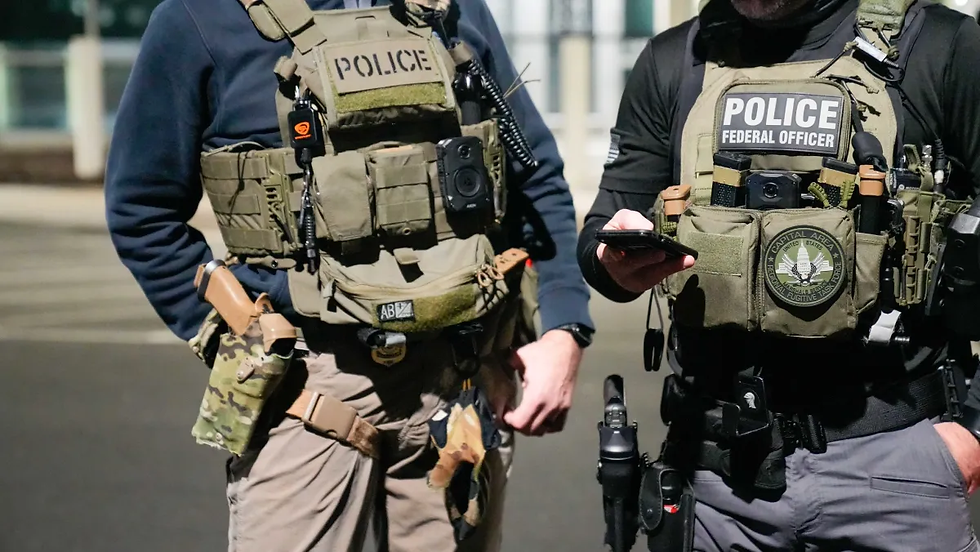
Faced with omnipresent biometric logging, communities are scrambling for countermeasures. While there is no perfect shield against government-grade AI, users and privacy advocates are experimenting with physical interventions to disrupt ICE facial recognition scans.
Infrared (IR) Reflection:One of the most discussed methods involves high-reflection IR coatings on eyeglasses. Many mobile facial recognition systems rely on projecting a grid of infrared dots to map the depth of a face (similar to how FaceID works). Glasses coated to reflect this spectrum can blow out the sensor, potentially blinding the depth-mapping algorithm. Users suggest looking for specific privacy-focused eyewear designed to create "ghosting" effects on IR cameras.
The "Razzle Dazzle" Approach:Drawing from CV Dazzle concepts, some activists advocate for asymmetric makeup and hair styling. The theory is to break the facial symmetry that algorithms look for—blocking the bridge of the nose or obscuring the cheekbones with geometric shapes. While this was effective against older algorithms, its efficacy against 2026-era AI is debatable.
Practical Limitations of Avoiding ICE Facial Recognition Scans
We have to be realistic. Physical obstructions like masks, low hats, and polarized sunglasses offer the best protection, but they also attract attention. In the Minnesota winter, heavy clothing provides natural cover, but as the weather warms, maintaining that level of coverage becomes conspicuous. Furthermore, reliance on a single method is dangerous. Modern surveillance aggregates data. Even if the facial scan fails, other systems mentioned in reports—like ALPR (Automated License Plate Readers) operated by contractors like Flock Safety—can track your movement and associate your vehicle with the location of the protest, effectively triangulating your identity without a clear face shot.
The Backend Tech: Palantir, Flock Safety, and the Terrorist Label

The software powering ICE facial recognition scans is likely a mesh of private contractors. Discussions surrounding the Minneapolis incident point heavily toward Palantir and Flock Safety as key players in this infrastructure.
Palantir has a long-standing history of providing data analytics to ICE, specifically for investigative case management (ICM). Their systems are designed to ingest massive amounts of disparate data—license plates, social media, facial scans, and employment history—to build comprehensive profiles. When the agent mentions a "nice little database," he is likely referring to a Palantir-integrated backend that cross-references the fresh scan against existing federal repositories.
Flock Safety’s role, while often associated with suburban neighborhood security, feeds into this ecosystem through wide-area surveillance. Their cameras capture vehicle details that can be shared with law enforcement. If you drive to an area where ICE is operating, the license plate reader places you at the scene. The mobile facial scan confirms your specific actions.
The terrifying aspect is the classification. Reports indicate that recent executive guidance may have broadened the scope of "domestic terrorism" to include those opposing specific ICE mandates. This administrative sleight of hand allows agencies to bypass protections usually afforded to protestors, categorizing them instead as threats to national security.
Legal Gray Zones: The First Amendment vs. Biometric Capture

The legality of ICE facial recognition scans on non-suspect civilians remains a constitutional minefield. The Cato Institute has flagged this behavior as a looming "constitutional crisis."
The First Amendment clearly protects the right to record public officials in public spaces. However, the government argues that collecting biometric data in a public place does not constitute a "search" under the Fourth Amendment because one has no expectation of privacy for their exposed face.
This gap in the law is where the abuse happens. While it is legal for you to film the police, the police (and ICE) are using the lack of biometric regulation to film you back, tag you, and place you on a watchlist. The asymmetry is stark. You get a video for your social media; they get a permanent file that can stop you from boarding a plane or crossing a border years down the line.
Until Congress intervenes or a significant court case reaches the Supreme Court, the practice of retaliatory data collection will likely continue. The "terrorist" label is being weaponized not to prevent violence, but to chill speech. When a mobile phone scan can strip you of your rights, the sidewalk is no longer a public forum—it’s a lineup.
FAQ
Can ICE agents scan my face with a personal phone?
Yes. Agents use government-issued mobile devices or authorized personal devices equipped with apps connected to federal databases to perform ICE facial recognition scans in the field.
Does recording ICE agents put me on a terrorist watchlist?
Based on recent incidents in Minneapolis, agents have explicitly told civilians that documenting their operations places them in a "domestic terrorist" database, leading to administrative consequences.
How do I know if my TSA Pre-Check was revoked by ICE?
You will typically receive a notification from the Department of Homeland Security stating your eligibility has changed. This often happens within days of an encounter where your biometrics were captured.
Do infrared (IR) glasses block facial recognition cameras?
IR-reflective glasses can disrupt the depth-sensing capabilities of some cameras (like those using dot projection), but they are not 100% effective against standard 2D image matching algorithms used in many surveillance systems.
What is the "domestic terrorist" database mentioned in Minneapolis?
The agent likely referred to a classification within the Guardian Lead System or a Palantir-managed investigative database, where individuals can be tagged for "associations" or "suspected threats" without a criminal conviction.


