Isomorphic Labs Drug Design Engine: Moving From Prediction to Design


The release of the technical report for the Isomorphic Labs Drug Design Engine (IsoDDE) marks a distinct shift in how artificial intelligence interacts with biology. While previous iterations like AlphaFold 3 revolutionized how we see protein structures, this new engine focuses on how we can manipulate them.
The headlines surrounding this release aren't just marketing noise. According to benchmark data, this system is solving problems that were previously thought to require expensive, time-consuming physical simulations. For computational chemists and drug discovery experts, the IsoDDE isn't just a visualization upgrade; it represents a functional leap in filtering and designing viable drug candidates.
This analysis breaks down the technical capabilities of the engine, contrasts it with existing tools like AlphaFold 3, and integrates insights from the scientific community regarding what this actually means for the future of medicine.
The Core Breakdown: How the Isomorphic Labs Drug Design Engine Works

The primary differentiator of the Isomorphic Labs Drug Design Engine is its ability to handle "out-of-distribution" data. In machine learning, models often fail when they encounter scenarios significantly different from their training data. Traditional tools struggle with novel protein-ligand interactions that haven't been mapped before.
Cracking the "Runs N’ Poses" Benchmark
The most significant metric released is the engine's performance on the "Runs N' Poses" benchmark (Škrinjar et al. 2025). This is a stress test for structural prediction models. It specifically looks at how well a system can predict structures when the target protein has little to no similarity (0-20% sequence identity) to anything in the training set.
In the most difficult category of this benchmark, the Isomorphic Labs Drug Design Engine achieved an accuracy rate more than double that of AlphaFold 3.
This is a massive operational difference. AlphaFold 3 is excellent at predicting structures when it has a reference point. IsoDDE works effectively when flying blind. For a researcher working on a "first-in-class" target—a disease mechanism that has never been drugged before—this capability allows for accurate structural hypotheses without waiting months for X-ray crystallography results.
Binding Affinity: Beating the Physics-Based Standard
Structural prediction is only step one. Knowing the shape of a lock is useless if you don't know if the key fits tightly enough to turn it. This is where Binding Affinity prediction comes in.
Historically, the gold standard for predicting how strongly a drug binds to a protein has been Free Energy Perturbation (FEP+). FEP+ is a physics-based simulation. It is accurate, but it is computationally expensive and slow.
The Isomorphic Labs Drug Design Engine predicts small molecule binding affinity with accuracy that exceeds FEP+, yet it does so at a fraction of the computational cost and time. Perhaps more impressively, it achieves these results purely from the amino acid sequence, without requiring prior experimental crystal structures. This removes the bottleneck of needing physical samples before starting the computational design phase.
Beyond AlphaFold 3: User Experience and Technical Differences
Users familiar with AlphaFold 3 often ask why a new engine is necessary. The distinction lies in the transition from biology (understanding life) to chemistry (altering life). AlphaFold maps the terrain; IsoDDE builds the roads.
Solving the Antibody Challenge (CDR-H3)
Antibodies are the fastest-growing class of drugs, but designing them is notoriously difficult. The specific region of an antibody that grabs onto a virus or cancer cell is called the CDR-H3 loop. It is hyper-variable and incredibly flexible, making it a nightmare to model.
In direct comparisons using the antibody-antigen test set, the Isomorphic Labs Drug Design Engine delivered high-fidelity predictions (DockQ score > 0.8) at a rate 2.3 times higher than AlphaFold 3 and 19.8 times higher than Boltz-2.
For immunologists, this reliability in the CDR-H3 loop means less time synthesizing antibodies that fail in the wet lab. The engine allows for de novo design—creating antibodies from scratch that theoretically target specific antigens—with a higher confidence interval than previously possible.
Cryptic Pockets and the "Hidden" Targets
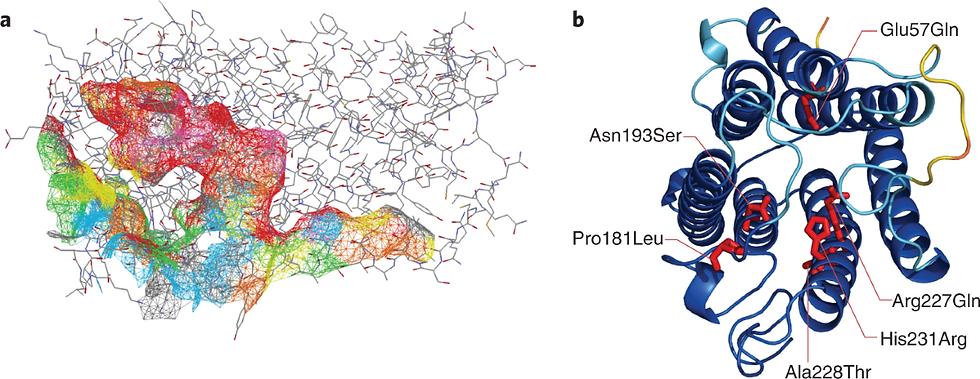
One of the most valuable features identified in the technical report is the detection of "cryptic pockets."
Proteins are not static statues; they wiggle and breathe. Sometimes, a pocket where a drug could bind only opens up when the protein moves in a specific way or when a specific molecule approaches it. Standard static models miss these.
The Isomorphic Labs Drug Design Engine successfully identified a novel allosteric cryptic site in Cereblon (a protein involved in cellular waste disposal). This specific site was only confirmed experimentally in a 2026 paper by Dippon et al. The engine found it using only the sequence input.
This capability unlocks "undruggable" targets. If a protein looks like a smooth surface to AlphaFold, IsoDDE might find the hidden groove that appears only under specific conditions, providing a new point of attack for therapeutics.
Community Analysis: Efficiency Recursion vs. True Innovation
The reception of the Isomorphic Labs Drug Design Engine in technical communities, particularly on platforms like Reddit’s r/singularity, offers a grounded perspective that balances the corporate optimism.
The "Recursion in Efficiency" Argument
A compelling point raised by users is the categorization of this technology. One astute observer noted that tools like IsoDDE represent "recursion in efficiency" rather than a new conceptual framework.
The argument is that AI is currently accelerating the scientific method we already use. It optimizes the discovery process—making it faster, cheaper, and more accurate—within the boundaries of existing physics and biology. However, it is not yet generating "Conceptual Innovation."
To truly revolutionize science, an AI would need to identify where current frameworks fail and propose new physical laws or biological concepts (similar to the shift from Geocentrism to Heliocentrism). IsoDDE is an incredibly powerful microscope, not a new theory of optics. It helps researchers find answers within the current search space much faster, but it is the human researchers who still define the questions.
Compressed Morbidity: The Real User Demand
While some tech enthusiasts discuss "immortality," the consensus among users looking at the Isomorphic Labs Drug Design Engine is more pragmatic. The demand is for "compressed morbidity."
Nobody wants to live forever in a state of decay. The value of this engine, according to community sentiment, lies in its potential to tackle Alzheimer’s, dementia, and cardiovascular disease. The goal is to extend the healthspan—keeping a person fully functional until the very end of life.
If IsoDDE can accelerate the development of neuroprotective drugs by accurately modeling the misfolded proteins associated with dementia (which are notoriously hard to map), it directly addresses the user need for quality of life over mere quantity of years.
Practical Applications and Future Availability

Currently, the Isomorphic Labs Drug Design Engine is not an open-source tool like the original AlphaFold code. It is a proprietary internal platform used by Isomorphic Labs for their own pipeline and in collaboration with pharmaceutical partners.
For the pharmaceutical industry, the operational path is clear:
Replace Early Screening: Use IsoDDE to replace early-stage FEP+ simulations, saving budget for later clinical stages.
Target the Unknown: Deploy the engine specifically on targets where no structural data exists (the "Runs N' Poses" 0-20% similarity bracket).
Validation: Use the tool to validate "cryptic pockets" before committing to expensive wet-lab assays.
This technology signals a shift where computational validation is no longer just a "nice to have" support step, but a primary filter that rivals experimental data in reliability.
The Isomorphic Labs Drug Design Engine does not promise to automate the scientist out of the lab. Instead, it removes the friction of physical limitations, allowing the scientist to test hypotheses that were previously too expensive or complex to attempt.
FAQ Section
How is the Isomorphic Labs Drug Design Engine different from AlphaFold 3?
While AlphaFold 3 excels at predicting static protein structures, the Isomorphic Labs engine is optimized for drug discovery tasks. It predicts binding affinity (how tight a drug holds on) and identifies cryptic pockets (hidden binding sites) with significantly higher accuracy than AlphaFold 3.
Can I download or use the Isomorphic Labs Drug Design Engine?
No, the engine is currently a proprietary tool used internally by Isomorphic Labs. Access is typically granted through pharmaceutical partnerships or collaborative drug discovery programs rather than public open-source licenses.
What are cryptic pockets and why do they matter?
Cryptic pockets are binding sites on a protein surface that are usually hidden and only open up when the protein moves or changes shape. They are crucial for drug discovery because they allow researchers to target proteins that appear "undruggable" in their static state.
Does this engine replace physical experiments?
It does not replace all experiments, but it significantly reduces the need for early-stage physical testing. By outperforming physics-based simulations like FEP+, it allows researchers to filter millions of potential drug candidates virtually before synthesizing the most promising ones for the lab.
What is the "Runs N' Poses" benchmark mentioned in the report?
Runs N' Poses is a rigorous benchmark for testing how well AI models predict protein-ligand structures. The Isomorphic Labs engine performed best in the "hard" category, where the target proteins were completely different (0-20% similarity) from the data the model was trained on.