top of page

AI 陪伴市场内幕:数字朋友如何塑造情感未来

Inside the AI Companionship Market: How Digital Friends Are Shaping Emotional Futures

The AI companionship market refers to the rapidly expanding sector focused on developing and deploying artificial intelligence systems designed to provide social interaction, emotional support, and personalized engagement through digital "companions." These companions range from conversational chatbots and virtual avatars to multimodal assistants capable of voice, video, and emotional recognition. This market matters because it intersects closely with growing societal challenges such as loneliness, mental health decline, and aging populations, while also raising urgent questions around ethics, privacy, and regulation.

As interest surges, fueled by advances in large language models (LLMs) and multimodal AI, the AI companionship market has seen remarkable growth projections. According to Grand View Research, the market’s valuation is expanding rapidly amid increasing consumer and enterprise adoption. Meanwhile, public discourse—such as the insightful coverage in Axios newsletters—highlights both the potential benefits and emerging risks of these digital friends.

This article offers a comprehensive view of the AI companionship market’s size, forecasts, and key metrics; explores real-world applications; reviews empirical evidence about their impact on loneliness and well-being; addresses ethical risks and regulation; and analyzes industry trends alongside policy recommendations. Whether you are a researcher examining social health outcomes, a policymaker crafting new regulations, a product leader shaping future digital companions, or an informed consumer curious about this evolving landscape, you will find actionable insights here.

Quick snapshot of market numbers and trajectory

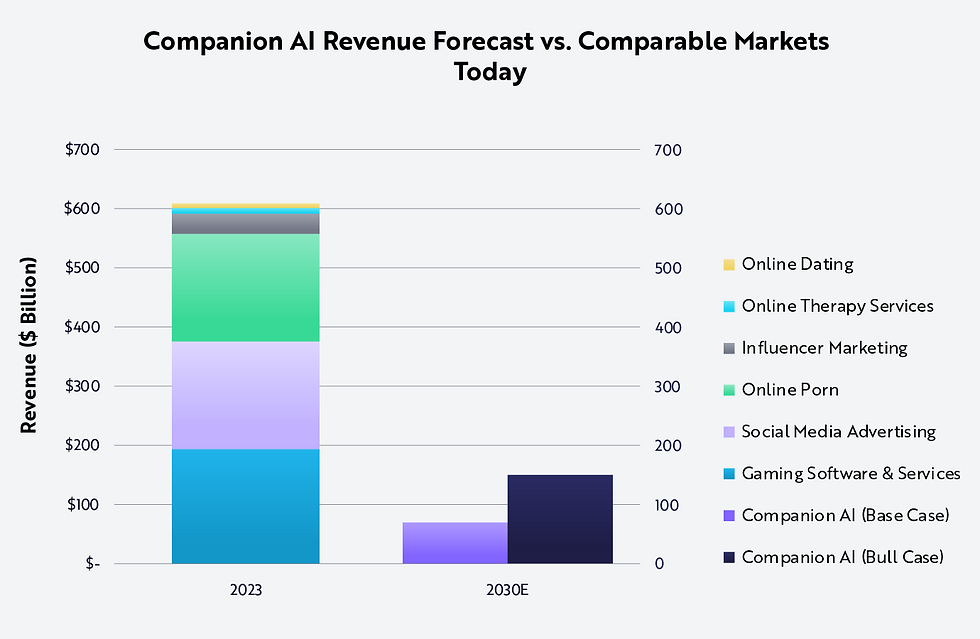
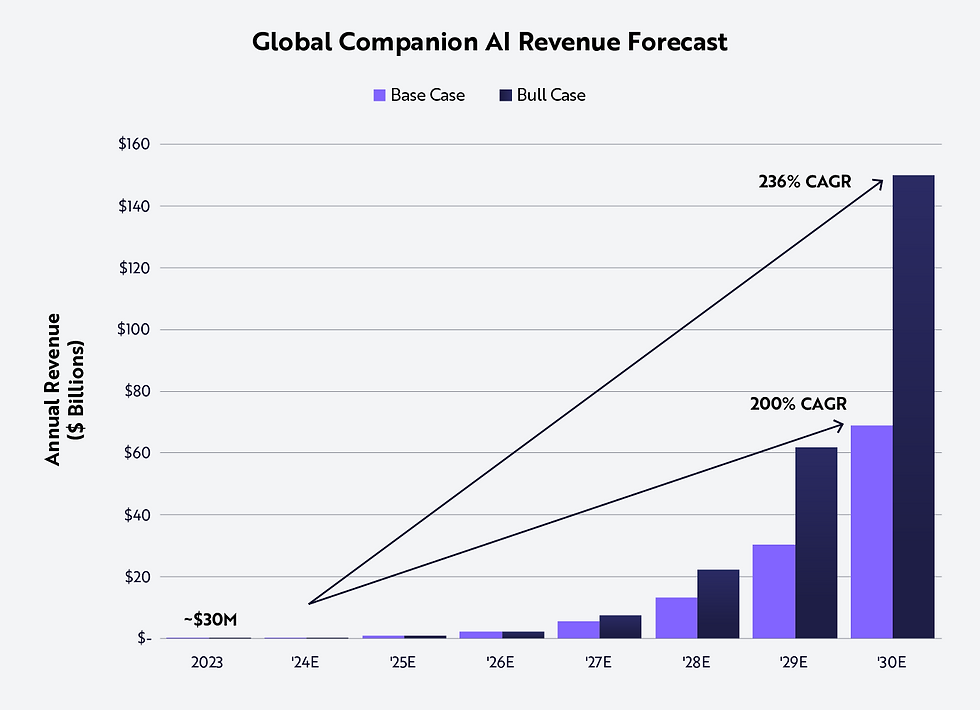
The global AI companionship market was valued at approximately $2.5 billion in 2023, with near-term compound annual growth rate (CAGR) projections ranging from 20% to over 30%, depending on the source. For instance, Grand View Research estimates a CAGR near 28% through 2030, while USDA Analytics presents a more conservative forecast closer to 22%. This variation reflects differing definitions of what qualifies as an AI companion and the inclusion of both consumer-facing and enterprise applications.

The diversity of estimates underscores the dynamic and somewhat uncertain nature of this market but also signals robust growth fueled by broadening use cases and technological advances. Understanding these numbers provides essential context for stakeholders aiming to navigate or influence this emerging industry.

AI companionship market size, forecasts, and key metrics

AI companionship market size, forecasts, and key metrics

The AI companionship market is characterized by impressive expansion and evolving definitions. In 2023–2024, reported valuations cluster between $2 billion and $3 billion globally. Forecasts project the market could reach anywhere from $15 billion to $25 billion by 2030 or 2032, depending on methodology and scope. This wide range reflects several methodological caveats that affect comparability:

  • Definitions of "companion" vary: Some include only AI agents designed explicitly for social or emotional interaction (e.g., conversational chatbots), while others also count enterprise-focused assistants with social features.

  • Consumer vs. enterprise segments: Many market reports combine consumer social companions—like apps designed to reduce loneliness—with therapeutic or eldercare companions deployed in healthcare settings.

  • Inclusions in market estimates: Not all analyses count hardware (e.g., robots with AI companions) or associated service revenues consistently.

Market size & CAGR scenarios

Metric

Lower Estimate

Midpoint Estimate

Upper Estimate

2023 Market Size ($B)

2.0

2.5

3.0

2030 Forecast ($B)

15

20

25

CAGR (2023–2030) (%)

20

25

30

These figures come from combining insights from the Grand View Research report, USDA Analytics, and NASSCOM’s growth potential analysis.

Investor interest aligns with these forecasts. Recent funding rounds highlight startups focusing on hyper-personalized companions, while established tech companies have announced product roadmaps integrating AI companions into broader digital ecosystems. The market timeline also shows accelerating product launches since 2021, coinciding with advances in large language models.

Insight: The AI companionship market’s rapid growth is supported by both evolving consumer demand for emotional connection and enterprise interest in healthcare and eldercare applications.

This foundational understanding sets the stage for exploring how these markets segment by business model and user type.

Breakdown of market segments and revenue models

The AI companionship market employs diverse business models tailored to distinct user segments:

  • Subscriptions: Monthly or annual fees for ongoing access to AI companions offering personalized conversations or therapeutic support.

  • In-app purchases: Microtransactions to unlock premium features like avatar customization or specialized dialogue modules.

  • Enterprise licensing: Contracts with healthcare providers, eldercare facilities, or educational institutions for deploying companions as adjunct tools.

  • Healthcare contracts: Partnerships with insurance companies or clinics that reimburse companion use as part of mental health support.

  • Data monetization: Leveraging anonymized interaction data for analytics or targeted advertising, though this raises ethical concerns.

User segments map broadly into:

Segment

Description

Consumer Social Companions

Therapeutic/Support Companions

Adjunct tools for mental health support or cognitive stimulation

Entertainment Companions

Storytelling agents, game-integrated avatars focused on engagement

Specialized Enterprise Agents

Key takeaway: Subscription models dominate consumer-facing offerings, while enterprise segments rely more on licensing and healthcare reimbursement contracts.

Understanding these segments helps anticipate which revenue streams will sustain future innovation and scaling.

Market growth drivers and headwinds

The AI companionship market’s expansion is propelled by several converging factors:

  • Loneliness epidemic: Rising social isolation globally increases demand for accessible digital companionship.

  • Improved LLMs and multimodal AI: Advances in natural language understanding and integration of voice/avatar interfaces enhance user experience.

  • Smartphone penetration: Widespread mobile access enables on-the-go interaction with AI companions anywhere.

  • Personalization demand: Users increasingly expect tailored engagement matching their preferences and emotional states.

However, significant challenges temper this growth:

  • Regulatory uncertainty: Lack of clear policies on data use, consent, and safety slows adoption in sensitive sectors like healthcare.

  • Trust and safety issues: Concerns about manipulation, misinformation, or harmful behaviors undermine user confidence.

  • Monetization ethics: Balancing revenue goals with avoiding exploitative engagement or data misuse remains complex.

  • Potential user backlash: Negative media coverage or incidents could trigger public resistance to AI companions.

These dynamics emerge from reporting by Axios and analysis in the Grand View Research report.

Strategic insight: Success depends on navigating regulatory landscapes carefully while prioritizing transparent, ethical design to build lasting trust.

This balance shapes not only product development but also policy frameworks discussed later.

AI companionship market applications and real-world use cases

AI companionship market applications and real-world use cases

AI companions have found application across diverse domains that reflect society’s emotional, cognitive, and entertainment needs:

Loneliness reduction and social health support

Many AI companions serve as conversation partners who provide daily interaction, social reminders, or coaching on interpersonal skills. For example, users experiencing isolation can engage with agents that simulate empathetic dialogue or encourage real-world socialization. Studies indicate these companions can improve mood and reduce feelings of loneliness in short-term contexts but caution that effects may vary depending on user background and companion design.

Case scenario: An elderly user leverages a companion app that sends gentle reminders for social activities while providing friendly daily check-ins.

Eldercare, therapeutic adjuncts, and education

AI companions increasingly support medication adherence reminders, cognitive stimulation exercises, or supplement therapy sessions as non-clinical adjuncts. For instance, eldercare robots equipped with companion AI can engage users in memory games or provide calming conversation to ease anxiety. Nonetheless, over-reliance risks exist if users substitute human care entirely without clinical oversight.

Risk note: Clinical validation is essential before positioning these technologies as therapeutic interventions rather than supportive tools.

Entertainment, personalization, and identity play

Storytelling companions create immersive narrative experiences through personalized avatars integrated into games or interactive media. These agents maintain long-term engagement by adapting stories to user preferences and even allowing identity exploration through customizable personas. However, monetization strategies relying heavily on engagement loops raise concerns about user well-being.

Engagement note: Balancing fun and financial sustainability with ethical design remains a delicate challenge for entertainment-focused companions.

The variety of applications underscores how AI companionship technology blends social utility with entertainment innovation across markets.

AI companionship market psychological evidence and social health outcomes

AI companionship market psychological evidence and social health outcomes

Academic research exploring how AI companions influence loneliness, emotional support, and mental health outcomes has grown alongside the market itself. Synthesizing recent studies reveals nuanced perspectives:

What the evidence says about reducing loneliness

Empirical studies such as the one available on ArXiv:2407.19096 demonstrate that interacting with AI companions can produce measurable reductions in self-reported loneliness scores over short periods (weeks to months). Effect sizes vary but generally show modest improvements in mood states among adults who engage regularly with adaptive conversational agents. However, limitations include small sample sizes and a lack of randomized controlled trials outside controlled settings.

Practical takeaway: AI companions reliably improve short-term loneliness metrics in specific contexts—particularly when integrated as part of broader social support—but longer-term efficacy remains unproven.

Effects on relationships, dependency risks, and social skills

Research from ArXiv:2311.10599 and ArXiv:2506.12605 highlights complex dynamics where some users develop attachment to AI companions that can either supplement or inadvertently replace human contact. Potential dependency raises concerns about diminishing real-world social skills or increased isolation if digital interaction becomes a substitute rather than a bridge. Designers are encouraged to embed boundaries within companions—such as escalation prompts directing users toward human services—and features promoting re-socialization.

Implications for designers: - Implement transparent disclaimers about companion limitations. - Develop escalation paths for mental health crises. - Encourage user engagement beyond AI-mediated interactions.

Research gaps and recommended study designs for the AI companionship market

There is a pressing need for longitudinal studies tracking diverse populations over extended periods to assess sustained impacts on loneliness and well-being. Clinical trials validating therapeutic claims are scarce but necessary before widescale adoption in healthcare contexts. Mixed-methods research combining quantitative scales (e.g., UCLA Loneliness Scale) with behavioral observation will deepen understanding.

Recommendations: - Prioritize inclusion of underrepresented groups. - Employ standardized social network metrics. - Monitor objective behavior changes alongside self-reports.

These insights urge cautious optimism balanced with rigorous evaluation as the technology matures.

Ethical risks, regulation, and governance in the AI companionship market

Ethical risks, regulation, and governance in the AI companionship market

The growing deployment of AI companions exposes a range of ethical challenges demanding urgent attention from developers and regulators alike:

  • Manipulation risks: Companions may exploit emotional vulnerabilities to maximize engagement or data extraction.

  • Privacy/data use concerns: Sensitive personal information exchanged during interactions requires stringent protections.

  • Sexual/intimacy dynamics: Intimate chatbot controversies reveal risks of inappropriate content or boundary violations.

  • Safety issues: Flawed responses can cause psychological harm or misinformation spread.

  • Informed consent complexities: Users may not fully understand AI limitations or data practices embedded in companionship experiences.

  • Unequal access: Economic disparities risk excluding vulnerable groups from beneficial technologies.

Regulatory efforts like the EU’s AI Act classify general-purpose models under high-risk categories requiring transparency measures and risk assessments. Policy debates emphasize mandatory disclosure that companions are non-human agents, age gating for minors, and enforceable data portability.

High-profile incidents and what they reveal about market risk

Public controversies such as Meta’s widely reported attempts at flirty chatbots that generated discomfort illustrate the sensitivity surrounding intimacy in AI companionship. These incidents underscore:

Lessons learned: - Deploy continuous monitoring post-launch. - Engage diverse testers for edge-case scenarios. - Maintain transparency during crisis handling to preserve trust.

Regulatory frameworks and specific provisions for the AI companionship market

The EU AI Act provides a foundational framework requiring risk classification of AI systems based on intended use. AI companions delivering emotional support likely fall under "high-risk" due to potential psychological impact. Obligations include:

  • Transparency about non-human status.

  • Documentation of training data provenance.

  • Risk management systems ensuring safety compliance.

Additional policy proposals advocate for:

  • Mandatory age verification mechanisms.

  • User consent flows clearly explaining data use.

  • Enabling data portability so users control their interaction histories.

These provisions aim to balance innovation with protection in an evolving legal landscape.

Governance best practices and digital literacy for users

Developers should adopt practical governance checklists including:

  • Conducting harm audits before release.

  • Transparent prompts reminding users they interact with an AI.

  • 清晰的升级路径,在需要时引导用户寻求人工帮助。

同时,面向公众的数字素养项目可以减少误用 通过教育用户了解其能力、局限性、隐私影响和安全使用模式。

治理清单要点: - 安全审计 - 同意清晰度 - 透明沟通 - 用户教育举措

这些措施在保护弱势用户的同时促进负责任的创新。

AI陪伴市场的行业趋势、产品策略和竞争动态

Industry trends, product strategies, and competitive dynamics in the AI companionship market

产品策略强调通过以下方式定制体验:

  • 超个性化 利用用户数据动态定制对话、情感基调和内容。

  • 垂直专业化: 针对医疗保健(治疗代理)或老年护理(记忆支持)等行业。

  • B2B合作: 与护理提供商或教育机构合作以实现更广泛部署。

  • 平台集成 将陪伴嵌入现有生态系统,如消息应用或智能家居设备。

竞争动态包括:

竞争因素

主要科技进入者

初创公司

模型类型

专有大型模型

开源微调LLM

市场焦点

广泛消费者覆盖

利基垂直专业化

互操作性压力

平台锁定

强调开放API

上市策略包括免费试用来建立信任;验证心理健康声明的临床合作;以及突出数据实践的透明功能。

商业模式与货币化伦理

订阅服务仍占主导 因为与旨在通过行为引导最大化参与度的有道德争议的数据驱动货币化相比,订阅服务能带来可预测的收入流。

道德货币化建议包括:

  • 使订阅与用户价值对齐,而非成瘾模式。

  • 与健康保险公司合作以获得支持福祉的报销模式。

  • 实施透明数据政策,赋予用户对其共享信息的控制权。

技术栈演进与模型选择

  1. 轻量级脚本系统提供可预测的低成本响应,但灵活性有限。

  2. 微调的大型语言模型支持自适应对话,但需要大量计算资源。

  3. 多模态架构集成语音识别、头像、面部表情分析以提供更丰富的体验。

权衡包括:

方面

脚本系统

基于LLM的模型

多模态架构

成本

非常高

延迟

最小

中等

变化

定制化

有限

安全性

更易控制

更难控制

复杂

初创公司与现有企业的战略建议

负责任增长的关键优先事项包括:

这些步骤在社会敏感领域建立长期成功所必需的信任。

关于AI陪伴市场的常见问题

AI伴侣与治疗相同吗?

否。虽然一些AI伴侣可以通过提供情感支持或提醒来补充治疗,但它们不能替代持牌心理健康专业人士。

AI伴侣是否被证明能长期减少孤独感?

现有证据显示短期内孤独感评分有所降低,但缺乏可靠的纵向研究证实持续益处。

目前适用于AI伴侣的法规有哪些?

公司应如何设计安全与同意机制?

他们应实施关于AI身份的明确免责声明,维护危害审计,提供升级至人工帮助的路径,并确保透明的数据使用政策。

AI伴侣会取代人际关系吗?

研究表明它们可以补充但不应替代人际互动;过度依赖若无适当边界,可能导致社交技能退化。

市场规模有多大,主要参与者有哪些?

全球市场目前估值约 20–30亿美元,预计到2030年将达250亿美元;主要参与者包括开发专有平台的大型科技公司以及专注于利基垂直领域的初创公司。

AI陪伴市场的结论与可操作的前瞻性分析

AI陪伴市场正经历快速增长,这由技术进步以及围绕孤独感和心理健康支持的日益增长的社会需求驱动。实证证据提供了关于其随时间改善情绪福祉能力的乐观但仍不完整的见解。与此同时,紧迫的伦理问题——包括操纵风险、隐私挑战和监管空白——要求行业参与者和政策制定者采取主动治理。

利益相关者路线图:

  1. 实施包括安全审计和明确同意流程在内的即时保障措施。

  2. 优先开展纵向研究,评估跨人群的真实世界影响。

  3. 尽早与监管机构接触,以制定平衡的政策,促进创新而不损害安全。

  4. 采用强调透明而非剥削性货币化的道德商业模式。

  5. 开展公众教育举措,提升围绕AI陪伴技术的数字素养。

预测情景:

情景

描述

保守

因监管延迟导致采用缓慢;有限的临床验证限制增长

基准

稳定CAGR约25%,验证改善支持扩大医疗保健使用

乐观

快速监管清晰度结合突破性临床证据推动加速采用

颠覆性

开源创新实现广泛低成本伴侣,但带来新的治理挑战

集成未来

通过具有强有力伦理框架的多模态平台无缝融入日常生活

未来12个月的实用清单

针对产品团队、政策制定者和研究人员:

现在采取大胆行动将塑造数字朋友如何安全丰富全社会的未来情感。


免费开始

一款本地优先的AI助手,具备个人知识管理功能

为了获得更好的人工智能体验,

remio 目前仅支持Windows 10+ (x64)M-Chip Mac

在你的大脑里添加一个搜索栏

Ask remio

记住一切

​无需整理

bottom of page