Google Gemini and the AI Race: Why Infrastructure Might Beat User Sentiment


The narrative surrounding the AI race has shifted. For a long time, the headline was that Google was caught sleeping while OpenAI and Microsoft sprinted ahead. Recent reports, including deep dives from the Wall Street Journal and community discussions on Reddit, suggest a change in the wind. Google is claiming to have finally leapfrogged its rivals with the latest iterations of Google Gemini.
But there is a sharp divide between what corporate press releases say and what actual people experience. If you look at the raw infrastructure, Google seems unstoppable. If you look at the user experience, the picture is messy, intrusive, and often frustrating.
The State of the AI Race: Infrastructure vs. Product

To understand where Google Gemini actually stands, you have to look at the plumbing. The AI race isn't just about who has the smartest chatbot today; it's about who can afford to keep running them tomorrow.
This is where the skepticism about Google’s consumer products clashes with their backend reality. The Wall Street Journal points out that Google’s reliance on its own custom silicon—the Tensor Processing Units (TPUs)—gives it a massive economic advantage. While Microsoft and Meta are paying the "Nvidia tax" for H100 chips, Google is training Google Gemini on hardware it designed and owns.
This allows Google to brute-force progress. They can iterate faster and cheaper than competitors who are beholden to third-party hardware supply chains. However, having the best engine doesn't matter if the car is uncomfortable to drive. The AI hype cycle often ignores that technical superiority doesn't always translate to a product people actually want to use.
Google Ecosystem Integration: Utility or Bloatware?

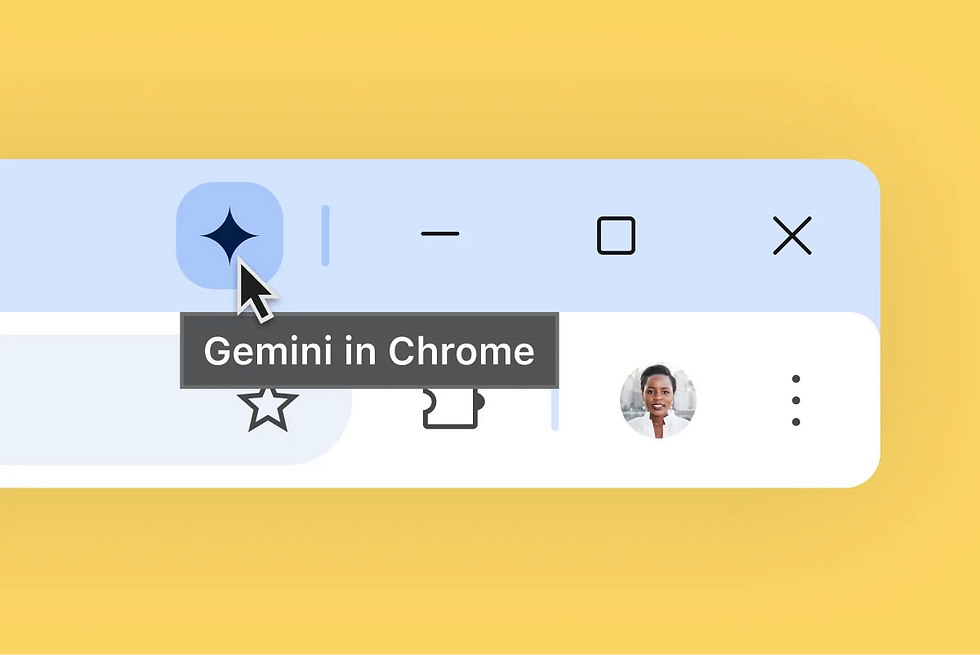
The strategy for Google Gemini is aggressive product integration. The goal is clear: put AI in front of 2 billion users by embedding it into the Google ecosystem—Docs, Gmail, Drive, and Android.
On paper, this looks like a checkmate. In reality, users are pushing back. The sentiment across tech forums is that this integration often feels forced. It reminds veteran users of "Clippy," the infamous Microsoft Office assistant. It pops up where it isn’t needed and offers help that wasn’t requested.
The "Forced" Update Problem
When you open a spreadsheet, you usually want to do math, not have a conversation. Users have noted that replacing deterministic tools with probabilistic AI introduces friction. If you need to calculate a budget, you need 100% accuracy. Google Gemini, like all LLMs, operates on "vibes" and probability. Shoving a creative writing tool into a data analysis environment creates a mismatch in user experience.
There is a feeling that Google is degrading the quality of its core search and productivity products to prop up its AI investments. The "new" Google Search, powered by AI overviews, has been criticized for hallucinating answers and burying the actual links users are looking for. It’s a classic case of a company prioritizing its strategic goals (winning the AI race) over the immediate needs of its customers.
User Experience: Where the Cracks Show

Despite the claims of Google Gemini surpassing GPT-4 in benchmarks, daily drivers of these technologies tell a different story.
Competitor Comparison
For coding and logic tasks, the consensus often leans toward Anthropic’s Claude. For general conversation and creative brainstorming, ChatGPT usually holds the edge in fluidity. Google Gemini is frequently described as "catching up." It’s good, but it often feels like it has guardrails that are too tight, or it refuses to answer benign questions due to over-tuned safety filters.
The Wearable Regression
Nowhere is the user experience struggle more evident than in hardware. Google replaced the legacy Google Assistant with Gemini on the Pixel Watch and other Wear OS devices. The result? A significant step backward.
Legacy voice assistants were dumb but fast. They ran simple scripts: set a timer, turn on the lights. Gemini tries to "think" about these requests. This introduces latency. Waiting five seconds for an AI to interpret a command to "set a timer for 10 minutes" defeats the purpose of a voice assistant. Users are finding that the new, "smarter" AI is actually worse at being a dumb assistant.
Practical Guide: Fixing Google Gemini Issues
If you are struggling with the transition to Google Gemini, specifically regarding privacy or the performance on wearable devices, you aren't alone. Based on community feedback and interface analysis, here is how you can mitigate some of the most common annoyances.
Restoring Performance on Wear OS
If your watch feels sluggish after the Gemini update, or if voice commands are failing, the most effective solution is to revert to the legacy assistant. Google allows this, though the setting is buried.
Open the Gemini application on your phone (or directly on the watch interface).
Navigate to your profile icon and select Settings.
Look for the menu labeled "Digital assistants from Google."
You will see an option to toggle between Gemini and Google Assistant.
Select Google Assistant.
This immediately restores the snappier, albeit "dumber," functionality for alarms, timers, and home control.
Managing Privacy and "Chat Memory"
A major long-tail keyword in these discussions is privacy concerns. By default, Google Gemini may retain your conversation history to improve its models or to provide "context" for future chats. If you discuss work projects or personal health issues, you might not want this data stored or reviewed.
To lock this down:
Access Settings via the Gemini app or web interface.
Locate "Gemini Apps Activity." Turning this OFF prevents Google from saving your chat history to your Google Account. This also stops human reviewers from potentially seeing anonymized versions of your chats.
Locate "Personal Context." Turning this OFF stops Gemini from scanning your past interactions to "know" you better.
If you only need temporary privacy, use the "Temporary Chat" feature (often found in the tiered menu). This functions like Incognito mode in Chrome—nothing is saved to your history once the session closes.
The Privacy Concerns in the Room

The Google ecosystem is built on data. That is the business model. When Google integrates Gemini into Workspace (Docs, Drive, Mail), the immediate fear is that the AI is reading your private files to train itself.
Google explicitly states that data in Workspace (for enterprise customers) is not used to train the public foundation models. However, for free consumer accounts, the lines can feel blurrier to the average user, even if the terms of service say otherwise. The perception of privacy is just as important as the reality.
When an AI suggests a reply to an email based on the context of a thread, it is proving that it has read the email. For many, that is a step too far. The privacy concerns here aren't just about data theft; they are about the creepiness factor. Users are becoming increasingly aware that in the AI race, they are the raw material being mined.
The Hardware Advantage and Future Outlook

Critiques aside, we have to look at the long game. The Reddit discussions and industry analysis agree on one thing: Google is too big to fail here.
The hardware advantage cannot be overstated. By owning the full stack—from the TPU chips in the data centers to the Android phones in pockets—Google has a path to dominance that OpenAI lacks. OpenAI relies on Microsoft, who relies on Nvidia. Google relies on itself.
As the cost of running these models skyrockets, efficiency will matter more than raw magic. Google can optimize Google Gemini to run efficiently on its own silicon in a way no one else can. This means that even if Gemini is currently the second-best product, it might eventually become the default product simply because it is cheaper to run and omnipresent on Android devices.
The AI hype will eventually settle. When it does, the winner likely won't be the company with the most dazzling demo, but the one with the most sustainable infrastructure. Google is betting that users will eventually accept the friction of product integration in exchange for convenience.
Right now, the product feels like it is in an awkward teenage phase. It is trying too hard, interrupting conversations, and claiming to know more than it does. But the infrastructure supporting it is mature. The question is whether Google can refine the user experience fast enough to stop users from defecting to ChatGPT or Claude before the sheer weight of the Google ecosystem locks them in.
This isn't a sprint anymore. It's a war of attrition. And in a war of attrition, the side with its own supply lines usually wins.
FAQ
Is Google Gemini actually better than ChatGPT?
Benchmarks for the latest Google Gemini models show it performing at or slightly above GPT-4 levels in reasoning and multimodal tasks. However, many users still find ChatGPT to be more natural for casual conversation and creative writing, while developers often prefer Claude for coding.
Why is Gemini so slow on my smartwatch?
Gemini processes voice commands using Large Language Models in the cloud, which requires more data and time than the legacy Google Assistant. The old assistant processed simple commands like timers locally or with very simple scripts, making it much faster for basic tasks.
Can Google Gemini read my private Google Docs?
If you use the free consumer version of Gemini and explicitly grant it access to your Workspace extensions, it can read your documents to answer your questions. Google states this data is not used to train public models, but you should check your privacy concerns settings to be sure.
How do I turn off the AI overviews in Google Search?
Currently, Google does not offer a simple "off" switch for AI Overviews in the main search settings. Users looking to avoid this often have to use specific browser extensions or "web-only" search filters to bypass the AI-generated content.
What is the difference between Gemini and Google Assistant?
Google Assistant is a command-based system designed to execute specific tasks (lights, alarms, calls). Google Gemini is a generative AI designed to understand complex context, generate text, and reason, which makes it smarter but often slower and less reliable for simple utility control.