How Businesses Turn Information Into Better Decisions

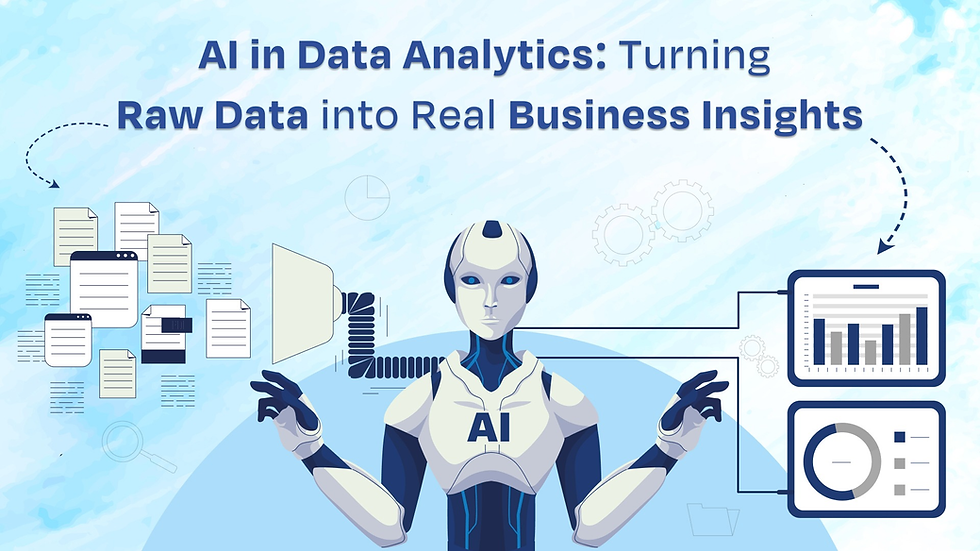
Introduction
These days, businesses create more information than ever. These interactions, along with sales data, financial records, employee feedback, and market research, and operational metrics, as well as digital analytics, all add to a vast amount of data that can be harnessed by organizations to make decisions.
But access to information is just the first step. The real challenge is to turn raw information into meaningful insights to guide decision-making. There are companies that can collect, organize, analyse and use information that can really have a huge head start over their rivals. They have a better chance of recognizing opportunities, addressing challenges, optimizing processes and accommodating customers.
Business is getting really fast-paced out there. Success isn't just about going with your gut anymore. While experience and knowing the industry inside out is still super important, there's a bigger focus now on clear processes. These should blend solid info, practical thinking, and top-notch communication. Companies that lead with data are way better prepared for shifts in the market and can grow in a sustainable way.
Why Information Matters in Business
All business decisions have an impact. The quality of the information a company can use can make a difference in the quality of a decision, whether it's for a new product, new market, new employee, new technology or new pricing policy.
Information is reliable, enabling organisations to minimise uncertainty. Rather than go on a “hunch”, business leaders can study facts, learn about trends, and analyze possible scenarios before making a decision.
In the case of a retailer, they can look at the kinds of things their customers are buying and decide on providing extra marketing support for the products. The service provider may analyse the feedback from the customer to make improvements. A manufacturing firm can track production information to determine inefficiency and waste. In every case information is the basis for making informed decisions.
In a competitive marketplace, organizations that are not able to leverage information effectively risk misusing the information and missing out on opportunities. Firms that adopt data-driven thinking can respond quicker, use resources more effectively, and make better-informed decisions.
This will develop students into proficient users of information technology systems.
Building Strong Information Systems
The first step in converting information into better decisions is to have efficient systems in place to capture and organize information.
A variety of organizations gather data from a number of sources such as:
Customer relationship management platforms
Financial software
Website analytics tools
Employee surveys
Market research reports
Customer support channels
The intent isn't to collect just any data. In contrast, businesses should be concentrating on gathering the information that is relevant to them and in keeping with their goals and priorities.
Properly organized information enables the decision maker to find the information that they need without wasting time trying to find answers to their questions. This will boost productivity and enable teams to react faster to varying circumstances.
Good information systems also help to ensure uniformity within departments. By having everyone use the same data source, communication is enhanced and misunderstandings are reduced. Everyone in a sales, marketing, finance and operations team can access the same data to make decisions without fighting about the numbers.
As well, effective systems enhance accountability. Staff are able to see how well they are doing, how far they are getting and where they might need to improve. This fosters a culture of evidence-based decision making, not guesswork.
Improving Consistency in Business Communication
Information is not just for analysis! It has a significant place with communication too.
Organizations use various kinds of docs to stay consistent, accurate, and professional. Clear communication ensures that employees, customers, suppliers, and partners remain aligned on expectations.
Having standardized resources, like contracts, policy documents and a letter of demand template, can make communication more clear and help cut down on administrative inefficiencies.
A demand letter template is particularly useful because it provides a structured framework for communicating important requests or concerns in a professional manner. Businesses can create a template for writing every letter, which will guarantee that essential details are incorporated and distributed in a clear way.
The consistency has a number of benefits. It saves time as it will allow them to spend less time preparing formal communications. Second, it helps to keep professionalism during all interactions. Thirdly, it minimises the risk of omissions and errors which may cause confusion and misunderstandings.
A demand letter template can be used as a solid foundation in many situations such as if a business must demand payment of an unpaid invoice, or if a contractual dispute exists, or if formal demand for action is required from another party. Employees can concentrate on particular aspects of the situation, and keep the tone and structure consistent.
In addition to efficiency, uniform communication devices aid in decision making by capturing pertinent information and making it available when necessary. Managers can read the letters, monitor progress and be able to make well-informed decisions from accurate records.
Many organizations have experienced communication failures, which result in delays, confusion and additional expense. When businesses adopt the use of clear documentation and utilize any available templates appropriately, they have a better chance of fostering effective communication and well-informed decision making.
Turning Data Into Actionable Insights
Information is useful, but is only useful when the organization can interpret it well.
Patterns, trends and relationships need to be identified within the data by business leaders. This process may require consideration of information and ideas from diverse points of view and important questions.
What Is Happening?
Descriptive analysis is concerned with the present circumstances.
Examples include:
Monthly sales performance
Customer satisfaction levels
Website traffic trends
Employee retention rates
Why Is It Happening?
Diagnostic analysis is an analysis of business results.
If sales aren't as expected, for instance, then management might consider what they can do to understand why customers are not buying, such as customer preference, competition, supply chain issues, or marketing efforts.
Root cause analysis allows organizations to make decisions based on symptoms and not root causes. While leaders might respond to issues at the surface, they can also respond to the issues below the surface that affect performance.
What do you think will happen next?
Predictive analysis involves looking at past data to make predictions.
Businesses can use predictive insights to anticipate customer demand, manage inventory levels, allocate resources, and prepare for market changes.
Predictions are never foolproof, but they can really help in planning and risk management. If an organization recognizes potential changes ahead of time, it may be better suited to deal with them proactively than reactively.
The Role of Data Visualization
The most important information can be overpowered if it isn't easy to grasp.
Data visualization is a useful tool for making complex data understandable and accessible. Visual representations allow stakeholders to more easily identify patterns and make decisions much faster.
For instance, a manager could create a pie chart that shows how much revenue is made by each product or customer group. Teams can easily make a pie chart, which will show them immediately how different parts are related to the whole. This will help to identify strengths, weaknesses, and opportunities for improvement.
A pie chart is an excellent graph for representing proportional relationships in the business world. Stakeholders can easily see the distribution of resources, sales, expenses, or customers in a group of numbers rather than a line of numbers.
A pie chart is often made by an organization during presentations, strategic planning sessions, and performance reviews because it is better to understand through visual information than just spreadsheets. Executives can easily gain the important information and direct the conversation to primary issues.
There are a number of benefits to effective visualization:
Quickly and accurately grasp essential metrics
Better inter-departmental communication
Better identification of trends and anomalies
More interaction with presenters and at meetings
Combined with powerful analysis, powerful visuals enable organizations to make information actionable. They connect raw data to relevant decisions making.
Encouraging Data-Driven Decision-Making
Many organisations invest lots of money in technology, but they don't create a culture around using data for decision making.
The application of technology doesn't automatically result in better outcomes. There must be a commitment to use information consistently by employees and leaders when considering options and prioritising.
The effective organisation tends to promote its staff to:
Question assumptions
Back up claims with evidence
Track critical performance measures
Communicate with colleagues within a team
Take advantage of successes and failures
Organizations can be more confident of achieving a consistent outcome if data is part of their day-to-day decision-making.
This also encourages accountability as there is a measurable outcome to check the success of decisions and not just people's opinions. Can gather evidence and determine if strategies are effective, what needs to be adjusted, and make changes as a result.
It takes continuous effort to develop a data-driven culture. Leaders need to show and encourage employees to use information in decision making and need to equip employees with the relevant tools and training to be able to use the information.
Overcoming Common Challenges
While information can be highly beneficial, it is not so easily put to use in business.
Information Overload
There are more data that many organisations gather that they can analyse.
Avoid overloading the information and causing confusion as to what is important. Key performance indicators should be aligned with businesses' strategy or operation needs.
Poor Data Quality
Poor decisions can result from incomplete, out-of-date or incorrect information.
Organizations should have procedures in place to keep information accurate and up-to-date. To enhance reliability, regular audits and validation procedures may be followed.
Siloed Information
Valuable information can get “stuck” in individual departments when they work independently.
Normally, the greater the cooperation and information sharing between departments, the more comprehensive the view of business performance. A cross-functional team approach and integrated systems can make a major contribution in decision making.
Resistance to Change
There may be some staff who are more used to making decisions in the traditional ways and don't feel comfortable with the data-based options.
Training, showing the benefits of using information to make decisions and rewarding successful implementation can help to reduce resistance and increase uptake.
Examples of Success in Real Life: Information Driven
Effective use of information is the key to many successful businesses.
Retailers analyze shoppers to maximize sales and marketing efforts. Data is vital to financial institutions because it helps them evaluate risk and make better lending decisions. Patient outcomes are assessed to refine the care approach and ensure that healthcare resources are used wisely.
Small businesses can also benefit from information-driven decision making. A local restaurant might use feedback to tweak its menu, for example, or an online retailer use analytics on a website to optimize conversion rates. Client engagement data is another area that can be analyzed by professional service firms to drive growth and enhance customer satisfaction.
In both scenarios, information is a valuable tool which can help with decision making and on-going improvements. Data driven organisations that learn from their data are better prepared to adapt, innovate and succeed.
Conclusion
But information is one of the most valuable assets that a business can have and its value relies on its use. Proper collection and communication are essential as are the analysis of trends, and the ability to make use of the information in a meaningful way.
Proper collection and communication of data are crucial, along with spotting trends and using info meaningfully. When businesses count on precise data, do thoughtful analysis, keep comms strong, and aim for growth, they can cut uncertainty, amp up efficiency, and build a solid foundation for lasting success.


