Humanoid Robots Hype vs Reality: The Gap Between Demos and Deployment
- Ethan Carter

- Dec 31, 2025
- 7 min read

Open any social media feed in 2025, and you are likely to see a video of a bipedal machine folding a shirt or making coffee. The visuals are arresting. Companies like Tesla, with its Optimus program, and startups like Figure or Agility Robotics are aggressively marketing a future where humanoid robots walk among us, taking over dangerous factory jobs and tedious household chores.
But if you talk to the engineers building them or the industrial managers expected to buy them, the narrative shifts. The glossy marketing videos often obscure a messy reality of heavy cables, short battery lives, and humans hiding behind curtains wearing VR headsets. There is a profound disconnect between the investor-fueled humanoid robots hype vs reality, and the technology is not as close to general deployment as the press releases suggest.
The Battery Problem Stalling Humanoid Robots

The single most significant bottleneck for humanoid robots isn't artificial intelligence; it is physics. Reddit threads populated by robotics researchers and students consistently point to power consumption as the primary feasibility killer.
Walking on two legs is energetically expensive. Unlike a wheeled chassis, which rests passively when not moving, a bipedal system requires constant micro-adjustments and active motor engagement just to remain upright.
For a humanoid robot to be useful in a factory or home, it needs to operate for an 8-hour shift. Currently, many of these highly touted prototypes struggle to last more than 30 to 90 minutes performing complex tasks. To extend that runtime, you need larger batteries. Larger batteries add weight. More weight requires more powerful motors to move the limbs, which in turn drains the battery faster. It is a vicious cycle that current energy density technology has not solved.
This limitation forces a compromise: robots are either tethered to power sources (which renders them useless for mobile tasks) or they are incredibly heavy and dangerous. A 200-pound robot falling over because its battery died mid-step poses a significant safety risk to human coworkers, requiring expensive safety cages that defeat the purpose of a collaborative robot.
The "Fake" Autonomy Behind Viral Videos
Public perception of humanoid robots hype vs reality is heavily skewed by carefully edited demonstrations. TechSpot and other industry observers have noted that many "autonomous" actions shown in promotional materials are actually teleoperated.
This is the "Wizard of Oz" effect. In many cases, a human operator is wearing a VR headset and using hand controllers to guide the robot's movements remotely. Gatlin Robotics, for instance, demonstrated a robot scrubbing a brick wall, but the intelligence wasn't in the machine—it was in the human guiding it.
While companies argue this is necessary for gathering training data to eventually teach the AI, it misleads the public regarding the current capabilities of the hardware. The dexterity required to manipulate soft objects—like folding laundry or handling fragile items—is incredibly difficult to automate. When you see a robot folding a shirt smoothly, there is a high probability a human is driving it.
If the business model relies on a one-to-one ratio of human pilots to robots, the economic argument for automation collapses. The goal is labor reduction, not labor displacement to a remote VR control room.
Why Specialized Machines Outperform Humanoid Robots

There is a romantic attachment to the human form. Because we have built a world for humans—stairs, door handles, vehicle seats—we assume the best robot should look like us. However, from an industrial engineering perspective, the human body is a "Jack of all trades, master of none." It is an evolutionary compromise, not an optimization for production.
The Efficiency Gap
In a factory setting, efficiency is the only metric that matters. A specialized arm bolted to the floor can move faster, lift more, and operate with greater precision than a humanoid robot ever could. Agility Robotics has deployed its Digit robot in Amazon warehouses, but for pure "pick-and-place" tasks, wheeled autonomous mobile robots (AMRs) combined with suction manipulators are often faster and cheaper.
The Cost Structure Reality
Data from McKinsey suggests a stark reality regarding cost. For every $100 spent deploying a robotic solution, only about $20 goes to the robot itself. The remaining $80 is consumed by safety infrastructure, system integration, and retrofitting the environment.
Humanoid robots promise to lower this integration cost by adapting to existing environments. Theoretically, you wouldn't need to rebuild the factory if the robot walks like a person. However, due to the balance and safety issues mentioned earlier, these robots currently require just as much, if not more, safety infrastructure than their non-humanoid counterparts. If a bipedal robot cannot reliably walk over an oil slick or navigate a cluttered aisle without falling, it becomes a liability, not an asset.
What Real Users Actually Want in Home Robotics

When you strip away the Silicon Valley buzzwords and look at what potential customers actually talk about, the demand for humanoid robots changes character. Users don't necessarily want a metal butler that looks like them. They want their problems solved.
Function Over Form
In discussions regarding home automation, a clear preference emerges for "utilitarian cute" over "uncanny valley." Many users cite Star Wars droids like R2-D2 or the "Gonk" droid—essentially trash cans on wheels—as ideal designs.
A wheeled robot with a manipulator arm is more stable, can carry heavier loads (like laundry baskets), and doesn't risk toppling over onto a pet or child. The obsession with legs is largely driven by developers, not the end-users who just want their toilets scrubbed.
The Specific Chores List
The gap between humanoid robots hype vs reality is widest in domestic chores. The "killer app" for home robots isn't companionship; it's the dirty work.
Laundry Management: Users want the entire cycle handled—washing, drying, folding, and putting away. Current robots like Weave Robotics are attempting this, but the handling of soft, deformable cloth remains a massive technical hurdle.
Sanitation: Cleaning toilets and scooping cat litter are high on the priority list. These are tasks where the form factor is irrelevant as long as the job is done.
Kitchen Duty: Loading and unloading dishwashers is a repetitive task well-suited for automation, yet difficult for current grippers that struggle with wet, slippery plates.
If a robot can reliably do these things, consumers do not care if it rolls, walks, or slides. The humanoid form is often a marketing wrapper for technology that could be delivered more efficiently in a different package.
The Niche That Matters: Eldercare and Agency

Despite the skepticism, there is one area where humanoid robots might offer unique value: psychological compatibility in care settings.
As the global population ages and the workforce shrinks, the ratio of caregivers to the elderly is becoming unsustainable. Here, the user experience is paramount. Insights from those involved in eldercare suggest that the goal of robotics shouldn't be to replace the elderly person's actions, but to restore their agency.
A robot that does everything for a senior might accelerate their physical and cognitive decline. Instead, the ideal humanoid robot would act as a physical brace or assistant—helping a senior stand up so they can walk themselves, or stabilizing a heavy pot so they can cook.
In this context, the humanoid form helps. It is easier to interact socially with a machine that has a face and limbs. The "cuteness" factor—robots that chirp or express simple emotions—can make the technology less intimidating. However, this is a delicate balance. A robot that looks too human can cause distress, especially for patients with dementia. The design target is "friendly machine," not "synthetic human."
The Financial Landscape: Investment vs. Return
The current surge in humanoid robots development is fueled by three macroeconomic factors: massive investment in AI data centers, labor shortages, and government incentives for reshoring manufacturing.
Tesla claims it could produce a million Optimus units a year by 2030. FEV Consulting predicts a global stock of one million humanoids by 2035. These numbers assume that the "hype vs reality" gap will close rapidly.
However, with startups burning through billions and deployment remaining limited to pilot programs, a correction is likely. We are seeing a classic "technological push" rather than "market pull." Engineers are building humanoids because they can, not necessarily because they are the most efficient solution for the immediate problems at hand.
Outlook: The Long Road to 2035
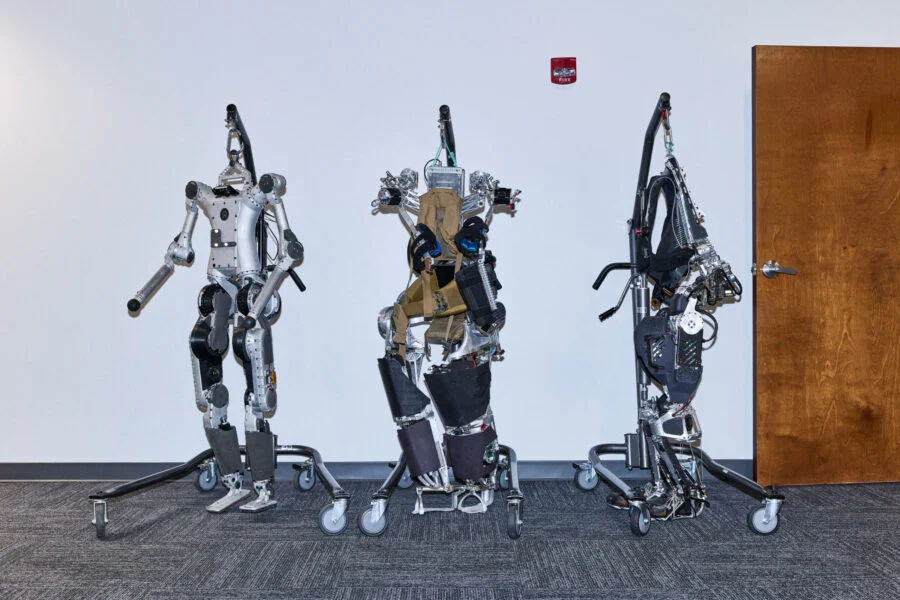
The consensus among skeptics and industry veterans is that we are 10 to 30 years away from a truly autonomous, useful, general-purpose humanoid robot.
The immediate future likely belongs to specialized, semi-autonomous machines that may borrow some humanoid features (like dual arms) but will ditch the legs for wheels to save power. The dream of a Rosie the Robot that can cook dinner, clean the rug, and converse about the weather is still firmly in the realm of science fiction.
For now, the smart money is on specialized automation. The humanoid robots hype vs reality debate serves as a reminder that just because a machine looks like us, doesn't mean it can replace us.
FAQ: Common Questions About Humanoid Robots
Why do humanoid robots have such short battery lives?
Humanoid robots consume immense amounts of power just to maintain balance and stand upright. Unlike wheeled robots, their motors are constantly active to fight gravity, meaning current battery technology often limits their operation to under 90 minutes per charge.
Are the humanoid robot videos on social media real?
Many viral videos are misleading. Companies often use teleoperation (remote control by a human wearing VR gear) to guide the robot, or they heavily edit the footage to speed up actions that actually take the robot several minutes to complete.
Why are wheels often better than legs for robots?
Wheels are energy-efficient and provide a stable center of gravity, making them safer and cheaper for indoor environments. Legs are complex, prone to mechanical failure, and require sophisticated software to prevent the robot from falling over.
What is the main cost driver for deploying robots?
Hardware is only a small fraction of the cost. Approximately 80% of the budget for robot deployment goes toward safety systems, integration with existing workflows, and facility modifications, rather than the purchase price of the robot itself.
When will humanoid robots be available for home use?
While simple prototypes exist, robust home robots capable of complex chores like laundry or cooking are likely 10 to 20 years away. Current technology struggles with the unpredictability of home environments and the manipulation of soft objects.

