Nvidia GPU Shortage 2026: Why RTX 50 Series Supply Is Dropping 40%


The era of easily accessible hardware appears to be closing once again. Reports circulating through the supply chain indicate that Nvidia intends to slash consumer graphics card production by 30% to 40% starting in the first half of 2026. Just as the market began to stabilize following the launch of the initial RTX 50 series cards, this production pivot threatens to disrupt pricing and availability for PC gamers globally.
This isn't a simple case of artificial scarcity to drive hype. The industry is facing a tangible hardware bottleneck centered on GDDR7 memory and general DRAM availability. With AI data centers and professional workstations demanding the lion's share of memory manufacturing capacity, the Nvidia GPU shortage of 2026 looks to be a supply-side crisis driven by component allocation rather than just high consumer demand.
Surviving the Nvidia GPU Shortage: Upgrade Strategies and Timing
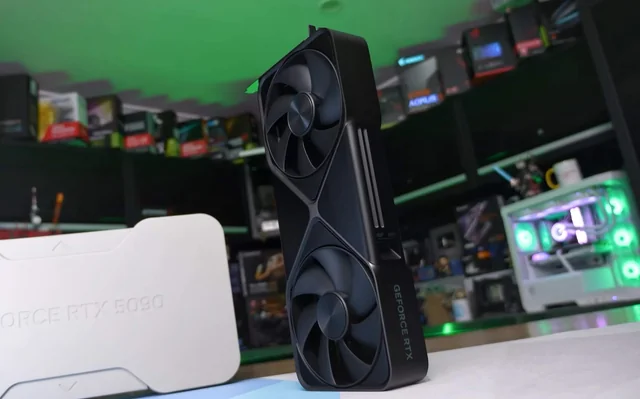
Before we dissect the supply chain mechanics, let’s address the immediate impact on your build. With a confirmed drop in supply on the horizon, the "wait and see" approach has become risky. Based on current market movements and veteran builder experiences, here is how to navigate the tightening market.
The Window to Buy Is Closing
If you are sitting on a build plan in late 2025, the time to execute is now. The supply cuts are scheduled for "early 2026," which means the current inventory in the channel is likely the most stable it will be for the next year. Builders who recently secured cards like the RTX 5070 or 5080 at MSRP are effectively insulated from the impending volatility. If you see stock now, especially for cards with 16GB of VRAM or more, securing it before Q1 2026 is the safest financial move.
Extending the Life of Older Hardware
Not everyone can or should panic buy a $1,000+ GPU. Many users are finding success in stretching the lifespan of older architectures like Pascal (GTX 1080 Ti) or Turing (RTX 2070 Super).
Resolution Management: Moving away from the 4K marketing hype is the easiest way to regain performance. High-refresh-rate 1440p OLED displays offer a stunning visual experience that places significantly less load on the GPU than 4K.
Platform Shifting: For those frustrated by the increasing hardware demands of Windows 11 and AI integrations like Copilot, migrating to efficient Linux distros (such as Linux Mint) has proven to breathe new life into aging hardware like AM4 platforms combined with older GTX/RTX cards.
The Mid-Range VRAM Trap
The specific models targeted for cuts—the RTX 5060 Ti 16GB and 5070 Ti—suggest a bleak future for mid-range longevity. If you need a card for content creation or texture-heavy gaming, do not settle for 8GB cards hoping they will suffice. The Nvidia GPU shortage is specifically squeezing the "sweet spot" cards that offer high VRAM at reasonable prices. If you cannot afford the high-end 5080/5090 tier, look for remaining stock of high-VRAM previous-generation cards before they vanish.
The Data Behind the Incoming Nvidia GPU Shortage

The projected 30% to 40% reduction in gaming GPU output is a massive shift for a company that controls over 90% of the discrete graphics market. This figure comes from board partners and supply chain sources, pointing to a severe contraction in the availability of GeForce products.
Targeted Cuts on High-Value Models
The reduction is not spread evenly across all products. Reports specifically highlight the RTX 50 series supply for models like the RTX 5070 Ti and the 16GB variant of the 5060 Ti as the primary victims. These cards require significant memory modules but sell at lower margins compared to the "RTX PRO" or data center lines. By cutting these specific SKUs, Nvidia conserves precious GDDR7 and DRAM chips for products that generate significantly higher revenue per unit.
Rising Component Costs
It is not just about availability; it is about the cost of goods sold. The price of NAND and DRAM has skyrocketed through 2025. As memory manufacturers struggle to keep up with the voracious appetite of the AI sector, the cost to build a graphics card has increased. When raw material costs rise, manufacturers prioritize their highest-margin products. Unfortunately for gamers, a consumer GeForce card is low on the totem pole compared to enterprise AI accelerators.
How the Nvidia GPU Shortage Affects VRAM Allocation
The core of this shortage is a battle for memory. The industry is transitioning to GDDR7, but production yields and volume are being stretched thin.
The Competition for DRAM Every major tech sector is fighting for the same memory fabrication capacity. AI accelerators require massive amounts of unified memory, SSDs require NAND, and system RAM (DDR5) is in high demand. The Nvidia GPU shortage is a symptom of this larger "memory crisis." Nvidia has to decide where to allocate its limited supply of memory chips.
The "Good Enough" 8GB Problem Because memory is scarce, we are seeing a trend where Nvidia may push high-volume production of cards with lower VRAM buffers (like 8GB), as they are cheaper to produce and allow the company to stretch its memory supply across more units. However, for modern gaming, 8GB is becoming a distinct bottleneck. The cuts to the 16GB mid-range cards suggest that Nvidia is deprioritizing the "future-proof" mid-range options. Consumers may soon be forced to choose between an under-specced 8GB card or a massively expensive flagship, with no middle ground available.
Market Impact: Gaming GPU Price Increase 2026

When the dominant market leader cuts supply by nearly half, prices inevitably react. We are looking at a market correction that will likely erase any "MSRP" norms established in late 2025.
The End of Discounts
Throughout 2025, we saw occasional dips in pricing for certain models. Those days are ending. Retailers, aware of the incoming shipment reductions, will likely hold prices firm or introduce markups. The grey market and scalpers will also sense the opportunity. If the RTX 50 series supply dries up in the retail channel, second-hand prices for RTX 40 series and even 30 series cards will stabilize or rise, reversing the typical depreciation trend.
The Gap for Competitors
This supply vacuum offers a theoretical opening for competitors. Rumors surrounding AMD's next-generation "Medusa Halo" chips suggest a strategy focused on high memory capacity (potentially up to 96GB addressable). If Nvidia abandons the high-VRAM mid-range segment to save memory for AI, gamers desperate for VRAM might finally look elsewhere. However, with Nvidia holding a near-monopoly, they are betting that gamers will pay the premium for a GeForce card regardless of the price hike or spec compromise.
The Shift to the Cloud
There is a broader implication here. As local hardware becomes more expensive and harder to produce due to memory constraints, the industry narrative may shift aggressively toward cloud computing. If a physical RTX 50 series supply is too difficult to maintain at a consumer price point, manufacturers might prefer renting you that power via a subscription. This shortage accelerates the trend where high-end local compute becomes a luxury niche, while the mass market is pushed toward streaming or lower-end integrated solutions.
Future Outlook: Navigating the 2026 Hardware Landscape

The Nvidia GPU shortage of 2026 serves as a wake-up call regarding the fragility of the PC gaming hardware market. The convergence of AI demand and gaming hardware on the same fabrication lines means that gaming is no longer the driver of GPU innovation—it is a passenger.
For the consumer, the strategy is clear. The era of waiting for price drops is paused. If you require hardware for professional work or high-end gaming, the current inventory is your safety net. The cuts hitting the RTX 5070 Ti and 5060 Ti 16GB act as a canary in the coal mine: memory is the new gold, and Nvidia is hoarding it for the enterprise.
We are entering a cycle of scarcity. Whether you choose to upgrade now, switch to a lighter operating system to extend your current rig's life, or look toward competitors, understanding that the 2026 market will be supply-constrained is essential for protecting your wallet and your gaming experience.
FAQ
Q: When will the 2026 Nvidia GPU shortage begin to affect prices?
A: Prices are expected to react in early 2026 as retail inventory depletes and new shipments slow down. However, savvy buyers may start clearing out current stock immediately, causing price creep as early as late 2025.
Q: Which specific RTX 50 series cards are being cut?
A: Reports indicate the deepest cuts will affect the RTX 5070 Ti and the 16GB version of the RTX 5060 Ti. Nvidia is shifting memory allocation away from these high-VRAM mid-range cards to support higher-margin products.
Q: Is it worth buying an RTX 40 series card now instead of waiting?
A: Yes, if you find a well-priced RTX 4070 Super or Ti Super, it is a viable hedge against the shortage. Waiting for RTX 50 series supply to normalize might leave you waiting well into late 2026 with no guarantee of better prices.
Q: Why is Nvidia cutting production if demand is high?
A: The issue is component scarcity, specifically GDDR7 and DRAM, combined with prioritizing profit. Nvidia makes significantly more profit using limited memory chips for AI and workstation GPUs than for consumer gaming cards.
Q: Will AMD GPUs be affected by the same shortage?
A: Likely to a lesser degree, but the underlying DRAM shortage is industry-wide. While AMD might have more aggressive pricing to capture market share, their production is also capped by the global availability of memory modules.


