Samsung’s 100% DDR5 Price Hike: Why Upgrading Your PC Just Got Harder


The era of affordable memory is ending abruptly. Recent market moves by major semiconductor manufacturers have triggered a massive DDR5 price hike, reshaping the cost of building or buying a computer for the foreseeable future. Samsung, a dominant force in the memory sector, has reportedly raised contract prices by over 100%, creating a ripple effect that goes beyond simple supply and demand.
This isn't a standard market fluctuation. It is a structural shift driven by the voracious appetite of the AI industry. For PC enthusiasts, system integrators, and anyone waiting to upgrade a five-year-old machine, the window of opportunity is closing. The data is clear: waiting for 2026 to upgrade might be a financial mistake.
Real-World Solutions: Handling the DDR5 Price Hike
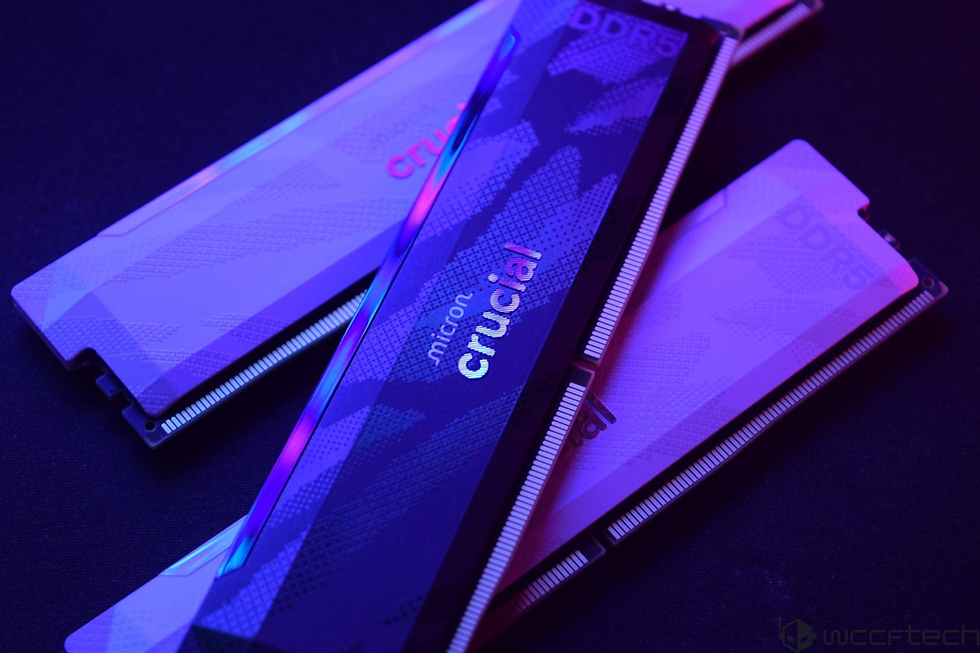
Before dissecting the economics, we need to address the immediate problem: if you are planning a build, what should you do? The consensus among early adopters and market watchers is that the DDR5 price hike is not a bubble—it is the new baseline.
User Experience: The Cost of Waiting
We are already seeing extreme volatility in the high-end market. Reports from system builders highlight a disturbing trend where specific high-capacity memory kits are tripling in price. One builder noted that a 256GB DDR5 6000 kit, purchased in August for roughly $800, now lists for nearly $2,750. Worse, it is frequently out of stock.
This mirrors the "preventative purchasing" behavior we saw during the GPU shortages, but now it has spread to storage and memory. Users are actively buying NVMe SSDs and RAM kits they do not currently need, purely to hedge against the DDR5 price hike bleeding into adjacent components. If you have an empty M.2 slot or DIMM slot you plan to fill "someday," fill it today.
The Upgrade Dilemma
For those sitting on older hardware, specifically 5-year-old machines that don't meet Windows 11 TPM 2.0 requirements, the situation is grim. The standard advice used to be "wait for the next generation." That logic no longer holds.
If your current rig is aging, you have two viable paths:
Buy Now, Don't Build Later: If you need a workstation for professional use, secure your RAM and SSDs immediately. The "Samsung memory shortage" rhetoric suggests that inventory is being artificially constrained.
Adjust Your Specs: If you wait until 2026, expect to pay more for less. You may need to settle for 32GB where you planned for 64GB.
This isn't just about RAM. SSD prices are tracking with the DDR5 price hike. The same fabrication plants produce the NAND flash used in storage. As production lines shift, SSDs are the next casualty. Upgrading now is the only way to lock in reasonable pricing.
The Economics Behind the DDR5 Price Hike

To navigate this market, you have to understand the mechanics driving it. Why is a stick of RAM suddenly costing double what it did a few months ago?
The "No Stock" Strategy
Samsung has reportedly told OEM customers—the companies that make your laptops and pre-built desktops—that there is "no stock." This is rarely literally true. Instead, it is a negotiation lever. By claiming zero inventory, Samsung forces buyers to accept the new, inflated contract rates.
The numbers support this. Contract prices for DDR5 modules have jumped from a low of around $7 to nearly $19.50. This isn't a gradual inflationary creep; it is a vertical line on the price chart. When the largest supplier in the world decides to hike rates, the entire market follows. SK Hynix and Micron are unlikely to undercut Samsung; they will likely match the DDR5 price hike to maximize their own margins.
How AI and HBM Drive the DDR5 Price Hike
The root cause is the semiconductor industry's pivot to High Bandwidth Memory (HBM). HBM is the fuel for AI accelerators used in data centers. It offers significantly higher margins than consumer DDR5.
Manufacturing HBM is resource-intensive. It eats up silicon wafers and production capacity that used to be allocated to standard PC memory. Manufacturers are making a calculated choice: allocate limited factory space to the booming AI sector rather than the stagnant consumer PC market. The DDR5 price hike is effectively the consumer subsidizing the AI gold rush. We are paying the premium so foundries can pivot to server-grade hardware.
Even the cost of electricity plays a role. Running these fabrication plants is energy-intensive, and rising energy costs are being baked into the unit price of every chip that leaves the factory.
Future Hardware: The 2026 DDR5 Price Hike Ripple Effect

Looking ahead to 2026, the hardware landscape looks expensive. The DDR5 price hike will dictate the specifications of future devices. Manufacturers have price points they must hit—$999 for a laptop, $799 for a phone. If the memory inside that device costs twice as much, they have to cut costs elsewhere.
Spec "Shrinkflation"
We should prepare for a return to lower base specifications. Just as we thought 16GB was becoming the standard minimum for laptops, the rising component costs may force manufacturers back to 8GB—or in mobile devices, even 4GB—to maintain profit margins.
Consumers expecting 2026 devices to offer "more for less" will be disappointed. The trend points toward "less for the same price." High-end configurations will exist, but they will carry a luxury premium that reflects the new reality of the DDR5 price hike.
Is DDR4 a Safe Haven?
Owners of older platforms might think they are safe sticking with DDR4. Unfortunately, the pricing contagion is spreading. DDR4 contract prices have also risen to around $18, nearly matching DDR5. It is no longer the cheap alternative. Manufacturers are losing interest in producing legacy technology when the same lines could be producing HBM or DDR5. The DDR5 price hike pulls the floor up for everything else.
The days of cheap, abundant memory are paused. Whether this is permanent or a cyclical squeeze remains to be seen, but for the next 12 to 24 months, the strategy is simple: secure your hardware before the inventory squeeze tightens further.
FAQ: Navigating the Memory Market
Q: Will the DDR5 price hike affect SSD prices as well?
A: Yes. SSDs use NAND flash, which often competes for similar manufacturing resources and supply chain logistics. We are already observing a correlation where storage prices rise alongside RAM prices, so buying storage early is recommended.
Q: Is the price increase due to a genuine shortage or price fixing?
A: It is a mix of both. While demand for AI-related HBM has genuinely reduced DDR5 production capacity, manufacturers like Samsung effectively control supply flow. By withholding stock ("No Stock" status), they gain leverage to enforce higher contract prices.
Q: Should I buy DDR5 RAM now even if I don't have a motherboard for it yet?
A: If you plan to build within the next 6 months, yes. The current trend indicates prices will continue to rise or stocks will dry up. Holding the physical hardware protects you from future spikes.
Q: Will the DDR5 price hike impact smartphone prices in 2026?
A: High-end smartphones use LPDDR5, which is subject to the same manufacturing constraints. You can expect flagship phones to either increase in price or launch with lower base memory configurations to offset the component costs.
Q: Does this affect DDR4 memory for older computers?
A: Surprisingly, yes. DDR4 contract prices have risen to near-parity with DDR5. As manufacturers phase out legacy production to focus on high-margin AI chips, DDR4 is losing its status as the budget-friendly option.

