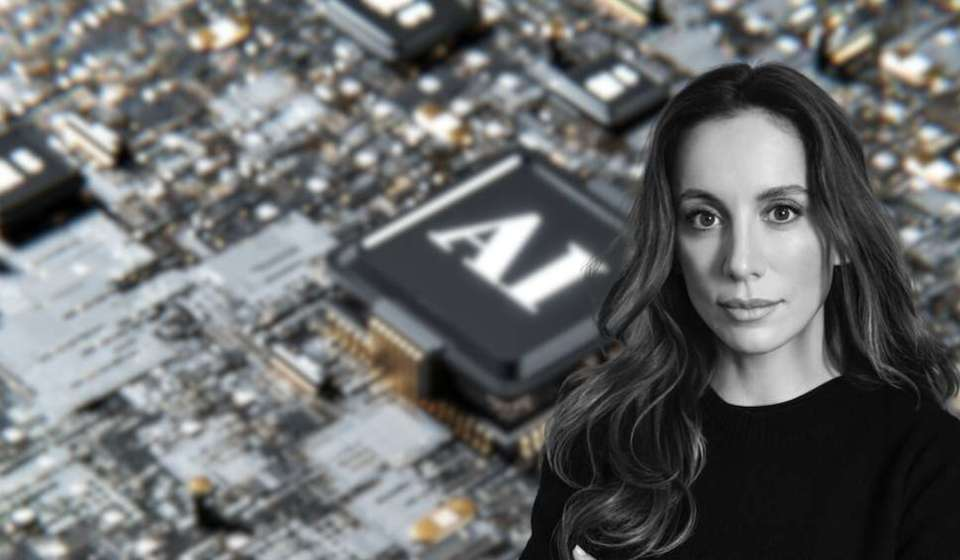
Thinking Machines Lab Talent Return: Why Top Founders Are Rejoining OpenAI


The AI industry just witnessed a reversal of flow that challenges the standard startup narrative. Usually, top talent leaves a giant like Google or OpenAI to found a nimble, well-funded startup. In the case of the Thinking Machines Lab talent return, the opposite has occurred.
Less than a year after raising a massive $2 billion seed round, critical co-founders Barret Zoph and Luke Metz, along with key researcher Sam Schoenholz, have abandoned the $12 billion venture to return to OpenAI.
This isn't just executive shuffling; it is a signal about the current state of AI infrastructure and the difficulty of competing with the incumbent "gravity wells" of compute. Below, we look at the technical disconnects identified by developers, the specifics of the departure, and what this means for the company Mira Murati is trying to build.
The Technical Reality: Why "Easier" Infrastructure Fails

Before analyzing the corporate drama, we need to look at the product logic. The core promise of many AI platforms—including what observers expected from Thinking Machines—is to simplify the complex stack of model training and fine-tuning.
Developers and users discussing this Thinking Machines Lab talent return have pointed out a fatal flaw in this business model.
The "Bimodal" User Trap
Experienced engineers on Reddit have highlighted a specific issue with trying to sell "abstracted" AI infrastructure. One user, drawing from their experience building loracraft.org, noted that the market for training tools is split into two distinct groups, neither of which pays well for a middle-layer solution.
The Experts: People who actually possess the skills to train and fine-tune Large Language Models (LLMs) understand the hardware and software dependencies intimately. They do not need—and often do not want—a "nanny" service that hides the details. They want raw compute and direct access to the metal.
The Novices: People who do not understand the underlying hardware often fail to produce usable models regardless of how simplified the interface is.
The argument here is that Thinking Machines Lab may be trying to solve a problem that doesn't exist for the people capable of paying for it. Attempting to remove the "infrastructure overhead" for training runs creates a tool that is too restrictive for pros and still too complex for beginners.
If the internal friction at the lab stemmed from this product-market mismatch, it explains why researchers like Zoph and Metz—who care about the cutting edge of Thinking Machines Lab talent return in terms of model performance—would retreat to an environment where the infrastructure is built for raw power, not commercial abstraction.
The "Gravity Well" of OpenAI Compute
The primary driver of the Thinking Machines Lab talent return appears to be the sheer resource gap between a startup—even one valued at $12 billion—and the established giants.
In the AI sector, capital is not the same as compute. Thinking Machines Lab has money. It has backers like Andreessen Horowitz, Nvidia, and AMD. But having money to buy H100s is different from having an operational, massive-scale cluster optimized for the next generation of training runs today.
Research vs. Product Engineering
Barret Zoph and Luke Metz are researchers at heart. Zoph’s previous work at Google and OpenAI focused on the theoretical limits of what models can do. The user commentary surrounding this news suggests that the administrative burden of standing up a new company distracts from actual research.
When you work at OpenAI, the "plumbing" is someone else's problem. You have access to perhaps the largest concerted compute cluster on earth. When you found a startup, you spend a significant portion of your time hiring, managing vendor relationships, and dealing with the mundane logistics of company building.
For top-tier researchers, the allure of the "OpenAI Gravity Well" is strong. The return of these founders suggests that for those who want to push the boundaries of AGI, the friction of running a startup is too high a price to pay. They want to be where the models are being trained, not in board meetings discussing cap tables.
Anatomy of the Departure: A PR Misstep
The execution of the Thinking Machines Lab talent return announcement revealed cracks in the organization's management style. The timeline of events created unnecessary confusion and speculation.
Initially, Thinking Machines CEO Mira Murati announced only the departure of Barret Zoph. It was a standard, polite corporate farewell.
However, shortly after Murati’s statement, OpenAI’s VP of Product, Fidji Simo, took to X (formerly Twitter) to welcome back a larger group. Simo clarified that it wasn't just Zoph—it was also co-founder Luke Metz and Sam Schoenholz. Simo further noted that this move had been in the works for weeks.
This discrepancy matters. When a CEO announces one departure while the competitor announces three, it suggests a lack of transparency or an attempt to soften the blow for investors. It creates a perception of instability. If the Thinking Machines Lab talent return was known internally for weeks, the piecemeal announcement strategy failed to control the narrative.
The Andrew Tulloch Precedent
This is not the first hit to the founding team. Andrew Tulloch, another co-founder, left in October 2025 to join Meta. With Tulloch gone, and now Zoph and Metz returning to OpenAI, the technical leadership of the company has been hollowed out.
Who is Left? The Soumith Chintala Factor

Amidst the news of the Thinking Machines Lab talent return, there was one significant hire: Soumith Chintala has been named the new CTO.
This is a critical stabilization move. Chintala is widely respected in the developer community as a creator of PyTorch. His involvement lends technical legitimacy to a company that just lost its primary research heads.
However, a CTO is different from a research lead. Chintala’s expertise is in frameworks and open-source ecosystems. The departing founders were specialists in model behavior and training dynamics. The shift in personnel might signal a shift in company strategy—moving from pure research (the domain of Zoph and Metz) to tooling and implementation (the domain of Chintala).
For the Thinking Machines Lab talent return narrative, Chintala acts as a counterweight, but he has a massive hole to fill regarding the company’s original vision of "deterministic LLMs" and research-first development.
User Needs: The Demand for Determinism

Despite the management chaos, the community still holds interest in the specific problems Thinking Machines Lab claimed to solve.
One of the key extracted user needs from discussions on the Thinking Machines Lab talent return is the desire for "deterministic LLMs." Currently, LLMs are probabilistic—run the same prompt twice with the same temperature, and you might still get variance due to floating-point non-determinism in parallel computing.
The Lab had published respected research on why models should be deterministic and how to achieve that. Developers want this.
The Need: Reliable, repeatable model outputs for production code.
The Problem: Current architectures make strict determinism computationally expensive or architecturally difficult.
The Fear: With the researchers behind this work leaving, the community worries this specific line of inquiry will be abandoned in favor of generic "AI Wrapper" products.
If Thinking Machines Lab pivots away from this deep-tech research to survive, the industry loses a valuable source of specialized knowledge.
Valuation Risks: The $12 Billion Question
The Thinking Machines Lab talent return forces a hard look at the valuation bubble surrounding "pre-product" AI companies.
Thinking Machines Lab raised capital at a $12 billion valuation based largely on the pedigree of its founding team. The premise was that a "super-team" of ex-OpenAI and Google researchers could build something rivaling the giants.
The "Talent Premium" Evaporates
When that talent walks out the door, the valuation logic collapses. Investors paid a premium for Barret Zoph and Luke Metz. With them gone, the company holds the cash but lacks the specific human capital that justified the price tag.
This serves as a warning for the broader ecosystem. While compute is a commodity, elite research talent is not. Contracts and vesting schedules have proven insufficient to lock in employees who can walk across the street to OpenAI and instantly access better resources. The Thinking Machines Lab talent return proves that even billion-dollar paper wealth cannot compete with the immediate gratification of working on the world’s most advanced models.
Implications for AI Startups
This event establishes a concerning trend for the 2026 AI landscape.
The Recruitment Moat: OpenAI is demonstrating that it can recapture talent simply by existing. The "alumni network" is flowing in reverse.
Infrastructure as a Filter: If your startup’s value proposition is "easier infrastructure," you are vulnerable. The people who need it can't use it effectively, and the people who can use it don't need you.
Transparency Matters: The botched announcement by Murati damaged trust. In a high-stakes environment, clarity is the only way to manage a crisis.
The Thinking Machines Lab talent return is more than a personnel announcement; it is a reality check. The romantic era of the "breakaway AI lab" may be ending as the sheer gravity of infrastructure costs and research requirements pulls the brightest minds back toward the center.
FAQ: Thinking Machines Lab Talent Return
Who exactly left Thinking Machines Lab in this recent event?
Co-founders Barret Zoph and Luke Metz, along with researcher Sam Schoenholz, have left the company. All three are returning to OpenAI to resume technical and research roles.
Why are founders returning to OpenAI despite high valuations?
The Thinking Machines Lab talent return is driven by access to superior compute infrastructure and a desire to focus on pure research. Founders often find that administrative burdens at startups distract from technical work, while OpenAI offers immediate access to massive training clusters.
Who is replacing the departing executives?
Soumith Chintala, known for his work on PyTorch, has been appointed as the new CTO of Thinking Machines Lab. He replaces Barret Zoph in leading the technical strategy of the company.
Did Thinking Machines Lab lose other founders previously?
Yes. Andrew Tulloch, another co-founder, left the company in October 2025 to join Meta. This marks a consistent pattern of leadership erosion within the lab’s first year.
What was the controversy regarding the announcement?
CEO Mira Murati initially announced only Barret Zoph's departure. Shortly after, OpenAI publicly confirmed that Luke Metz and Sam Schoenholz were also returning, making the Lab’s initial communication appear incomplete or evasive.
How does this affect the company's valuation?
Thinking Machines Lab was valued at roughly $12 billion, largely based on its founding team's reputation. The Thinking Machines Lab talent return removes key assets that justified this valuation, putting pressure on the remaining leadership to prove they can still deliver without the original architects.