Tired of Biometric Scans? The Best Discord Alternatives for Privacy

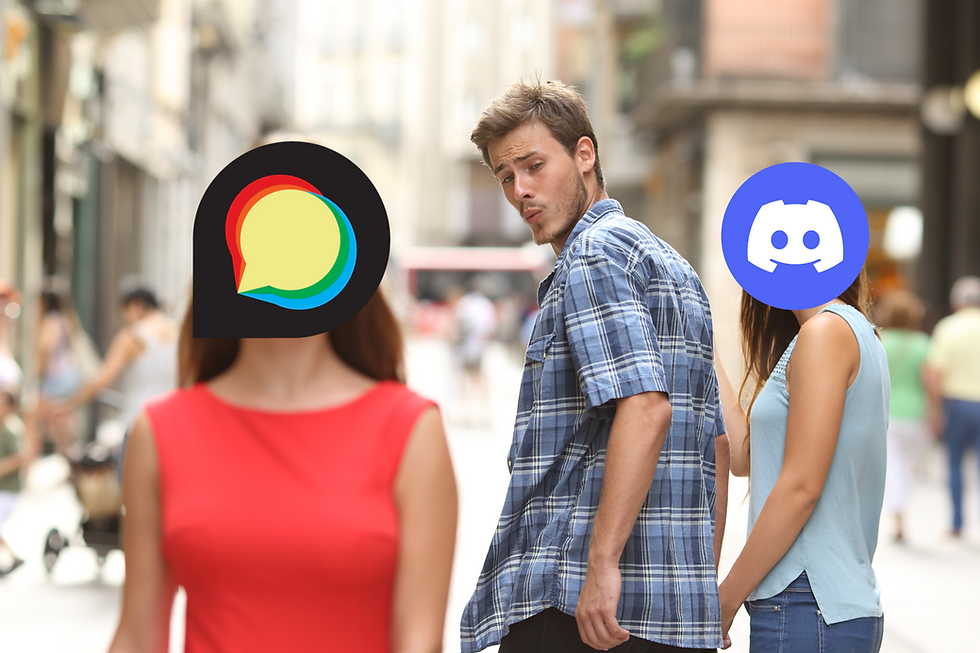
Discord used to be the simple "Skype for gamers" that just worked. Now, it feels like a data-hungry corporation trying to force you into biometric verification or government ID checks just to access a server. Between the constant "Nitro" upselling and the news that your data might be feeding AI models for Palantir, the platform has lost its way. Many of us are looking for Discord alternatives that respect user autonomy rather than treating us like products.
The problem is that switching isn't just about the software; it’s about the people. Moving a community of 500 or even 50 friends is a massive technical and social hurdle. If you are serious about leaving, you need to know which platforms actually hold up under pressure and which ones are just half-baked clones.
Why Users Are Flocking to Discord Alternatives Right Now

The push for Discord alternatives isn't just a trend; it's a reaction to "enshittification." When a platform reaches a certain size, it starts squeezing its users for every cent and every byte of data. The recent move toward requiring facial scans or government-issued IDs for age-restricted content—and the inevitable creep of these requirements to general users—was the breaking point for many.
There is also the "Dark Forest" problem. Discord has turned the internet into a series of silos that search engines can't index. If a server goes down or a user gets banned without recourse, years of community knowledge vanish. People are realizing that centralizing their entire digital life on one proprietary server owned by venture capitalists is a massive risk.
Technical Solutions for Moving Your Community
The biggest barrier to adopting Discord alternatives is the "Network Effect." You might love an open-source tool, but if your friends won't install it, you’re just talking to yourself.
One technical workaround is using a Matrix bridge. Matrix is a protocol, not just an app. By setting up a bridge, you can keep a foot in both worlds. You can chat from an Element (Matrix) client, and your messages appear in the old Discord server. This allows you to slowly migrate the "power users" first without cutting off the "casuals" who refuse to leave.
Another strategy is the "dual-homing" approach. Start hosting your weekly game nights on a Mumble server while keeping the text chat on Discord. Once people realize how much better the audio quality is and how much less RAM the client uses, the transition to a full Discord alternative becomes much easier.
Matrix and Element: The Decentralized Powerhouse
If you want a permanent exit strategy, Matrix is the most robust of the Discord alternatives. It’s a federated protocol, meaning no single company owns the network. You can host your own server (called a homeserver) or use a public one like Matrix.org.
The main client for Matrix is Element. It supports "Spaces," which function almost exactly like Discord servers. You get channels, roles, and permissions. The biggest advantage here is end-to-end encryption. Unlike Discord, the people running the server cannot read your private messages.
However, Matrix isn't perfect. The onboarding process is still clunky. Expecting a non-technical friend to understand what a "homeserver" is can be a challenge. But for communities that prioritize long-term survival and privacy, it is the only real choice that can't be bought out or shut down by a CEO.
Guilded: The High-Performance Feature King

For gamers who don't care about decentralization but hate Discord's paywalls, Guilded is often at the top of the list for Discord alternatives. Out of the box, Guilded gives you things Discord charges $10 a month for: 4K streaming, high-bitrate audio, and massive file uploads.
Guilded also includes built-in tools that Discord lacks, like sophisticated calendars, tournament brackets, and recruitment forms. It’s designed specifically for organized gaming clans.
The catch? Roblox bought them. Now, you have to link a Roblox account to use it. For many "hardcore" gamers or privacy advocates, this is a non-starter. It’s essentially trading one corporate overlord for another. But if your goal is simply to have better features for free, Guilded is technically superior to Discord in almost every way.
Mumble: Low Latency for Serious Gaming
Sometimes, the best Discord alternatives are the ones that do less, but do it better. Mumble has been around forever, and there is a reason it hasn't died. It is a lightweight, open-source VOIP tool that focuses entirely on voice.
Discord's audio is "good enough," but Mumble's audio is elite. It uses the Opus codec and features "positional audio," which makes your teammates' voices come from the direction their characters are standing in-game. It uses almost zero system resources, which is a godsend if you're playing a CPU-heavy game like Tarkov or Star Citizen.
You won't find stickers, soundboards, or "Activities" here. It’s just a list of channels and high-quality voice. For many, that's exactly what a Discord alternative should be: a tool, not a social media platform.
Stoat (Revolt): The Open-Source Mirror
Stoat, formerly known as Revolt, is probably the most direct "clone" among Discord alternatives. If you took Discord, stripped out the ads, the tracking, and the Nitro pop-ups, and made it open-source, you’d have Stoat.
The interface is so similar that your community will have zero learning curve. It supports text, voice, and roles. It’s currently in a transitional phase with server migrations, so it can be a bit buggy, but it represents the best hope for a "drop-in" replacement that doesn't require learning a whole new way of communicating.
Why Self-Hosting Is the Ultimate Privacy Win

The only way to truly escape the cycle of a platform becoming "good, then big, then greedy" is to own the hardware. Many Discord alternatives, including Matrix, Mumble, and TeamSpeak, allow for self-hosting.
When you host your own server, you control the data logs. You decide who can join. You don't have to worry about a "Trust and Safety" team at a major corporation accidentally leaking your private photos or government ID. It requires a bit of technical know-how—usually just a cheap VPS or a Raspberry Pi—but the peace of mind is worth the effort.
The Problem with Steam Chat and Legacy Tools
People often suggest Steam Chat as one of the easiest Discord alternatives because everyone already has it. While it has improved, it still feels like an afterthought. It lacks the persistent "home" feeling of a dedicated server. It’s fine for a quick voice call, but it’s not a community hub.
Then there are tools like IRC or TeamSpeak. These are great for what they are, but they lack the modern "all-in-one" feel. Most people today expect to be able to share a video, post a meme, and jump into a voice call in the same window. Moving back to IRC feels like moving back to a flip phone—it works, but you'll miss the convenience.
Moving Beyond the "Gamer" Label
A lot of the frustration with Discord comes from its identity crisis. It’s trying to be a corporate tool, a gaming hub, and a social network all at once. Because of this, many Discord alternatives are actually specialized tools.
If your community is more about discussion and less about gaming, you might be better off with Zulip or Discourse. Zulip uses a unique threading system that prevents conversations from turning into an unreadable wall of text. Discourse is a modern forum that allows for long-form thoughts that stay searchable for years. These aren't just Discord alternatives; they are upgrades for communities that value signal over noise.
The Reality of the "Discord Refugee"

We are seeing a massive influx of people testing these platforms. Every time Discord announces a new privacy-invasive feature, servers for Stoat and Matrix see a spike in sign-ups. The "Discord Refugee" is a real demographic—users who are tired of being treated as a data point.
The transition won't happen overnight. It took Discord years to kill TeamSpeak and Skype. But the momentum is shifting. People are becoming more tech-literate and more protective of their digital footprints. Choosing Discord alternatives is no longer just for the "tinfoil hat" crowd; it’s becoming a standard move for any community leader who wants to protect their members.
FAQ
Is Matrix actually secure for private conversations?
Yes, Matrix supports end-to-end encryption (E2EE) using the Olm and Megolm cryptographic ratchets. This means that even if the server owner is compromised, they cannot read the content of your encrypted messages.
Do any Discord alternatives support screen sharing?
Guilded and Stoat (Revolt) both support screen sharing natively. Matrix supports it through various clients like Element, though the stability can vary depending on which server you are using.
Will I lose my chat history if I move to a new platform?
Usually, yes. Most platforms do not have an automated "import" feature for Discord logs. However, some Matrix bridges allow you to sync your history from the moment the bridge is active.
Why is Mumble considered better for gaming audio?
Mumble uses a lower-latency architecture and the Opus codec, providing "mouth-to-ear" speeds that are faster than Discord. It also includes "positional audio," which provides a competitive advantage in many tactical shooters.
Does Guilded really require a Roblox account?
As of recent updates, yes. Roblox acquired Guilded and has made a Roblox account mandatory for all new and existing users to log in, which has been a point of controversy for the community.
Can I host my own Discord-like server?
You can’t host Discord itself because it is proprietary, but you can host "Spacebar" (formerly Fosscord), which is an open-source project designed to be a self-hostable, Discord-compatible backend.


