What Wearable AI Means for the Future of Personal Productivity

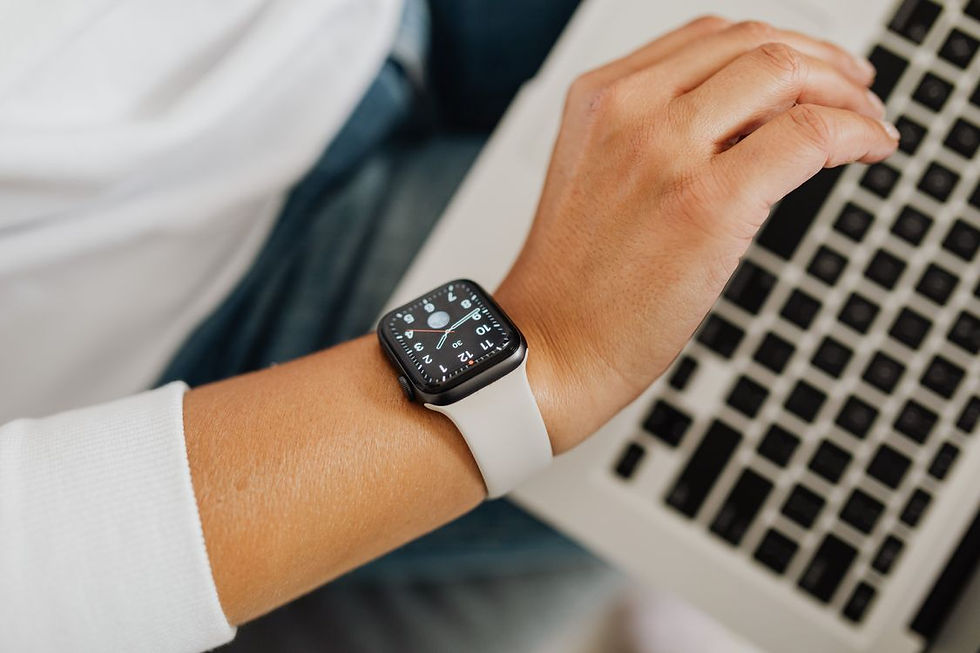
Personal productivity has traditionally been tied to screens. We organize schedules on laptops, respond to messages on phones, take notes in apps, search for information through browsers, and manage projects from dashboards. These tools are powerful, but they also create a familiar problem: getting something done often requires stopping what we are doing, opening another device, finding the right application, and shifting our attention.
Wearable AI could change that relationship with technology. Smart glasses, intelligent earbuds, watches, and other connected devices are beginning to combine artificial intelligence with voice interaction, cameras, sensors, and cloud services. Rather than asking users to constantly move between the physical and digital worlds, wearable AI has the potential to make useful information available while people continue working, traveling, learning, or handling everyday tasks.
The real productivity opportunity is not simply having AI available everywhere. It is reducing the friction between having a thought, finding information, capturing something important, and taking action.
Productivity Is Moving Beyond the Screen
Most productivity software assumes the user is sitting in front of a display. Even mobile apps often require several steps before a simple task can be completed. A person may need to unlock a phone, locate an application, search for information, type a note, or navigate multiple menus before returning to what they were originally doing.
Wearable AI introduces a different model. Instead of making the user stop and interact with technology, the technology can potentially become part of the activity itself. A professional walking between meetings could capture an idea through voice. A traveler could request information without stopping to search manually. Someone working with their hands could retrieve instructions while continuing the task.
This shift does not mean smartphones and laptops are disappearing. They remain better suited to complex work that requires large displays, detailed editing, or extended concentration. Wearables are more likely to complement those devices by handling quick interactions that currently interrupt a person's flow.
AI Glasses Can Reduce Small Everyday Interruptions
Eyewear is particularly interesting because glasses can remain accessible throughout the day without occupying the user's hands. Modern Meta glasses illustrate how cameras, audio, voice interaction, and AI capabilities can be incorporated into a familiar wearable format.
From a productivity perspective, the appeal is less about replacing a computer and more about reducing unnecessary device switching. Instead of reaching for a phone every time a question, reminder, or idea appears, some interactions can potentially happen through voice or audio while the user continues moving.
Small interruptions may seem insignificant, but they accumulate. Checking a phone for one piece of information can easily lead to notifications, messages, and unrelated apps. A wearable interface that helps users complete a specific task without opening a full screen could make certain everyday workflows feel more focused.
Capturing Ideas Could Become More Natural
One of the biggest productivity challenges is capturing information at the moment it becomes useful. Good ideas rarely arrive only when someone is sitting in front of a note-taking app. They appear while walking, commuting, exercising, talking with colleagues, or working on something completely different.
Wearable AI could make these moments easier to capture. Instead of trying to remember an idea until later, users could record a short voice note, create a reminder, or save contextual information immediately. AI systems could then help organize that material, summarize it, categorize it, or connect it with related information later.
This has important implications for personal knowledge management. The value of a note is not simply that it exists; it needs to be easy to find and useful when it matters. Combining wearable capture with AI-powered search and organization could reduce the gap between noticing something important and turning it into actionable knowledge.
AI Is Already Changing How Knowledge Workers Spend Their Time
The productivity potential of wearable AI sits within a larger shift toward AI-assisted work. Research is beginning to show that AI can reduce time spent on some routine knowledge-work tasks when it is integrated into tools people already use.
A large Microsoft Research study on generative AI and work patterns examined thousands of workers across multiple industries and found that access to an AI tool was associated with less time spent on email and faster document completion. The findings do not suggest that AI automatically improves every type of work, but they do illustrate an important principle: productivity gains often come from removing repetitive effort from familiar workflows rather than adding entirely new tasks.
Wearables could extend that idea beyond the desktop. If AI can provide useful assistance without requiring users to stop what they are doing and open another application, the technology may reduce friction in parts of the day that traditional productivity software rarely reaches.
Voice Could Become a More Important Productivity Interface
Typing remains essential for detailed work, but it is not always the fastest way to interact with technology. Voice can be more efficient for short requests, reminders, quick searches, or capturing thoughts while someone is moving.
Wearable AI makes voice particularly relevant because many devices have limited or no screens. A user could ask for a calendar update, dictate a note, request a summary, start a timer, or retrieve a specific piece of information without manually navigating an application.
The challenge for developers will be keeping these interactions concise. Listening to a long spoken response is often less efficient than scanning the same information visually. Successful wearable productivity tools will therefore need to understand not only what information users need, but how much information is appropriate in that moment.
A short answer, followed by the option to view more detail on another device, may be more useful than trying to reproduce a complete desktop experience through audio.
Wearable AI Could Improve Context Switching
Modern knowledge work involves constant switching between tasks. A person may move from email to documents, then to meetings, messaging apps, project management software, and research tools within a single hour. Each transition requires mental adjustment, and frequent interruptions can make focused work more difficult.
Wearable AI will not eliminate context switching, but it could reduce some of the unnecessary transitions between physical activities and digital tools. If someone can capture a reminder during a conversation without opening a phone, or retrieve a simple piece of information while continuing a task, they may be able to maintain attention more effectively.
The key is restraint. A wearable that constantly delivers notifications could make distraction worse rather than better. Productivity-focused design should prioritize relevant, intentional interactions and give users control over when the device demands attention.
In that sense, the most productive wearable may not be the one that provides the most information. It may be the one that knows when not to interrupt.
Personal Knowledge Management Could Become More Context-Aware
AI-powered knowledge tools are already making it easier to search across notes, documents, emails, recordings, and other information. Wearables could add another layer by making real-world experiences easier to capture and connect with those digital knowledge bases.
Imagine attending an industry event and recording a short observation immediately after a conversation. Later, AI could connect that note with the relevant project, contact, meeting transcript, or research document. A professional touring a work site might capture observations through voice and have them automatically organized for follow-up.
This kind of workflow could reduce the amount of manual organization required after information is collected. Instead of relying entirely on memory or creating disconnected notes, users could develop a more continuous system where information moves naturally from capture to organization and retrieval.
The challenge will be ensuring that automation remains transparent. Users should understand where information is being stored and be able to correct inaccurate categorization rather than relying blindly on AI-generated organization.
Hands-Free Workflows Could Benefit Mobile Professionals
Many productivity tools are designed for office workers, but a large number of professionals spend much of their time away from a desk. Sales representatives, technicians, healthcare staff, retailers, hospitality teams, photographers, field researchers, and other mobile workers often need information while interacting with people or completing physical tasks.
Wearable AI could be particularly valuable in these environments. A technician could retrieve documentation while working on equipment, a salesperson could capture notes immediately after a client conversation, and a field employee could record observations without stopping to type them into a phone.
These are not dramatic science-fiction scenarios. They are small workflow improvements that can reduce administrative work and help information reach digital systems sooner. When combined with SaaS platforms, CRM tools, knowledge bases, and project management software, wearable devices could become another interface for systems businesses already use.
Meetings Could Become Easier to Follow Up On
Meetings create a large amount of information, but much of it is quickly forgotten or scattered across handwritten notes, chat messages, and follow-up emails. AI transcription and summarization have already begun changing this process by making it easier to turn conversations into searchable records.
Wearable technology could extend that concept to less formal interactions. Not every valuable conversation takes place in a scheduled video meeting. Professionals exchange ideas while walking between rooms, attending conferences, visiting clients, or discussing projects informally.
With appropriate consent and privacy controls, wearable devices could help users capture their own notes or reminders immediately after these conversations. AI could then turn those short inputs into organized follow-up items, reducing the risk that useful information disappears simply because nobody had a notebook open at the right moment.
The most practical use may not be continuous recording. It may be making intentional capture so easy that people actually use it.
AI Wearables Could Support Better Task Management
Task lists often fail because creating and updating them takes effort. People remember something they need to do while away from their productivity system and assume they will add it later, only to forget.
Wearables could make task capture more immediate. A user might create a reminder while walking, add a follow-up after finishing a conversation, or record a task without opening a separate application. AI could help interpret the request, recognize dates or priorities, and send the task to the appropriate system.
This could also improve the connection between tasks and context. Instead of creating a vague reminder such as “follow up tomorrow,” a system might connect the task with the relevant meeting, contact, or project information already stored elsewhere.
The usefulness of this approach depends heavily on integration. A wearable productivity system that creates another isolated task list would simply add complexity. The greatest value will come when wearable interactions feed naturally into tools users already trust.
Search Could Become More Immediate and Contextual
Traditional search usually begins with a deliberate action: open a browser, enter a query, review results, and choose a source. Wearable AI could make certain types of information retrieval more immediate by allowing users to ask short questions in context.
A professional working on a project might ask for a definition, calculation, schedule detail, or information from an existing knowledge base without leaving the task. A traveler could request basic information while moving through an unfamiliar environment. Someone working with a physical object could potentially ask questions related to what they are seeing.
This kind of contextual search could save time when the question is simple and the answer can be delivered clearly. For deeper research, screens will remain essential because users need to compare sources, evaluate evidence, and work with larger amounts of information.
The productivity benefit comes from matching the interface to the task rather than trying to force every type of research through the same device.
Privacy Will Be Central to Productive Wearable AI
The productivity possibilities of wearable AI also create legitimate privacy concerns. Devices that use cameras, microphones, location, or personal knowledge systems may handle sensitive information, especially in workplaces and public environments.
For wearable productivity tools to become widely accepted, users need clear control over what is captured, when recording is active, where information is stored, and which applications can access it. Businesses adopting wearable technology may also need policies around confidential conversations, customer information, and device use in restricted spaces.
Privacy is not separate from productivity. A tool that makes users or colleagues uncomfortable will eventually create more friction than it removes. Clear indicators, intentional activation, understandable permissions, and responsible data handling will be essential to making wearable AI useful in professional settings.
More Technology Does Not Automatically Mean More Productivity
One of the risks of wearable AI is assuming that faster access to information is always beneficial. Many people already struggle with notification overload, constant communication, and the feeling that work follows them everywhere.
Putting AI into devices worn throughout the day could make that problem worse if products are designed around maximum engagement. Productivity-oriented wearables should instead help users filter information and decide when interaction is worth their attention.
A useful device might summarize rather than forward every notification, allow certain tasks to be captured without opening distracting apps, or provide information only when the user specifically requests it. The goal should be to reduce cognitive overhead rather than create another channel demanding constant attention.
The difference between a productive wearable and a distracting one may ultimately come down to how carefully it manages attention.
The Future Is Likely to Be Multimodal
Wearable AI does not need to replace phones or laptops to have a significant impact on productivity. A more realistic future is one in which people move between devices depending on what they are doing.
A wearable may be ideal for capturing an idea, asking a quick question, receiving a short update, or triggering an action. A phone can provide additional context and visual information. A laptop remains better for concentrated writing, analysis, design, and complex decision-making.
AI can help connect these interfaces so that users do not need to restart a task every time they move between devices. An idea captured through glasses could appear automatically in a knowledge-management system. A voice reminder could become a task on a desktop dashboard. Information requested while walking could be saved for deeper review later.
When these transitions work smoothly, wearable AI becomes less about adding another gadget and more about making the existing technology ecosystem easier to use.
Personal Productivity May Become More Ambient
The most important change wearable AI could bring is a shift from active interaction toward ambient assistance. Traditional software waits for users to open it. Wearable technology can remain available throughout the day and provide assistance when needed without demanding a dedicated work session.
That could make routine actions such as capturing ideas, retrieving information, creating reminders, and documenting observations feel less like separate administrative tasks. AI can handle some of the organization afterward, leaving users to focus more of their attention on the work or experience itself.
However, the future of personal productivity should not be measured by how many AI interactions can be added to a person's day. The real measure is whether technology helps people spend less time managing tools and more time doing meaningful work.
Wearable AI has the potential to move productivity in that direction. If developers prioritize useful context, seamless integration, privacy, and control over attention, the next generation of wearables could make digital assistance feel less like another application and more like a natural extension of the way people already work.


