Why the Dell AI PC Hype Died at CES 2026


The technology industry loves a buzzword until it doesn't. For the last two years, you couldn't buy a laptop without being told it was an "AI PC." Manufacturers plastered stickers on chassis, added dedicated copilot keys, and insisted that neural processing units (NPUs) were the future of computing. But at CES 2026, the script flipped.
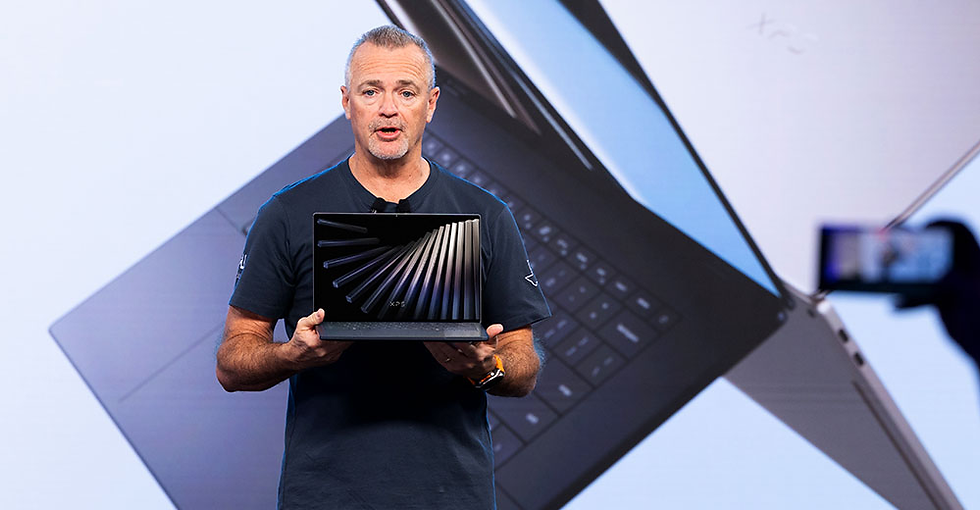
Dell, previously a vocal champion of this trend, held a briefing that was noticeably quiet about artificial intelligence. Jeff Clarke, Dell’s COO, and product lead Kevin Terwilliger admitted what many users have felt for months: consumers generally do not care about the Dell AI PC branding. They care about screens, build quality, and raw performance.
This pivot isn't just a marketing adjustment; it’s a response to distinct friction between hardware manufacturers and their user base. Before analyzing the industry shift, it is vital to address the practical reality for users who are currently stuck with these machines and looking for a way out.
Practical Solutions: Managing the Dell AI PC Experience

While Dell has stopped shouting about AI, they haven't stopped installing the hardware. The 2026 lineup, including the new XPS and Alienware models, still contains NPUs. For many IT professionals and privacy-conscious users discussed in recent community threads, the presence of these "AI-ready" components is more of a liability than a feature.
Here is how power users are currently mitigating the Dell AI PC software bloat and reclaiming system resources.
Switching to Windows IoT Enterprise LTS
One of the most effective methods to bypass the consumer-grade AI integration is migrating to Windows IoT Enterprise LTSC (Long-Term Servicing Channel). Unlike standard Windows 11 Home or Pro, this version does not come pre-loaded with Copilot, Recall, or the aggressive telemetry associated with the Dell AI PC ecosystem.
Why it works: It provides a stripped-down, stable OS environment intended for mission-critical hardware (like ATMs or medical devices) but works perfectly on high-end laptops.
The Benefit: You get the driver support for your Dell hardware without the forcing of AI assistants.
The Linux Alternative
For those willing to leave the Microsoft ecosystem entirely, formatting the drive and installing a Linux distribution remains the nuclear option. Community feedback indicates that Linux support for NPU hardware is still maturing, which ironically works in the user's favor. Since the OS doesn't inherently try to offload tasks to the NPU for data analysis, the chip simply sits dormant, consuming negligible power and zero personal data.
Virtual Machine Isolation
For enterprise users who cannot wipe the host OS due to company policy, running work inside a Virtual Machine (VM) has become a standard defense. By keeping sensitive data within a VM that has no access to the host’s NPU or specific "AI awareness" features, users effectively neutralize the Dell AI PC risk profile while still adhering to corporate hardware standards.
The 2026 Marketing Pivot: Silence on the Dell AI PC

The briefing at CES 2026 was arguably the most "normal" hardware event in half a decade. Dave James from PC Gamer noted that for the first time in years, the conversation focused on form factors, display technology, and thermal management.
Admitting the Disconnect
The core realization from Dell’s executive team is that AI features have not driven refresh cycles. People buy new computers because their old ones break or become too slow, not because they want a slightly faster way to generate an email draft.
By removing the Dell AI PC talking points from the forefront, the company is acknowledging a "boy who cried wolf" fatigue. Consumers were promised a revolution and received chatbots that hallucinate facts. By reverting to traditional specs—RAM, storage speed, and chassis weight—Dell is attempting to regain credibility with a customer base that has grown cynical of intangible software promises.
The "Hammer Looking for a Nail" Problem
User sentiment on platforms like Reddit mirrors this corporate realization. The comparison frequently drawn is to 3D TVs or NFTs. The industry built the technology (the NPU) and then scrambled to find a use case for it, rather than building a solution to an existing problem.
For the average buyer, an NPU adds cost to the motherboard. If that component doesn't speed up video rendering, compile code faster, or improve gaming framerates, it is dead weight. Dell’s decision to hush the marketing suggests they know they can no longer justify the price premium based on "intelligence" alone.
Privacy Concerns Beneath the Dell AI PC Hood
The retreat from AI marketing is also likely a defensive maneuver against privacy backlash. The Dell AI PC narrative became inextricably linked with features like Windows Recall, which takes constant screenshots of user activity.
The Recall Factor
Even if Dell acts as a hardware vendor, their machines run software that users increasingly view as spyware. When a laptop is marketed heavily as an "AI machine," users immediately associate it with data scraping.
Community discussions highlight a significant portion of the market that actively avoids "AI" branded hardware because they assume it involves deeper levels of telemetry. By dropping the Dell AI PC label, Dell distances its hardware from the controversial software features Microsoft continues to push. It allows them to sell a laptop as just a laptop, sidestepping the privacy debate entirely.
The NPU Is Still There
It is critical to understand that the hardware hasn't changed. The new Alienware and XPS models demonstrated at CES 2026 still possess the silicon capable of local neural processing. The distinction is that Dell is no longer asking you to applaud it.
This creates a "stealth AI" era. The capabilities are embedded, waiting for software that might actually be useful—or invasive—down the road. For now, the silence serves to lower consumer defenses.
The Dell AI PC and the Coming Memory Shortage

One of the few forward-looking predictions from the CES 2026 briefing was Jeff Clarke’s warning regarding a looming memory shortage. This adds a logistical layer to the demise of the Dell AI PC marketing push.
RAM Competition
AI models, even small local ones, are memory-hungry. They require significant RAM allocation to run smoothly on-device. If the industry is facing a supply squeeze on memory modules, it makes little sense to encourage consumers to fill that precious RAM with background AI processes that provide marginal utility.
By shifting focus away from AI, Dell lowers the expectation that these machines need to be constantly caching data for neural networks. It aligns the marketing message with the supply chain reality: memory is about to get expensive, so we should prioritize it for the operating system and applications users actually use.
Is the Dell AI PC Era Over Before It Began?
The trajectory of the Dell AI PC resembles the ultrabook craze of the early 2010s but with less sticking power. With ultrabooks, the form factor (thin and light) eventually just became the standard. With AI PCs, the "feature" is invisible and, for many, unwanted.
The Enterprise "Tax"
A recurring complaint from IT procurement managers is the inability to opt-out. When buying thousands of Dell Latitudes for a workforce, businesses are paying for the silicon die area occupied by the NPU. If the software ecosystem never delivers a "killer app" for business productivity that requires local processing, companies have effectively paid a tax on millions of units for zero return.
Dell’s quiet CES briefing suggests they hear this complaint. They cannot remove the NPU—that is dictated by chipmakers like Intel and AMD—but they can stop insulting the intelligence of their buyers by pretending it's a revolutionary necessity.
A Return to Utility
The "un-AI" briefing is a signal that the hardware market is correcting itself. The past few years saw an over-financialization of tech features, where stock prices drove product roadmaps. The Dell AI PC was a Wall Street pitch deck translated into a consumer product.
Now, as the hype cycle crashes into the reality of daily usage, the focus returns to utility. A laptop is a tool. Users want it to be durable, private, and fast. They do not want it to "think" for them, especially if that thinking involves sending telemetry data to the cloud.
Outlook for 2026 and Beyond
We are entering a phase of silent integration. The Dell AI PC name will likely fade, replaced by standard spec sheets. The NPU will become just another coprocessor, like the ISP (Image Signal Processor) for your webcam—boring, functional, and rarely discussed.
For the consumer, this is a win. It clears the noise from the buying process. You can once again compare laptops based on screen brightness, keyboard travel, and battery life. The AI hardware will remain dormant inside the chassis, waiting for a purpose that may or may not ever arrive.
FAQ: Navigating the Post-Hype PC Market

Q: Does the new Dell lineup still have AI hardware if they aren't advertising it?
Yes. The processors used in the 2026 XPS and Alienware models still contain NPUs (Neural Processing Units). The hardware capability remains, even though Dell has removed the "AI" branding from their primary marketing materials.
Q: Can I physically remove the NPU from a Dell AI PC?
No. The NPU is integrated directly into the main CPU die (System on Chip). It is not a separate card or module that can be unplugged. The only way to disable it is through software configurations or BIOS settings, though these options vary by model.
Q: Why did Dell stop pushing the "AI PC" label?
Dell executives admitted that customers simply do not care about AI features when choosing a PC. Additionally, the association of AI with privacy risks and "bloatware" was likely hurting sales rather than helping them, prompting a return to traditional performance metrics.
Q: Is Windows Recall enabled by default on these new machines?
Microsoft’s policy on this has fluctuated, but generally, the hardware is "Recall ready." However, due to severe backlash, it usually requires an opt-in or can be disabled during the initial setup (OOBE). Using Enterprise or LTSC versions of Windows is the safest way to ensure it is not present.
Q: Will the predicted memory shortage affect non-AI tasks?
Yes. If Jeff Clarke’s prediction of a 2026 memory shortage is accurate, prices for RAM upgrades will rise across the board. This makes it even more important to ensure your system resources aren't being wasted on background AI processes you don't use.


