Excel to PowerPoint
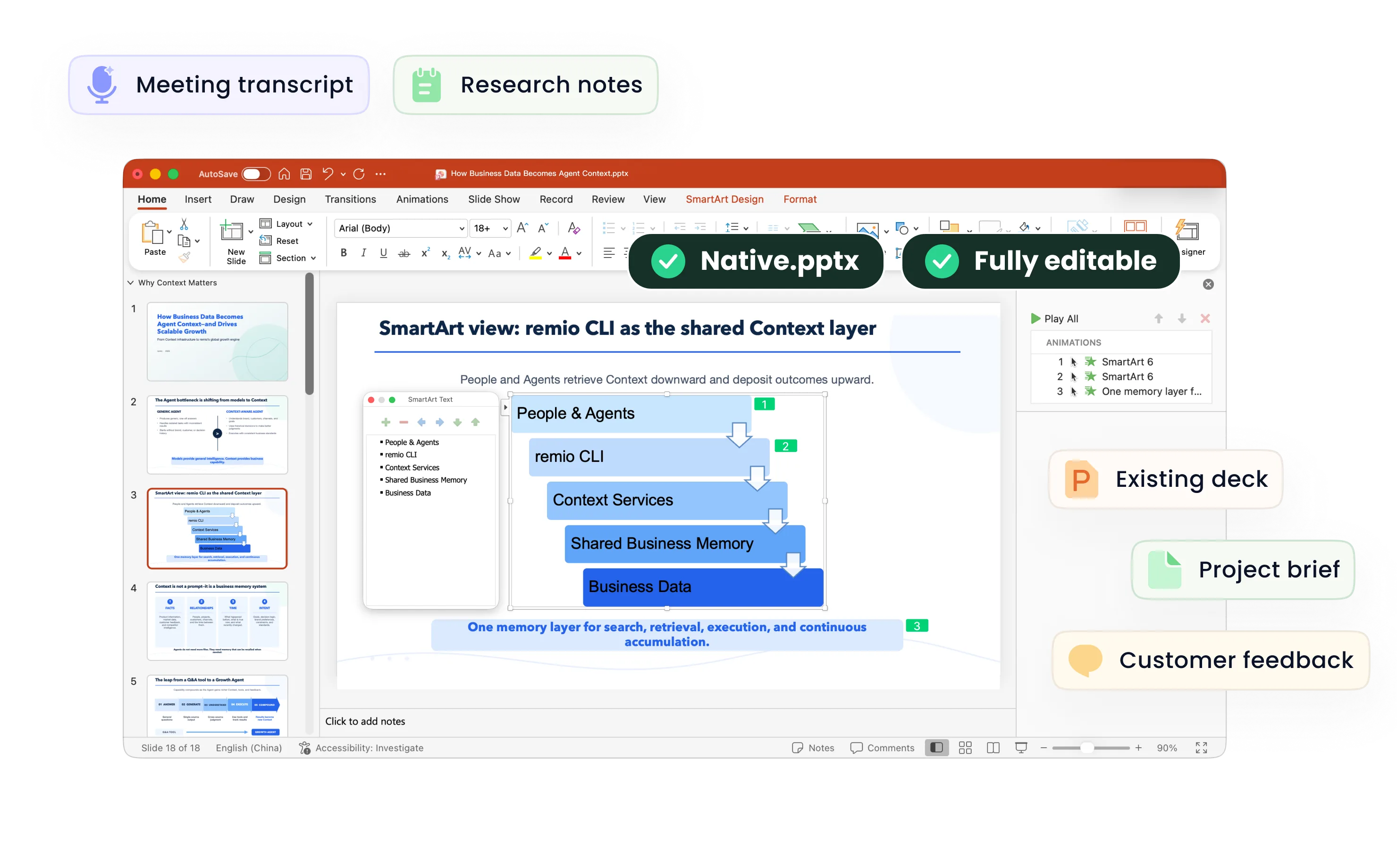
Build editable PowerPoint presentations from Excel data and project context with remio. Review metrics, units, reporting periods and the slide narrative.
Choose the story the numbers need to tell
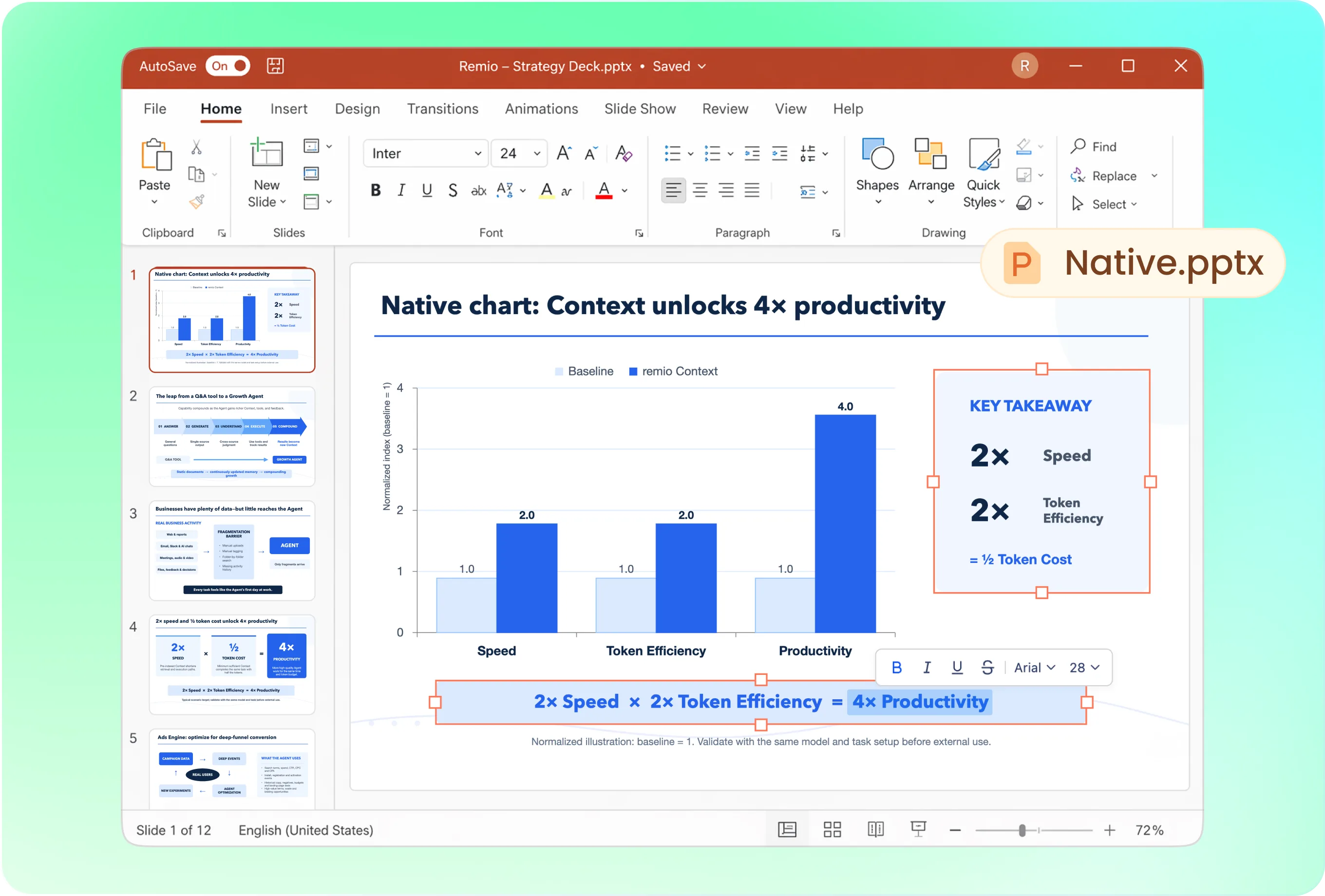
Try: “Use the monthly sales workbook for an eight-slide review. Show revenue versus target, changes by region, the main drivers and next actions. State the period and units on every relevant slide.” Review the selected data and conclusions before creating the deck.
Keep the review consistent with your team’s decks
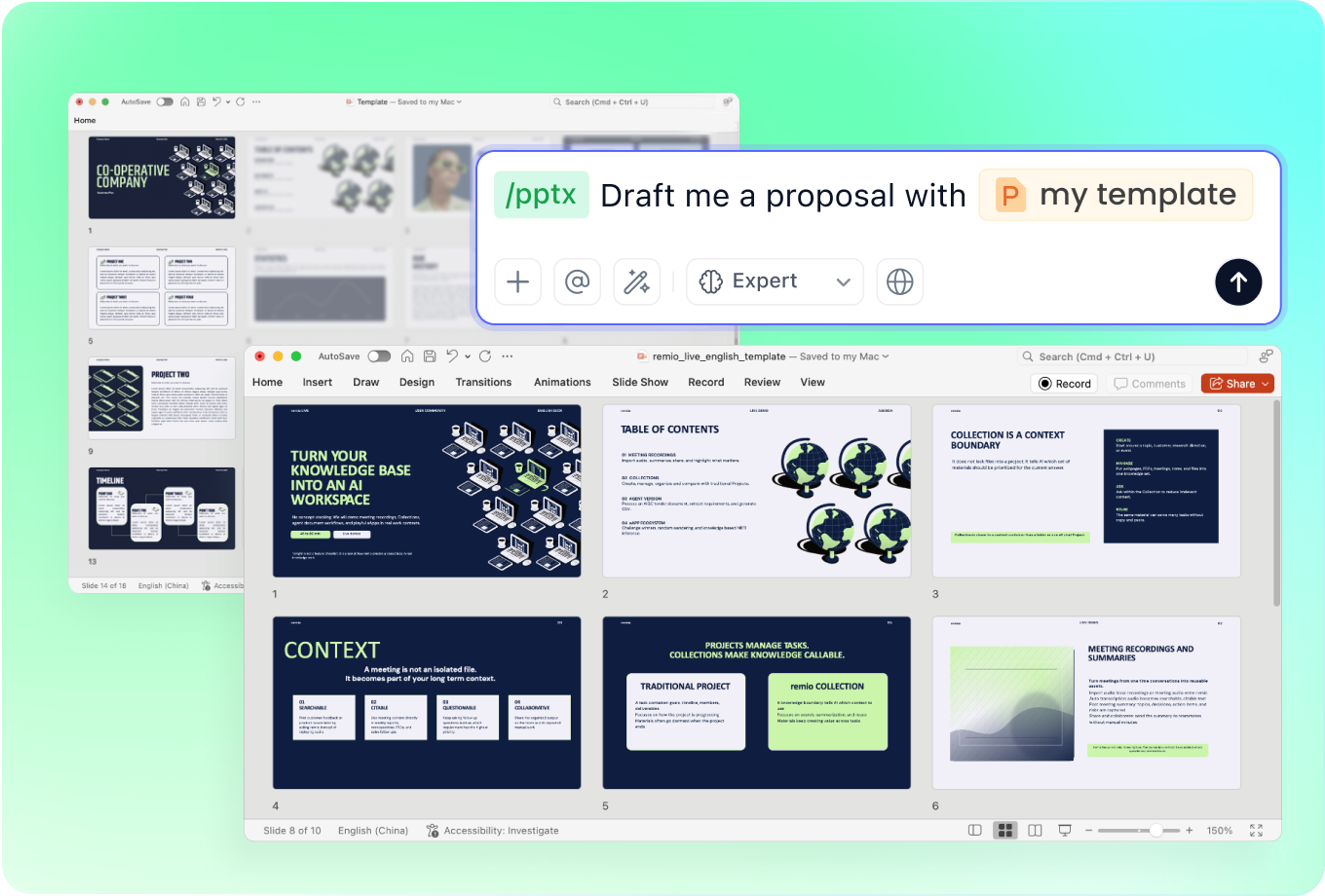
Provide the company PowerPoint and ask remio to follow its layout, fonts and colors. Explain how your team presents KPIs and variances. Keep the visuals readable instead of shrinking a worksheet to fit the slide.
Refresh an existing monthly or quarterly deck
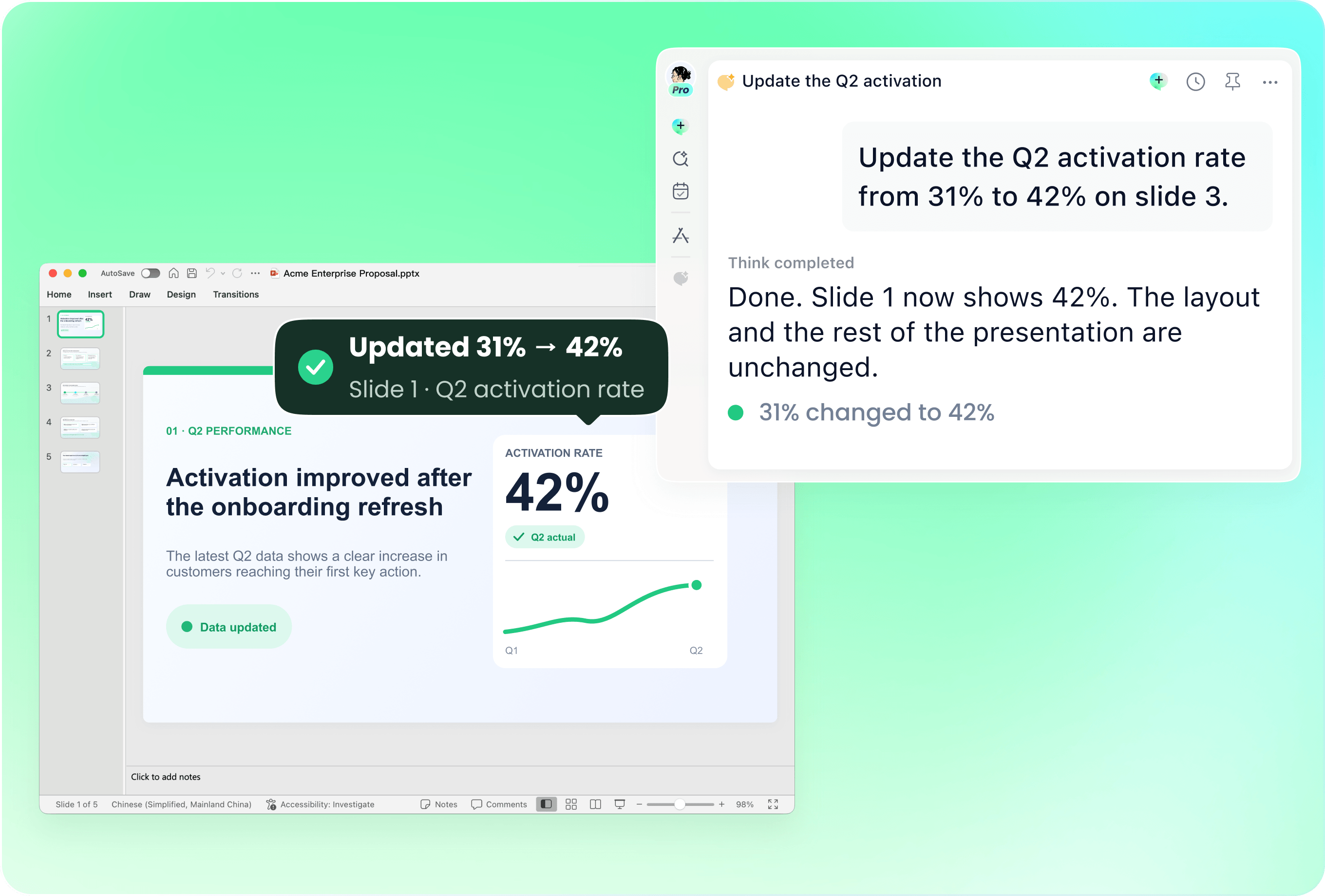
Add the new workbook alongside the prior presentation. Identify which slides and metrics should change. Review the new totals, chart labels and commentary so the latest period is consistent throughout the deck.
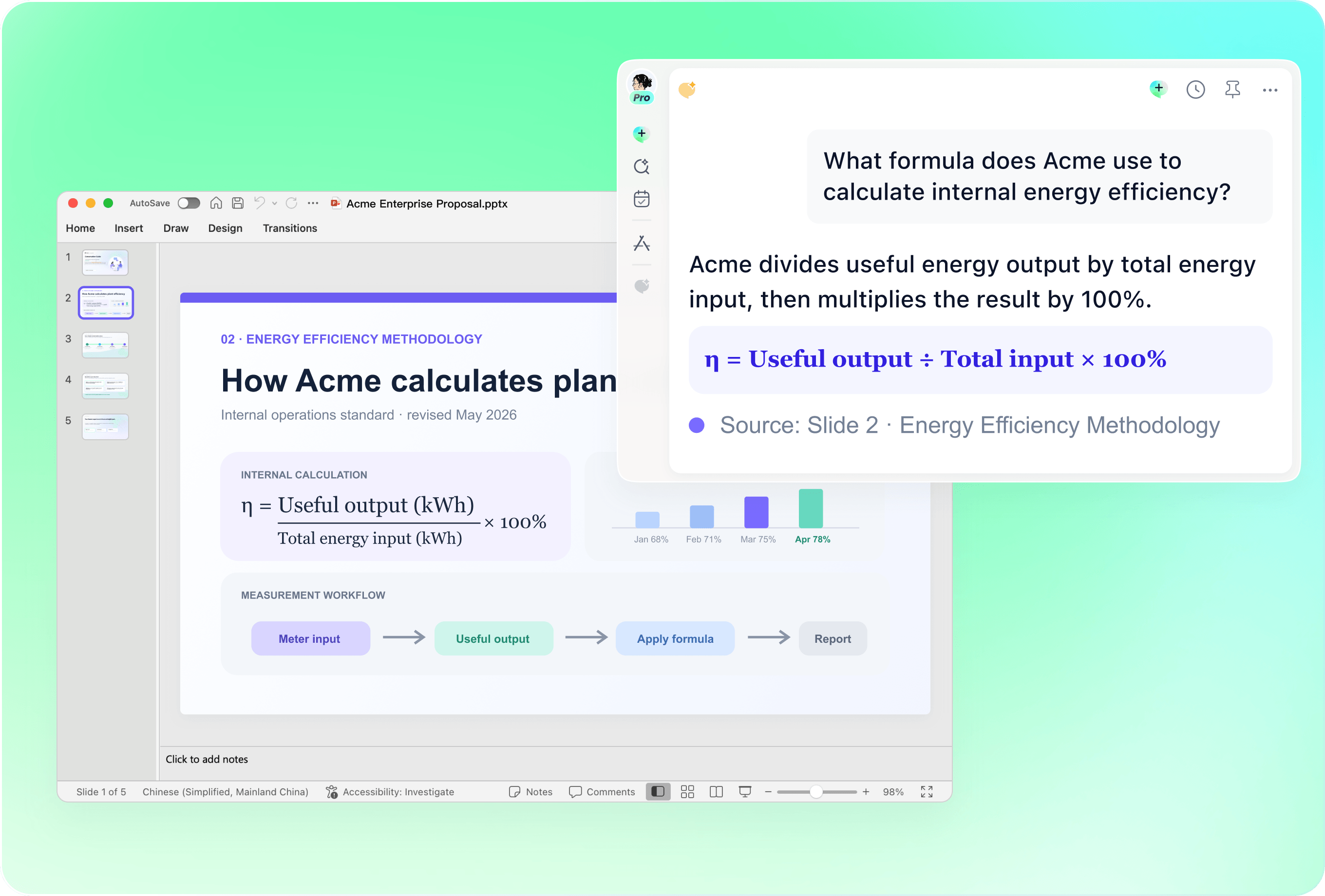
Verify figures before reviewing the design
Check selected sheets, totals, units, dates and missing values. Review how each chart or table represents the workbook. A generated presentation is not a live link to Excel, and you should verify the editability of any chart elements you plan to change later.

Explain what changed using work context
Combine the workbook with project notes and meeting context to explain the drivers behind the figures. Distinguish measured results from hypotheses. Ask remio to identify missing evidence rather than invent a reason for every change.
How it works
From source material to a PowerPoint file you can keep updating.
01
Add the workbook and reporting brief
Provide the relevant Excel file, sheets, period, metric definitions and audience.
02
Review the data and proposed narrative
Check totals and comparisons, then confirm which findings deserve a slide.
03
Build and check the PowerPoint
Create the .pptx, then verify numbers, chart labels, units and recommendations against the workbook.
FAQs
Yes. You can download remio and start for free. Some advanced usage may depend on your subscription plan, but you can try the AI presentation workflow before committing.
remio is designed as a local first app instead of a browser-only slide editor.
For AI presentations, this makes a real difference. Local file access helps remio parse documents faster, handle larger context, and better preserve PowerPoint structure, styles, and layouts. It also reduces the need to upload sensitive files into a browser-based tool.Use the relevant workbook together with metric definitions, reporting dates and project context. Specify which sheets and comparisons to use. Verify totals, units and the meaning of missing values before presenting. If you need an automatically updating Excel link, confirm that separately; a generated deck does not imply a live connection.
Yes. remio creates a native .pptx file from the start, not a presentation you have to export later. Every text box, layout, chart, and image stays editable in PowerPoint.
You can open it locally, edit it directly, and keep the same .pptx file from draft to final presentation.Not yet. remio currently focuses on native PowerPoint and .pptx workflows.
Keynote and Google Slides support are planned and will be added gradually.