top of page
remio AI Presentation workspace and source materials

Interview PPT templates

Prepare a focused interview presentation from your brief, CV and work examples. Shape the story with remio, then check the evidence and rehearse your delivery.

Desktop app for Windows 10+ (x64) and Apple silicon Macs.

Interview PPT templates

Prepare a focused interview presentation from your brief, CV and work examples. Shape the story with remio, then check the evidence and rehearse your delivery.

Desktop app for Windows 10+ (x64) and Apple silicon Macs.

Download remio
remio AI Presentation workspace and source materials

Interview PowerPoint Templates

Create an interview presentation from your brief, CV and work examples. Use remio to structure a job, case-study or research interview deck in editable PowerPoint.

Start with the interview brief

Start with the interview brief

Identify the role, the question you have been asked, the audience and the time available. A self-introduction, a case interview and a research interview need different evidence. Give remio the brief and your relevant materials before asking for an outline.
Build a story around your contribution

Build a story around your contribution

Choose work examples that connect your experience to the role. Explain the situation, what you personally did and the result, using figures you can substantiate. Keep a self-introduction selective: the deck should support your account of the work rather than repeat every line of your CV.

Make a case study easy to follow

Make a case study easy to follow

Separate the problem, evidence, assumptions, options and recommendation. Explain how you reached the conclusion and what you would test next. Add the case materials you are permitted to use; label illustrative figures clearly and keep them separate from actual results.

Use a professional visual structure

Use a professional visual structure

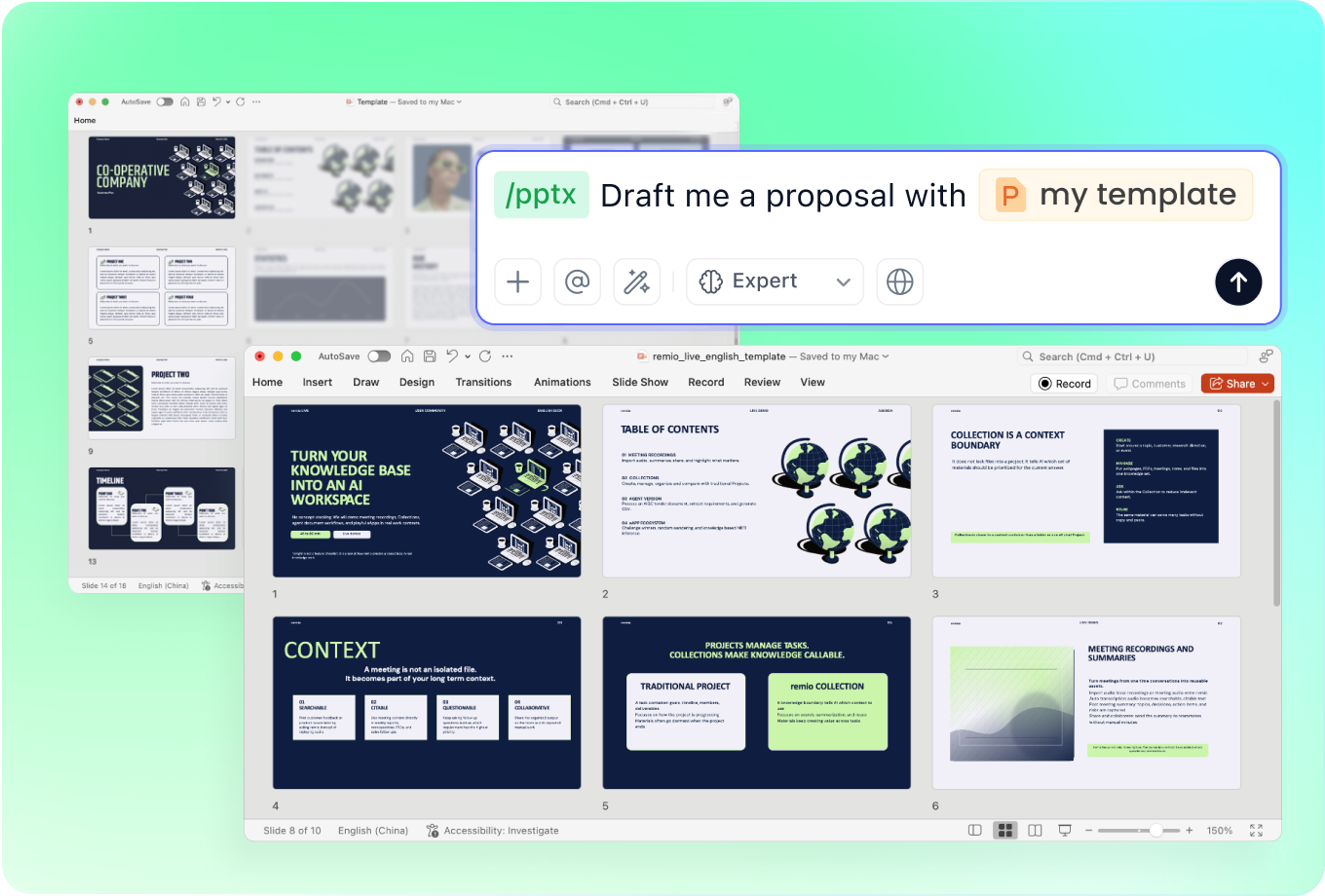
Keep headings, type sizes and visual emphasis consistent so the interviewer can follow the argument. If a presentation format or company deck has been supplied, add it alongside the brief and describe the changes needed. Review the resulting slides instead of assuming a template answers the question for you.

Refine the deck and rehearse

Refine the deck and rehearse

Use the editable PowerPoint to check the sequence, shorten crowded slides and prepare for likely follow-up questions. Rehearse against the actual time limit, including transitions and discussion. For a PhD or management interview, focus the closing on the research direction or leadership priorities relevant to the brief.

How it works

From source material to a PowerPoint file you can keep updating.

  1. Add the brief and examples

    Provide the role, question, audience, time limit and relevant work evidence.

  2. Shape your interview story

    Review the argument, examples, case reasoning and closing message.

  3. Refine and rehearse

    Check the slides, verify details and practice within the actual time limit.

FAQs

What should an interview presentation include?

Follow the interview brief first. A useful structure introduces your relevant experience, develops a small number of evidence-backed examples and closes by connecting your contribution to the role or question. A case interview may instead need a problem, analysis, options and recommendation.

How should I plan a ten-minute interview presentation?

Build an outline around the points you can explain clearly within the limit, then rehearse with a timer. Remove slides that do not support the central message and allow for the introduction, transitions and any required questions. Follow the interviewer’s instructions about length and slide count.

How do I present a case study or self-introduction?

For a case study, make the reasoning visible and distinguish evidence from assumptions. For a self-introduction, select the experiences most relevant to the role and explain your own contribution. Use examples you can discuss in detail rather than adding unsupported achievements.

Can I adapt the structure for a PhD or management interview?

Yes. For a research interview, emphasize the question, previous work, methods and proposed direction, with references where needed. For a management interview, emphasize decisions, team context, trade-offs and outcomes you can explain. Adapt the evidence and depth to the actual brief.

How do I prepare an interview deck with remio?

Download remio, add the interview brief, CV, relevant notes and work examples, and describe the presentation you need. Review the outline, refine the editable slides, verify details and rehearse before the interview.

Interview PowerPoint Templates

Create an interview presentation from your brief, CV and work examples. Use remio to structure a job, case-study or research interview deck in editable PowerPoint.

Start with the interview brief

Start with the interview brief

Identify the role, the question you have been asked, the audience and the time available. A self-introduction, a case interview and a research interview need different evidence. Give remio the brief and your relevant materials before asking for an outline.
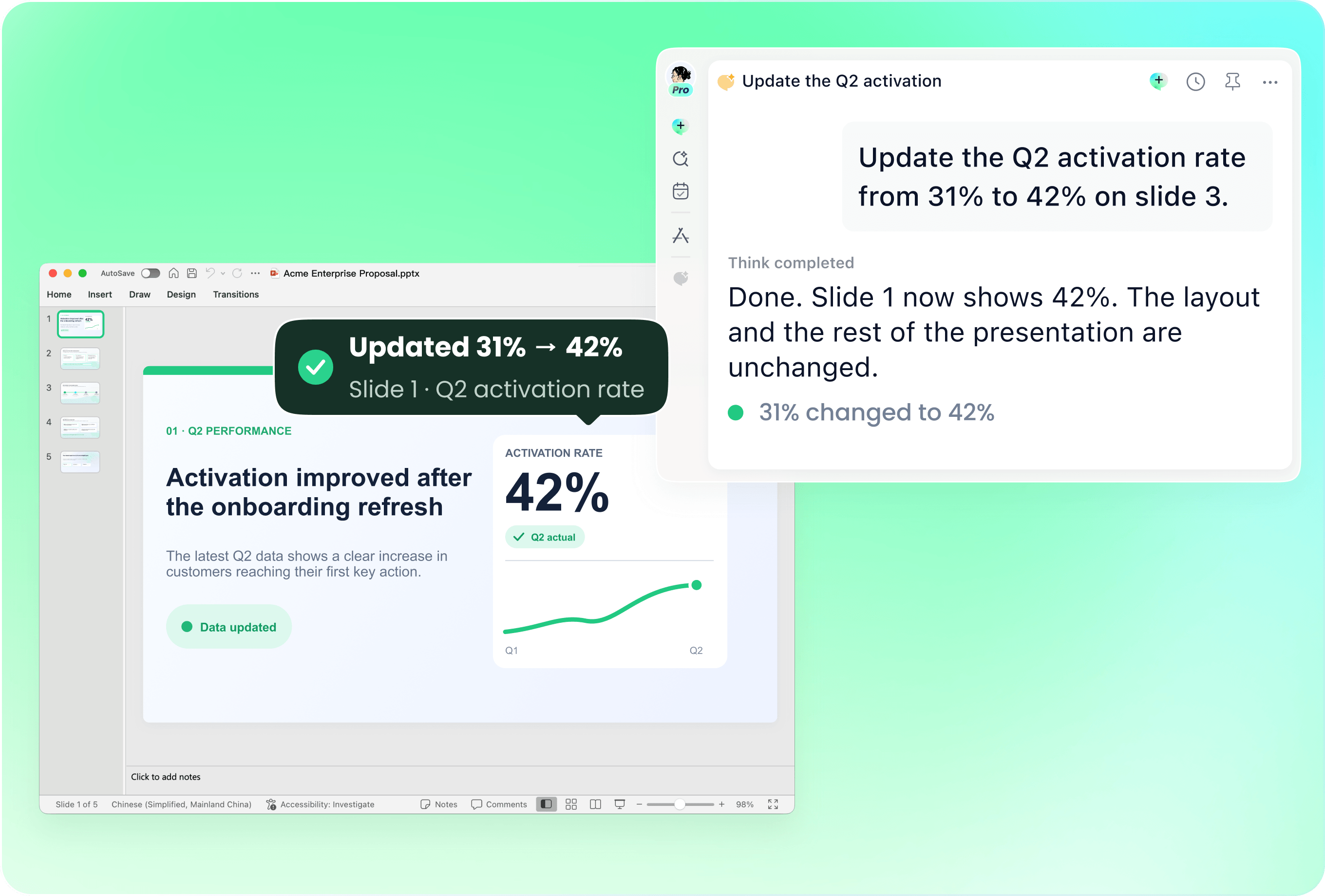
Build a story around your contribution

Build a story around your contribution

Choose work examples that connect your experience to the role. Explain the situation, what you personally did and the result, using figures you can substantiate. Keep a self-introduction selective: the deck should support your account of the work rather than repeat every line of your CV.

Make a case study easy to follow

Make a case study easy to follow

Separate the problem, evidence, assumptions, options and recommendation. Explain how you reached the conclusion and what you would test next. Add the case materials you are permitted to use; label illustrative figures clearly and keep them separate from actual results.

Use a professional visual structure

Use a professional visual structure

Keep headings, type sizes and visual emphasis consistent so the interviewer can follow the argument. If a presentation format or company deck has been supplied, add it alongside the brief and describe the changes needed. Review the resulting slides instead of assuming a template answers the question for you.

Refine the deck and rehearse

Refine the deck and rehearse

Use the editable PowerPoint to check the sequence, shorten crowded slides and prepare for likely follow-up questions. Rehearse against the actual time limit, including transitions and discussion. For a PhD or management interview, focus the closing on the research direction or leadership priorities relevant to the brief.

How it works

From source material to a PowerPoint file you can keep updating.

01

Add the brief and examples

Provide the role, question, audience, time limit and relevant work evidence.

02

Shape your interview story

Review the argument, examples, case reasoning and closing message.

03

Refine and rehearse

Check the slides, verify details and practice within the actual time limit.

FAQs

  • Follow the interview brief first. A useful structure introduces your relevant experience, develops a small number of evidence-backed examples and closes by connecting your contribution to the role or question. A case interview may instead need a problem, analysis, options and recommendation.

  • Build an outline around the points you can explain clearly within the limit, then rehearse with a timer. Remove slides that do not support the central message and allow for the introduction, transitions and any required questions. Follow the interviewer’s instructions about length and slide count.

  • For a case study, make the reasoning visible and distinguish evidence from assumptions. For a self-introduction, select the experiences most relevant to the role and explain your own contribution. Use examples you can discuss in detail rather than adding unsupported achievements.

  • Yes. For a research interview, emphasize the question, previous work, methods and proposed direction, with references where needed. For a management interview, emphasize decisions, team context, trade-offs and outcomes you can explain. Adapt the evidence and depth to the actual brief.

  • Download remio, add the interview brief, CV, relevant notes and work examples, and describe the presentation you need. Review the outline, refine the editable slides, verify details and rehearse before the interview.

FAQs

Follow the interview brief first. A useful structure introduces your relevant experience, develops a small number of evidence-backed examples and closes by connecting your contribution to the role or question. A case interview may instead need a problem, analysis, options and recommendation.

Build an outline around the points you can explain clearly within the limit, then rehearse with a timer. Remove slides that do not support the central message and allow for the introduction, transitions and any required questions. Follow the interviewer’s instructions about length and slide count.

For a case study, make the reasoning visible and distinguish evidence from assumptions. For a self-introduction, select the experiences most relevant to the role and explain your own contribution. Use examples you can discuss in detail rather than adding unsupported achievements.

Yes. For a research interview, emphasize the question, previous work, methods and proposed direction, with references where needed. For a management interview, emphasize decisions, team context, trade-offs and outcomes you can explain. Adapt the evidence and depth to the actual brief.

Download remio, add the interview brief, CV, relevant notes and work examples, and describe the presentation you need. Review the outline, refine the editable slides, verify details and rehearse before the interview.

bottom of page