
top of page
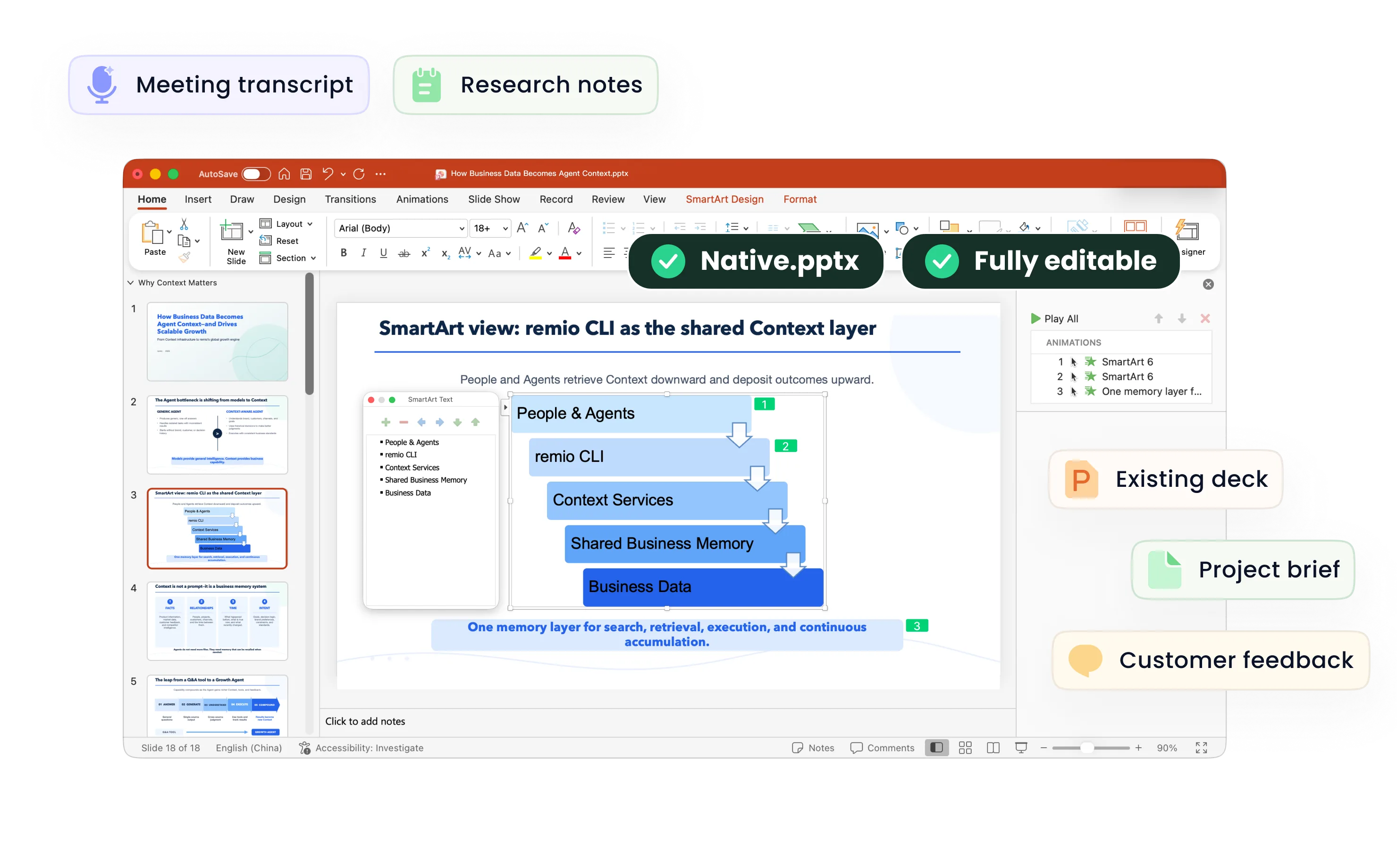
remio AI Presentation workspace and source materials

Science PPT templates

Present a scientific question, method and findings clearly. Bring reviewed notes and data into remio, then build an editable PowerPoint you can check and refine.

Desktop app for Windows 10+ (x64) and Apple silicon Macs.

Science PPT templates

Present a scientific question, method and findings clearly. Bring reviewed notes and data into remio, then build an editable PowerPoint you can check and refine.

Desktop app for Windows 10+ (x64) and Apple silicon Macs.

Download remio
remio AI Presentation workspace and source materials

Science PowerPoint Templates

Structure science presentations around a question, method, results and discussion. Build editable PowerPoint slides from your reviewed research material in remio.

State the question and scope

State the question and scope

Introduce the scientific question, hypothesis or objective and the background needed to understand it. Tell remio the audience, presentation length and subject. A biology presentation, chemistry lab report or physics explanation needs different terminology and visual detail.

Make the method understandable

Make the method understandable

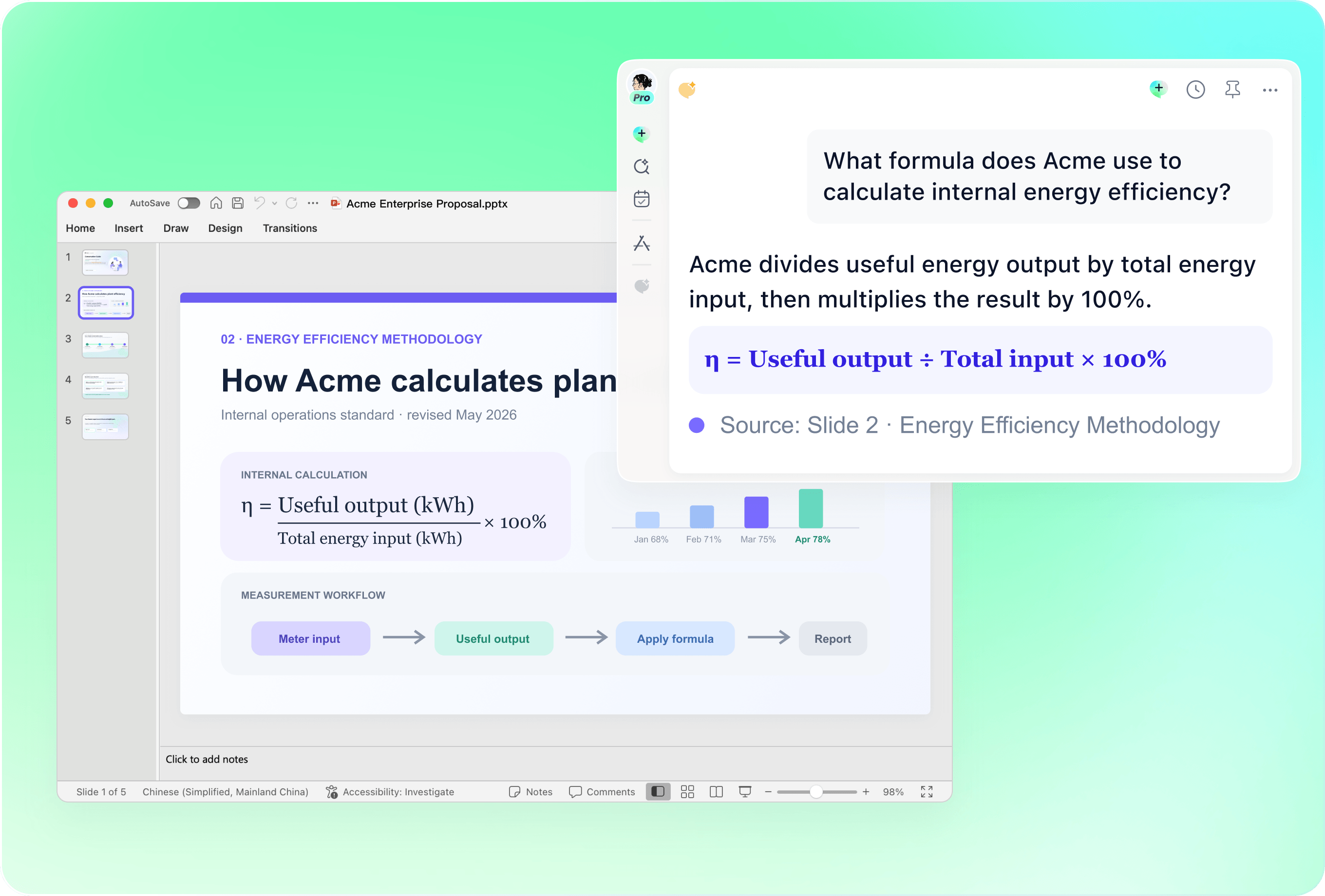
Explain the setup, procedure, variables and comparisons that matter to the question. For a science fair project, keep the sequence easy to follow without removing the controls or limitations needed to interpret the observations. Use diagrams only when they accurately reflect the work.

Show results without inventing them

Show results without inventing them

Add the reviewed results, tables and source notes you are allowed to use. Check chart labels, units, sample sizes and uncertainty against the actual data. Do not add invented measurements, p-values or claims of statistical significance to make the presentation look complete.

Separate findings from interpretation

Separate findings from interpretation

Describe what was observed before explaining what it might mean. Discuss alternative explanations, limitations and the questions still open. For environmental science, distinguish measurements from projections and identify the source and conditions behind each chart.

Finish with the evidence and next step

Finish with the evidence and next step

Return to the research objective, summarize the supported finding and state what further work is needed. Check equations, references, image credits and readability. When updating an existing deck, review that the revised results and conclusion remain consistent throughout.

How it works

From source material to a PowerPoint file you can keep updating.

  1. Add the question and material

    Provide the audience, objective, method, reviewed data and references.

  2. Organize the scientific explanation

    Review the background, method, results, discussion and conclusion.

  3. Check the evidence and visuals

    Verify calculations, chart labels, limitations and sources before presenting.

FAQs

What should a science presentation include?

A useful sequence is background, question or objective, method, results, discussion, conclusion and references. Adapt it to the work and audience. A conceptual physics explanation may not have experimental results; a research report should make its actual method and evidence clear.

Which science subjects can this structure support?

Use it for biology presentations, chemistry lab reports, physics explanations, environmental science, research findings and science fair projects. Provide the relevant terminology and reviewed material instead of relying on a generic template to supply scientific content.

How should I present scientific data?

Choose charts that match the question and actual data. Label axes and units, show the relevant sample size and uncertainty, and keep comparisons fair. A trend alone does not establish causation or statistical significance. Verify the chart against the original source.

Does remio validate results or statistical significance?

Use remio to organize the explanation and edit the slides. Verify the science, calculations, equations and statistical claims with the appropriate methods and original sources yourself. Do not treat generated wording as validation of an experiment or finding.

How do I create a science presentation with remio?

Download remio, add the question, audience, reviewed notes and data, and describe the presentation you need. Review the structure, refine the slides, verify every scientific claim and rehearse the explanation.

Science PowerPoint Templates

Structure science presentations around a question, method, results and discussion. Build editable PowerPoint slides from your reviewed research material in remio.

State the question and scope

State the question and scope

Introduce the scientific question, hypothesis or objective and the background needed to understand it. Tell remio the audience, presentation length and subject. A biology presentation, chemistry lab report or physics explanation needs different terminology and visual detail.

Make the method understandable

Make the method understandable

Explain the setup, procedure, variables and comparisons that matter to the question. For a science fair project, keep the sequence easy to follow without removing the controls or limitations needed to interpret the observations. Use diagrams only when they accurately reflect the work.

Show results without inventing them

Show results without inventing them

Add the reviewed results, tables and source notes you are allowed to use. Check chart labels, units, sample sizes and uncertainty against the actual data. Do not add invented measurements, p-values or claims of statistical significance to make the presentation look complete.

Separate findings from interpretation

Separate findings from interpretation

Describe what was observed before explaining what it might mean. Discuss alternative explanations, limitations and the questions still open. For environmental science, distinguish measurements from projections and identify the source and conditions behind each chart.

Finish with the evidence and next step

Finish with the evidence and next step

Return to the research objective, summarize the supported finding and state what further work is needed. Check equations, references, image credits and readability. When updating an existing deck, review that the revised results and conclusion remain consistent throughout.

How it works

From source material to a PowerPoint file you can keep updating.

01

Add the question and material

Provide the audience, objective, method, reviewed data and references.

02

Organize the scientific explanation

Review the background, method, results, discussion and conclusion.

03

Check the evidence and visuals

Verify calculations, chart labels, limitations and sources before presenting.

FAQs

  • A useful sequence is background, question or objective, method, results, discussion, conclusion and references. Adapt it to the work and audience. A conceptual physics explanation may not have experimental results; a research report should make its actual method and evidence clear.

  • Use it for biology presentations, chemistry lab reports, physics explanations, environmental science, research findings and science fair projects. Provide the relevant terminology and reviewed material instead of relying on a generic template to supply scientific content.

  • Choose charts that match the question and actual data. Label axes and units, show the relevant sample size and uncertainty, and keep comparisons fair. A trend alone does not establish causation or statistical significance. Verify the chart against the original source.

  • Use remio to organize the explanation and edit the slides. Verify the science, calculations, equations and statistical claims with the appropriate methods and original sources yourself. Do not treat generated wording as validation of an experiment or finding.

  • Download remio, add the question, audience, reviewed notes and data, and describe the presentation you need. Review the structure, refine the slides, verify every scientific claim and rehearse the explanation.

FAQs

A useful sequence is background, question or objective, method, results, discussion, conclusion and references. Adapt it to the work and audience. A conceptual physics explanation may not have experimental results; a research report should make its actual method and evidence clear.

Use it for biology presentations, chemistry lab reports, physics explanations, environmental science, research findings and science fair projects. Provide the relevant terminology and reviewed material instead of relying on a generic template to supply scientific content.

Choose charts that match the question and actual data. Label axes and units, show the relevant sample size and uncertainty, and keep comparisons fair. A trend alone does not establish causation or statistical significance. Verify the chart against the original source.

Use remio to organize the explanation and edit the slides. Verify the science, calculations, equations and statistical claims with the appropriate methods and original sources yourself. Do not treat generated wording as validation of an experiment or finding.

Download remio, add the question, audience, reviewed notes and data, and describe the presentation you need. Review the structure, refine the slides, verify every scientific claim and rehearse the explanation.

bottom of page