Microsoft Stock Drop: $357B Loss Amid AI Spending and Windows Issues


On January 29, 2026, Microsoft experienced its second-largest valuation collapse in history. The stock plummeted nearly 10%, erasing $357 billion in market cap in a single trading session. While the headlines are dominated by Wall Street's reaction to slowing Azure growth and ballooning AI capital expenditures, the story on the ground is different.
For the average user, the company’s struggle isn't about profit margins—it’s about a deteriorating product experience. Before we dissect the financial mechanics of this crash, we need to look at the technical reality driving user sentiment away from the ecosystem.
User Reality: Why Windows Frustration is Peaking

While investors worry about return on investment (ROI) for artificial intelligence, actual customers are wrestling with basic functionality. The disconnect between Microsoft’s high-altitude AI strategy and the ground-level user experience has never been wider.
The "Headphone Fix" and Driver Instability
Recent community discussions highlight a level of instability in Windows that feels reminiscent of the Windows 98 era. Users are reporting specific driver conflicts that cause entire applications to crash upon launch.
One prevalent issue involves audio drivers conflicting with specific application startup processes. A user-verified workaround—which frankly shouldn't exist in 2026—involves physically plugging in headphones to bridge the audio driver initialization, launching the app, and then unplugging them. If a trillion-dollar software ecosystem relies on users tricking the audio jack to launch a program, the foundation is cracking.
This isn't an isolated incident. There are reports of persistent profile corruption where Windows automatically logs users out, eventually corrupting the user profile entirely. The only working solution for many has been abandoning their primary account and creating a new local user, migrating data manually.
The Printer Menu Inconsistency
Basic utilities are also suffering from a lack of quality control. The printing interface in Windows has become fragmented. Depending on which application you are printing from, Windows now summons different versions of the print dialogue—some legacy, some "modern."
Worse, settings retention has broken for many. Users configuring preferences for a specific print job find those settings reset immediately after the job completes, forcing a reconfiguration every single time. It destroys workflow efficiency for office workers who rely on consistent output settings.
Microsoft Stock Drop Context: The Linux Migration
This technical debt is having a tangible impact on user retention. The Microsoft stock drop might be financial, but the user drop is operational. The introduction of "Microsoft Recall"—a feature that takes constant snapshots of user activity—became the breaking point for privacy-conscious users.
Combined with the maturity of the Steam Deck and Proton compatibility layers, gaming on Linux is no longer a hurdle. Users who switched to Linux in early 2026 report an "out of the box" experience for gaming that requires almost no terminal configuration. The narrative that you must stay on Windows for games is dead.
Financial Analysis: Behind the $357 Billion Loss

Shifting from the product to the finances, the Microsoft stock drop on January 29 was triggered by a specific set of numbers released in the fiscal Q2 2026 earnings report.
Azure Growth vs. Capex Shock
The numbers tell a story of diminishing returns. Microsoft reported Q2 revenue of $81.7 billion and an EPS of $4.14, actually beating analyst estimates. Under normal circumstances, this would raise the stock price.
The crash happened because of the cost required to generate that revenue.
Capital Expenditure (Capex): Spending surged 66% year-over-year to a record $37.5 billion.
Azure Growth: Slowed to roughly 39%, missing the "whisper numbers" (informal expectations) of 40%+.
The market's reaction was swift. Investors saw Microsoft spending nearly $40 billion in three months to build AI data centers, only to see cloud growth deceleration. Mizuho analysts have since labeled the stock "dead money" until Azure growth creates a convincing U-turn back above that 40% threshold.
The Hardware Bottleneck
A critical detail often missed is why Azure slowed down. It wasn't necessarily a lack of demand, but a lack of capacity. Microsoft management revealed they are prioritizing their limited supply of GPUs for internal AI model training and research rather than renting them out to Azure customers.
They are betting the farm on future AI capabilities at the expense of current cloud revenue. This internal resource hoarding creates a ceiling on how much money Azure can make right now, spooking investors who want immediate returns on that massive Capex spend.
The DeepSeek Effect and Market Psychology

You cannot explain the 2026 Microsoft stock drop without looking at the broader industry context, specifically the "DeepSeek Effect."
In 2025, the release of DeepSeek's low-cost models shattered the assumption that you need infinite money to build good AI. When a competitor delivers comparable performance for a fraction of the training cost, the market begins to question the valuation of companies spending $37.5 billion a quarter on infrastructure.
This skepticism was the dry timber; the earnings report was the match. The market is currently re-evaluating the entire valuation logic of Big Tech. If AI intelligence becomes a commodity driven by efficiency rather than brute-force spending, Microsoft's massive moat of cash and servers becomes less of an advantage and more of a liability (depreciating assets).
User Needs: What the Market Actually Wants
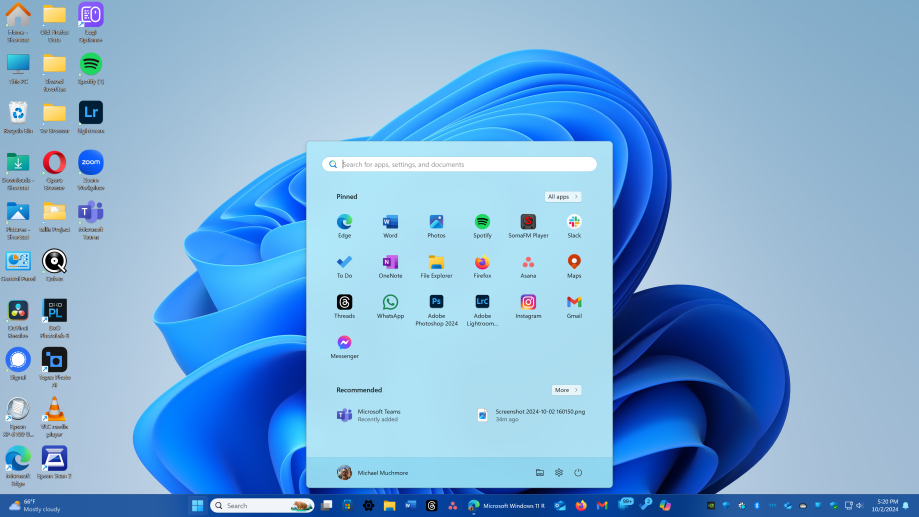
While Microsoft pours billions into Copilot and data centers to recover its stock price, the Microsoft stock drop discussions have revealed what their core user base actually wants. It isn't more AI.
The Demand for "Lite" Software
There is a clear demand for a "Word Lite." Users are asking for a stripped-down, web-based, or lightweight local version of text processing that opens instantly and doesn't carry the bloat of the full Office suite.
Similarly, the PDF experience on Windows remains subpar. Users are clamoring for a high-quality, native PDF reader/editor that integrates cleanly with Word without requiring expensive third-party subscriptions or buggy browser plugins.
Pure OS and Cheap VMs
The developer community has signaled a desire for low-cost entry points into the Azure ecosystem. A specific request is for a "nearly free" single-instance Virtual Machine (VM)—a sandbox for students and hobbyists. This used to be the classic "drug dealer" strategy of tech: get them hooked on the cheap stuff so they pay for the enterprise tier later. By making Azure expensive and complex, Microsoft is losing the next generation of developers to cheaper, simpler cloud providers.
Regarding the OS, the feedback is consistent: Remove the ads. Remove the forced Copilot integrations. Users want a clean, quiet workspace. The irony is that Microsoft could likely improve sentiment significantly just by offering a "Pro" version of Windows that guarantees zero upsells, even if they charged more for it.
The Disconnect
The events of January 2026 highlight a dangerous bifurcation. On one side, you have a company obsessively focused on winning the AGI race, spending historic amounts of money on GPUs and energy. On the other side, you have a user base struggling to print documents and workaround audio driver crashes.
The Microsoft stock drop serves as a reality check. Valuation cannot indefinitely decouple from the quality of the core product. When your power users are migrating to Linux because they feel respected there, and your investors are fleeing because your spending seems unchecked, you are fighting a war on two fronts.
Recovery requires more than just pushing Azure growth back to 40%. It requires stabilizing the platform that gave Microsoft its monopoly in the first place. Until Windows works reliably and Azure delivers clear margins, the volatility is here to stay.
FAQ: Microsoft Stock Drop and Technical Issues

Why did Microsoft stock drop on January 29, 2026?
The stock dropped approximately 10% because investors were spooked by a 66% increase in capital expenditures (mostly AI spending) combined with slowing growth in the Azure cloud division. The market is concerned that the massive cost of building AI infrastructure is not generating returns fast enough.
What is the "Headphone Fix" for Windows crashes?
This is a user-discovered workaround for a specific Windows driver bug where apps crash on startup. Users found that plugging in headphones before launching the app forces the audio driver to initialize correctly, preventing the crash.
How does the "DeepSeek Effect" impact Microsoft?
The "DeepSeek Effect" refers to the market realization that high-quality AI models can be built at a much lower cost than previously thought. This challenges Microsoft's strategy of spending tens of billions on hardware, leading investors to downgrade the stock's value.
Are users really switching from Windows to Linux?
Yes, a growing segment of power users and gamers are migrating to Linux, cited by the maturity of the Steam Deck and privacy concerns regarding Microsoft Recall. Recent feedback indicates that gaming on Linux is now largely "plug-and-play" for many titles.
What are the main complaints about Windows currently?
Beyond privacy concerns with Recall, users cite inconsistent user interfaces (specifically printer menus), corrupted user profiles forcing account resets, and intrusive ads or "upsells" for Copilot within the operating system.
Is Azure growth slowing down?
Yes. In the Q2 2026 earnings, Azure growth clocked in around 39%, which was below the 40%+ expectations of many investors. This deceleration is partly because Microsoft is using its limited GPU supply for internal research rather than renting it to customers.


