New Google AI Studio Terms Ban Consumer Use: The Developer Pivot


The ecosystem for power users just got tighter. A quiet but significant update to the Google AI Studio terms has drawn a hard line in the sand: the platform is now strictly for developers building for professional or commercial purposes. The explicit addition of language stating the service is "not for consumer use" signals a shift in how Google intends to separate its mass-market chatbot, the Gemini App, from its workbench tools.
This change isn't just semantics. It carries implications for data privacy, account security, and the future of free access to Google’s most capable models. For the thousands of enthusiasts who migrated to AI Studio to escape the limitations of the consumer app, this update demands a change in strategy.
Navigating Google AI Studio Terms: User Experience & Solutions

Before dissecting the legal text, we need to address the immediate reality for users. Many people have abandoned the standard Gemini App in favor of AI Studio. The reasoning is sound: the consumer app often feels lobotomized. It imposes heavy safety filters, refuses to edit history, and lacks the system instruction capabilities that power users need to get precise outputs.
Under the new Google AI Studio terms, continuing to use the platform as a personal playground technically violates the agreement. However, the functionality hasn't disappeared—the legal classification has just changed.
Why Power Users Prefer the Studio
The discrepancy between the two platforms is stark. In the Gemini App, a user is at the mercy of opaque system prompts that often rewrite queries or refuse requests based on "vibe." In AI Studio, you control the temperature, the top-K sampling, and most importantly, the System Prompt. This allows for raw, unfiltered logic that the consumer app blocks.
Users report that the "dumbed down" nature of the main app makes it unusable for complex logical tasks or coding, driving them to the Studio. Now, the Google AI Studio terms force a decision: comply with the "professional use" definition or risk losing access.
The Fix: Professionalize Your Usage
If you are using AI Studio because you value data privacy and control, you need to legitimize your usage. The terms distinguish heavily between "Unpaid Services" and "Paid Services."
Link a Cloud Billing Account: This is the single most effective step. By associating your project with a Google Cloud billing account, you move from the "Unpaid" tier (where data is harvested) to the "Paid" tier.
Disable Training: Under the paid tier, the Google AI Studio terms guarantee that your inputs and outputs are not used to train Google’s models. This aligns with professional confidentiality requirements.
Treat It Like a Tool: If Google is reviewing accounts for "consumer" behavior, usage patterns matter. High-frequency, low-latency requests typical of API testing look different from long, rambling chats about personal feelings.
Decoding the New Google AI Studio Terms
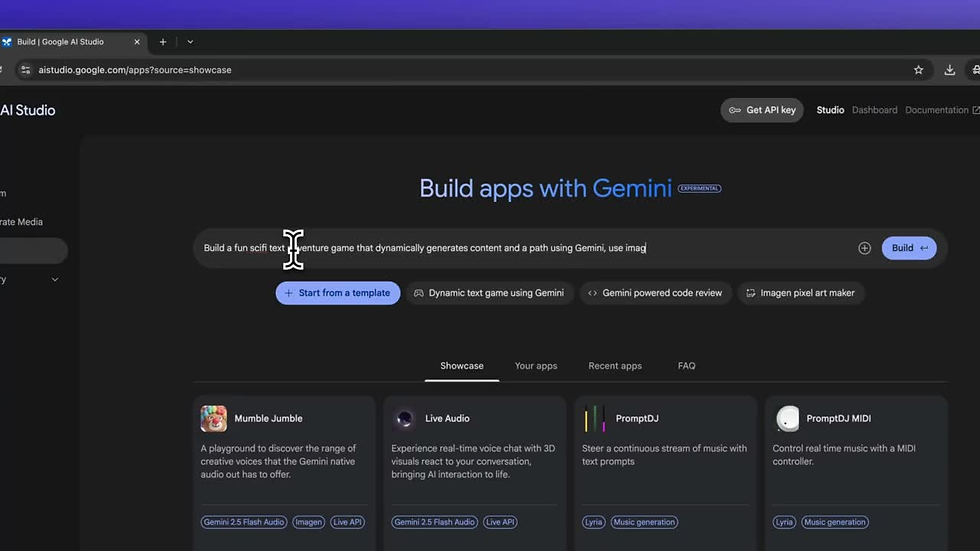
The core update is a restriction on who belongs on the platform. Google has updated the definition of authorized users to exclude general consumers.
The "Professional Purpose" Mandate in Google AI Studio Terms
The updated text explicitly states that AI Studio and the Gemini API are for "developing for professional or commercial purposes." This is a departure from previous iterations where the line was blurred.
By framing the service this way, Google creates a legal buffer. They are no longer offering a consumer product subject to certain consumer protection laws in various jurisdictions; they are offering a B2B tool. This likely helps them navigate compliance landscapes like the EU’s GDPR or California’s CCPA by categorizing the user base as business entities rather than individuals.
For the user, this means the safety nets are gone. If you use the API for personal medical advice (which is explicitly banned in the terms) or general entertainment, you are operating outside the scope of the license.
Age and Usage Restrictions
The terms reinforce an 18+ age requirement. More interestingly, they double down on specific prohibited uses, such as generating content for clinical practice. This isn't just about liability; it's about the conditioning of the model. Google seems intent on preventing the Studio from being used as a "black box" oracle for high-stakes personal decisions.
Privacy Risks Under the Updated Google AI Studio Terms
The most critical part of the document for any user—developer or otherwise—is the section on data handling. The Google AI Studio terms bifurcate privacy based on payment status.
Google AI Studio Terms on Unpaid vs. Paid Projects
If you are using the free tier of the Gemini API or AI Studio without a billing account, you are the product. The terms are clear: Google uses content from unpaid services to "improve machine learning models." This includes your prompts, the model's responses, and any uploaded files.
Furthermore, human review is part of this process. De-identified data can be read by human annotators to refine the model’s safety and accuracy. For a developer testing proprietary code or a writer drafting a novel, this is a dealbreaker. The "consumer" who uses the free tier for personal journaling is essentially publishing their diary to Google’s training cluster.
The Google AI Studio terms provide an escape hatch: Paid Services. Once you enable pay-as-you-go billing, the terms shift. Google "will not use" data from paid projects for training. For businesses, this is the only viable way to use the platform. For individual power users, this creates a "privacy tax"—you must be willing to pay (even pennies) to ensure your data remains yours.
Why Google AI Studio Terms Are Pushing Consumers Out

This shift isn't accidental. It solves a specific product strategy problem for Google.
Differentiation of Services
Google has a monetization problem. They sell Gemini Advanced subscriptions to consumers, but the free AI Studio often provided a superior experience for zero cost. By changing the Google AI Studio terms, Google is trying to close the loophole. They want consumers in the subscription app (where they can control the ecosystem and data) and developers in the API (where they pay for tokens).
Regulatory Compliance and Google AI Studio Terms
Classifying the tool as "developer-only" simplifies regulatory compliance. Consumer AI products are under a microscope regarding bias, safety, and addiction. Developer tools, however, are viewed as raw infrastructure. By declaring the Studio "not for consumer use," Google shifts the burden of responsible AI deployment onto the user. If you build a harmful chatbot using their API, the terms allow them to say you violated the professional usage policy, distancing the company from the output.
Conclusion
The era of Google AI Studio as a "secret" free chatbot is ending—not necessarily because the software has changed, but because the rules have. The new Google AI Studio terms draw a sharp border between the consumer and the builder.
If you value the control and raw power of the Studio, you can no longer be a passive user. You must adopt the posture of a developer: enable billing to protect your privacy, understand the liability you carry, and stop expecting the hand-holding of a consumer app. The tool remains powerful, but the free ride on privacy is over.
Frequently Asked Questions
1. Can I still use Google AI Studio for free under the new terms?
Yes, the free tier still exists, but the terms now restrict it to professional or development use. Additionally, data generated in the free tier can be used by Google to train its models and may be subject to human review.
2. How do I stop Google from training on my AI Studio data?
You must link a Google Cloud Project with an active billing account to your AI Studio usage. The Google AI Studio terms state that content from "Paid Services" is not used to improve their machine learning products.
3. What is the difference between Gemini Advanced and AI Studio?
Gemini Advanced is a consumer-facing product with a simplified interface, built-in safety rails, and integrated Google Workspace features. AI Studio is a developer workbench allowing for parameter tuning (temperature, top-k), system prompting, and direct API access, now strictly designated for non-consumer use.
4. Will Google ban me if I use AI Studio for personal tasks?
While immediate bans are rare, violating the "non-consumer use" clause gives Google the right to suspend your account at any time. Persistent use of the API for prohibited activities, or hitting usage limits typical of consumer botting, increases this risk.
5. Does the age limit apply to the API if I am a student developer?
Yes, the terms require all users to be 18 years or older. This applies regardless of whether the usage is educational or commercial; minors are technically prohibited from agreeing to the binding developer terms.


