OpenRouter vs Claude Direct API: AIアプリをスケーリングするための利点と欠点
- Aisha Washington

- 6月7日
- 読了時間: 11分
Lead Section: OpenRouter vs Claude Direct API—What’s the Best API for Scalable AI Apps?
In the rapidly evolving landscape of AI application development, choosing the right large language model (LLM) API is a critical decision that influences scalability, cost-efficiency, and performance. Two prominent options stand out: OpenRouter and Claude Direct API.
OpenRouter is a unified API layer that aggregates access to over 100 LLMs from various providers such as Anthropic, OpenAI, and Google. It offers developers a single integration point to switch between models seamlessly, simplifying multi-vendor management and enabling flexible, cost-effective AI application scaling.
In contrast, Claude Direct API is Anthropic’s official gateway designed for dedicated, high-performance access to their suite of Claude models—including Opus, Sonnet, and Haiku. It focuses on providing optimized throughput, lower latency, and immediate access to the latest Claude features.
With AI app demand surging across industries—from startups innovating with AI tutors to enterprises automating complex workflows—understanding the trade-offs between a flexible model router like OpenRouter versus a dedicated model API like Claude Direct is essential. These architectural choices impact not only scalability and performance but also cost management and long-term vendor relationships.
This article dives deep into the technical and strategic pros and cons of both APIs for scaling AI applications. We’ll explore core features, pricing models, real-world use cases, and industry trends to help you select the right API strategy for your AI projects.
Background: Understanding Modern LLM API Access
What is an API?
An Application Programming Interface (API) is a set of protocols that enables software applications to communicate with each other. In the context of AI development, APIs provide developers with programmatic access to large language models (LLMs) hosted by cloud providers. By sending prompts and receiving generated responses over HTTP calls—often via RESTful APIs—developers integrate advanced NLP capabilities into their products without hosting models themselves.
RESTful APIs for LLMs typically involve:
Endpoints where requests are sent
Authentication tokens for secure access
JSON payloads specifying prompts and parameters
Response objects containing model-generated text
This architecture allows rapid iteration and integration of AI into diverse applications such as chatbots, AI tools, or data analysis platforms.
Unified API Aggregators vs. Direct Model APIs
Historically, developers integrated directly with single-provider LLM APIs (e.g., OpenAI’s GPT or Anthropic’s Claude). However, the proliferation of providers and models has led to complexity in managing multiple integrations, billing systems, and differing rate limits.
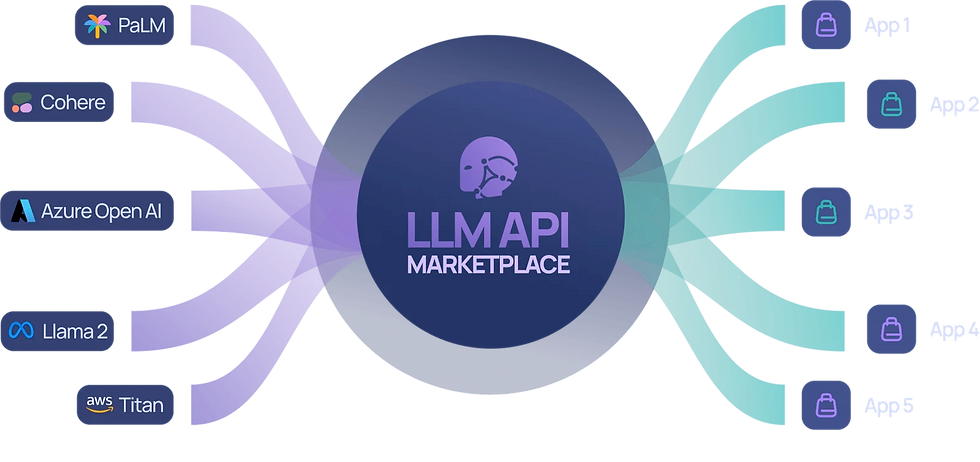
This challenge birthed unified API aggregators like OpenRouter—platforms that consolidate access to many LLMs behind one standardized interface. Developers can switch models dynamically by adjusting an API parameter rather than rewriting client code or managing multiple credentials.
Unified aggregators promote:
Model flexibility: Access dozens of models with one integration.
Cost optimization: Route traffic based on cost-performance trade-offs.
Simplified billing: Unified invoicing across vendors.
In contrast, direct model APIs like Claude Direct offer dedicated connections optimized for a single provider’s models. This often yields better latency, guaranteed feature parity, and enterprise-grade support but at the expense of multi-model flexibility.
The choice between these approaches hinges on your application’s priorities regarding scalability, performance, cost, and vendor lock-in risk.
Section 1: Core Features—OpenRouter and Claude Direct API Compared
1.1 OpenRouter: Unified LLM API Access
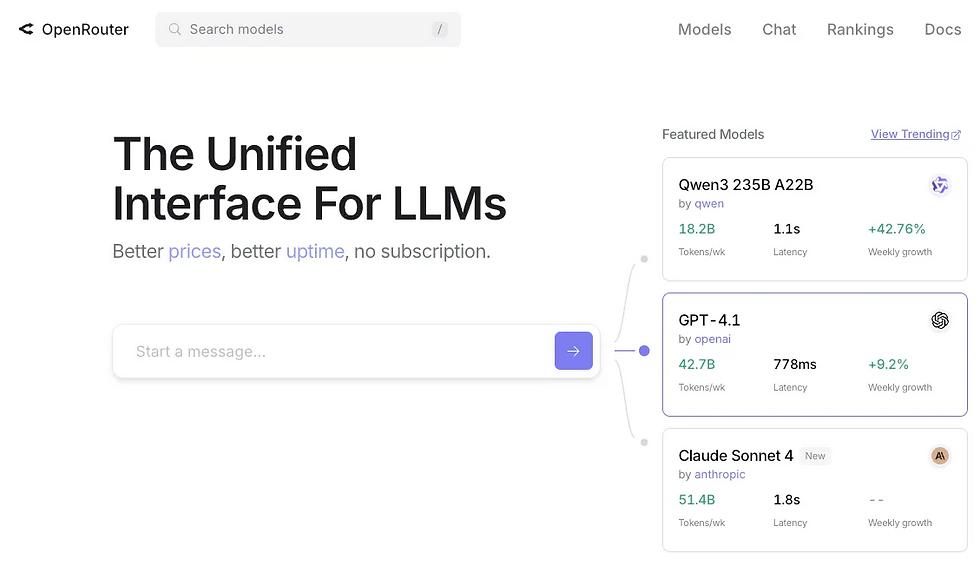
OpenRouter functions as a single endpoint aggregating over 100 LLMs from providers including Anthropic’s Claude, OpenAI’s GPT series, Google’s PaLM models, and others. Its core appeal lies in model flexibility through simple API parameters, enabling developers to route requests dynamically without modifying underlying codebases.
Key capabilities include:
Unified billing: Developers receive a consolidated invoice regardless of which provider’s model was used.
Model switching: An API parameter controls which LLM processes each request; this facilitates A/B testing or fallback strategies.
Centralized quota management: Rate limits and throughput are managed under one umbrella.
Multi-cloud support: Access models running on different clouds or infrastructures transparently.
OpenRouter simplifies complex multi-provider ecosystems into a cohesive experience. This makes it ideal for teams seeking broad experimentation or cost optimization without committing to single vendors upfront.
“OpenRouter reduces overhead by abstracting away provider-specific nuances into one standardized interface.” — Developer experience study
OpenRouter Official Documentation provides hands-on examples showcasing quick integration and multi-model usage.
1.2 Claude Direct API: Dedicated Claude Model Access
The Claude Direct API provides exclusive access to Anthropic’s Claude family of models such as Opus (optimized for chat), Sonnet (creative writing), and Haiku (concise summarization). This direct connection to Anthropic’s backend ensures:
Lower latency: Network paths and compute resources are optimized for faster response times.
Immediate access to new features: Latest model improvements are available as soon as they are released.
Enterprise-grade SLAs: Customized rate limits, uptime guarantees, and dedicated support.
Expanded context windows: Larger input sizes for complex tasks compared to typical aggregator limits.
The Claude Direct API is tailored for applications requiring consistent high throughput, predictable performance, and tight integration with Anthropic’s evolving roadmap.
“For mission-critical AI apps where reliability and feature parity are paramount, direct APIs like Claude Direct remain indispensable.” — Industry analyst report
Section 2: Pros and Cons for Scaling AI Applications
2.1 OpenRouter: Advantages for Scalability
OpenRouter’s flexibility offers significant advantages when scaling AI applications:
Model Flexibility: Developers can instantly switch between any supported model by adjusting parameters in API calls. This facilitates:
A/B testing different LLMs for quality or latency
Fallback mechanisms if a preferred model is temporarily unavailable
Multi-tiered service offerings using cheaper or more powerful models dynamically
Cost Management: By routing non-critical queries to less expensive models (e.g., open-source or smaller-scale LLMs), teams optimize operational expenses while reserving premium models for high-value tasks.
Simplified Integration: Only one integration is needed regardless of how many providers or models are used. This reduces engineering overhead during development and maintenance.
Billing Consolidation: Organizations benefit from receiving a single invoice that consolidates costs across providers, simplifying accounting and forecasting.
These features make OpenRouter particularly attractive for startups or projects experimenting with multiple LLMs without incurring heavy integration costs.
“OpenRouter’s model routing enables granular control over cost-performance trade-offs critical at scale.” — Tech industry whitepaper
2.2 OpenRouter: Limitations and Trade-Offs
Despite its benefits, OpenRouter introduces some challenges:
Added Latency: There is an inherent overhead of approximately 50–150 milliseconds per request due to the additional routing layer. While this is modest for many apps, latency-sensitive applications may feel the impact.
Potential Reliability Issues: As a third-party intermediary, OpenRouter depends on its own uptime and may face outages or breaking changes from underlying providers that propagate through the service.
Indirect Model Access: Users may experience delays in gaining access to the absolute latest features released by providers since OpenRouter must integrate them first.
These factors introduce trade-offs that teams must consider when prioritizing performance or control over flexibility.
2.3 Claude Direct API: Advantages for Scaling
Choosing the Claude Direct API brings several compelling benefits:
Lowest Latency: Direct integration delivers around ~800ms response times with minimal overhead—essential for interactive applications demanding quick turnarounds.
Dedicated Support & Rate Limits: Enterprises can negotiate custom rate limits (requests per minute), ensuring predictable throughput during peak loads along with priority customer support.
Direct Feature Access: Immediate availability of the newest Claude capabilities enables competitive differentiation through cutting-edge NLP functionalities.
This makes Claude Direct ideal for organizations whose primary concern is reliable performance coupled with advanced feature sets within the Anthropic ecosystem.
2.4 Claude Direct API: Limitations and Trade-Offs
However, some constraints exist:
Vendor Lock-in: Committing to Anthropic exclusively can complicate future migrations to other providers or multi-vendor strategies.
Limited Flexibility: Only Claude models are accessible; no option to switch to other LLMs within the same integration.
Engineering Overhead: Supporting integrations across multiple direct APIs increases maintenance burden compared to a unified aggregator approach.
These limitations make it less suitable for teams valuing agility or experimenting with diverse models across providers.
Section 3: Pricing, Performance, and Rate Limits—A Data-Driven Comparison

3.1 Pricing Breakdown
Feature | ||
|---|---|---|
Input Tokens | $3 per 1M tokens | ~$3.05 per 1M tokens |
Output Tokens | $15 per 1M tokens | ~$15.25 per 1M tokens |
Routing Fee | None | Small overhead (~0.5%) |
While prices are roughly comparable, OpenRouter adds a marginal routing fee reflecting its value-added service layer. This overhead is generally offset by savings from multi-model flexibility enabling cost optimization strategies.
3.2 Rate Limits and Throughput
Claude Direct offers customizable rate limits based on enterprise contracts—allowing high throughput scaling with guaranteed SLAs. Conversely, OpenRouter applies unified limits across all integrated providers which typically start lower but can be scaled with plans.
Enterprise users needing guaranteed request volumes may prefer direct APIs for this reason; however, OpenRouter’s aggregated quota simplifies multi-vendor capacity planning.
3.3 Latency and Model Availability
Latency comparisons highlight:
Metric | Claude Direct API | OpenRouter |
|---|---|---|
Latency (P95) | ~800ms | ~850–950ms (includes routing overhead) |
Model Availability | Only Claude Models | 100+ Models from multiple providers |
Applications demanding lowest possible latency may favor Claude Direct; those prioritizing broad model choice can leverage OpenRouter’s extensive catalog despite slight latency increases.
Section 4: Use Cases and Real-World Scenarios

4.1 Startup Scenario: Flexibility at Scale
Consider AI-Tutor, an edtech startup scaling its user base by 300% over six months. They leveraged OpenRouter’s model routing to optimize costs by:
Using cheaper open-source models for basic queries
Routing complex tutoring sessions to Anthropic’s Claude models
Implementing fallback logic to maintain uptime during provider outages
This allowed tiered pricing plans catering to different user segments without multiple codebases or billing complexities.
“OpenRouter enabled us to experiment rapidly while controlling costs—a must-have during hypergrowth.” — CTO of AI-Tutor
4.2 Enterprise Scenario: Specialization and Performance
HealthData Corp, a healthcare analytics company processing sensitive patient data, chose Claude Direct API for:
Guaranteed throughput under contract SLAs
Advanced contextual capabilities needed for clinical documentation
Compliance assurances through direct vendor engagement
Dedicated support from Anthropic for troubleshooting high-stakes issues
For HealthData Corp., performance consistency and compliance outweighed the benefits of multi-model flexibility.
4.3 Hybrid Approaches
Several organizations blend both strategies:
Use OpenRouter for exploratory or low-priority workloads
Reserve Claude Direct API for core features requiring highest reliability
Abstract calls via middleware enabling seamless switching based on load or cost
This hybrid approach balances resilience with agility in evolving AI stacks.
Section 5: Industry Trends—Model Diversification and API Strategy
5.1 Rise of Model Routing and Aggregators
The explosion of LLM providers has led many companies towards unified APIs like OpenRouter to hedge against vendor lock-in risks while tapping into diverse model capabilities. Analysts highlight this as a growing trend driven by:
Increased competition among providers
Demand for cost-effective multi-model experimentation
Need for simplified integrations amid complexity
5.2 Direct API Integrations for Enterprises
Conversely, large enterprises still heavily invest in direct API integrations due to:
Custom contract negotiations offering volume discounts
Compliance requirements necessitating direct vendor accountability
Dedicated support channels critical for mission-critical deployments
Direct APIs remain a strategic choice where predictability and governance trump flexibility.
Section 6: Overcoming Challenges—Vendor Lock-In, Cost, and Performance

6.1 Vendor Lock-In and Future Flexibility
ベンダーロックインは将来の俊敏性を制約します。Claude Directの独占使用からの移行は、独自のフォーマットや機能により、コストと時間がかかる可能性があります。
このリスクを軽減するために:
特定のベンダーAPIからアプリを分離する抽象化レイヤー(例: OpenRouter)を実装します。
ビジネスロジックを書き換えることなく、基盤となるLLMプロバイダーを切り替えられるモジュール式のコードベースを設計します。
このアプローチにより、今日の最高クラスのモデルを活用しつつ、将来の柔軟性を維持できます。
6.2 大規模でのコスト管理
Anthropic Opusのようなプレミアムモデルのみでスケーリングすると、ボリュームが増えると法外に高額になる可能性があります。
コスト削減の戦術には以下が含まれます:
重要でないクエリや探索的なクエリを、OpenRouter経由で安価なオープンソースまたは下位 tier のモデルにルーティングします。
分析ダッシュボードでトークン消費を綿密に監視します。
予算制約に合わせた使用上限を設定します。
このような戦略により、急成長期に品質と手頃さをバランスさせます。
6.3 信頼性とアップタイム
ミッションクリティカルなアプリケーションの場合:
障害時にリクエストを代替モデル/APIに自動的に再ルーティングするフォールバックメカニズムを確立します。
アップストリームプロバイダーのステータスを監視するヘルスチェックを採用します。
一時的な問題を適切に処理するために、指数バックオフ付きのリトライロジックを使用します。
これらのプラクティスにより、外部サービスへの依存にもかかわらず、継続的なアップタイムを確保します。
セクション 7: 実装ガイド—APIの統合と切り替え
7.1 OpenRouterの開始
OpenRouterを統合するには:
OpenRouterプラットフォームからAPIキーを取得します。
from openai import OpenAI

client = OpenAI(
  base_url="https://openrouter.ai/api/v1",
  api_key="<OPENROUTER_API_KEY>",
)

completion = client.chat.completions.create(
  extra_headers={
    "HTTP-Referer": "<YOUR_SITE_URL>", # Optional. Site URL for rankings on openrouter.ai.
    "X-Title": "<YOUR_SITE_NAME>", # Optional. Site title for rankings on openrouter.ai.
  },
  extra_body={},
  model="model-name",
  messages=[
    {
      "role": "user",
      "content": "What is the meaning of life?"
    }
  ]
)
print(completion.choices[0].message.content)
3. Change themodel` parameter dynamically to switch providers/models effortlessly.
7.2 Claude Direct APIの統合
Claude Directには以下が必要です:
Anthropicの開発者ポータルに登録します。
import anthropic

anthropic.Anthropic().messages.create(
    model="claude-sonnet-4-20250514",
    max_tokens=1024,
    messages=[
        {"role": "user", "content": "Hello, world"}
    ]
)
必要に応じてアカウントマネージャーを介してエンタープライズオプションを構成します。
公式ドキュメントは Anthropic Claude API で包括的なガイダンスを提供しています。
7.3 API間の切り替え
将来-proofingのために:
バックエンドに関係なくリクエスト/レスポンスを均一に処理する抽象化レイヤーをコードベースに設計します。
疑似コードの例:
def generate_text(prompt, provider="openrouter", model="claude-v1"):
    if provider == "openrouter":
        # Call OpenRouter endpoint with model param
        pass
    elif provider == "claude_direct":
        # Call Anthropic endpoint directly
        pass
これにより、ビジネスロジックを大幅にリファクタリングすることなく、シームレスな切り替えやフォールバックが可能になります。
FAQ: OpenRouter vs Claude Direct API—よくある質問への回答
Q: OpenRouterとClaude Directの主な違いは何ですか? A: OpenRouterはAnthropic Claudeを含む複数のLLMを集約した統一インターフェースを提供しますが、Claude DirectはAnthropicのClaudeモデルにのみ専用アクセスを提供し、最適化されたパフォーマンスを実現します。
Q: 各APIのスケーリングコストはどれくらいですか? A: 価格は入力トークン100万あたり約3ドル、出力トークン100万あたり15ドル程度で同等です。OpenRouterは仲介サービス層によるわずかなルーティング手数料が追加されます。
Q: スタートアップと企業ではどちらのAPIが優れていますか? A: Startups はOpenRouterの柔軟性とコスト最適化の恩恵を受けます。企業は保証されたSLA、コンプライアンスサポート、一貫したパフォーマンスのためにClaude Directを好むことが多いです。
Q: LLMでベンダーロックインを避けるにはどうすればよいですか? A: OpenRouterのような抽象化レイヤーを使用するか、独自のミドルウェアを構築することで、アプリを単一プロバイダーの独自APIや機能から切り離すことができます。
Q: OpenRouterとClaude Directの間でモデルパフォーマンスは同一ですか? A: 同じ基盤モデル(例: Claude v1)を使用する場合、一般的には同一ですが、直接APIの方がレイテンシがわずかに低かったり、機能への早期アクセスが可能だったりする場合があります。
Q: APIが失敗した場合のフォールバックを設定するにはどうすればよいですか? A: アプリに障害を検知してOpenRouterのような抽象化を介して代替プロバイダー/モデルにリクエストを自動的に再ルーティングするロジックを実装します。
Q: 同じアプリケーションで両方のAPIを使用できますか? A: はい。多くの組織がコスト、パフォーマンス、回復力をバランスさせるハイブリッドアーキテクチャを使用して両方のアプローチを組み合わせています。


