Intel vs AMD Market Share 2026: Why Gamers Are Abandoning Ship


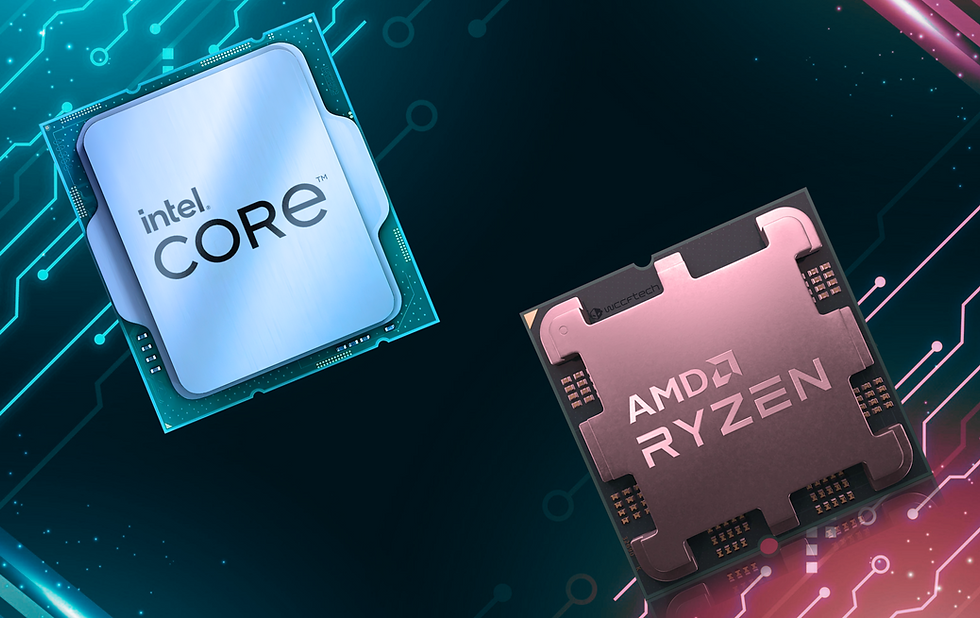
The gaming hardware landscape is shifting faster than it has in a decade. If you look at the raw numbers from the Steam Hardware Survey for December 2025, a clear narrative emerges: the era of absolute dominance for the "Team Blue" camp is ending. We are seeing a massive correction in the Intel vs AMD market share split, driven not just by competitive benchmarks, but by fundamental trust issues and hardware failures.
For years, sticking with Intel was the safe bet. You bought an i7 or i9, and it just worked. That guarantee has evaporated. Between the degradation issues affecting Raptor Lake chips and the lackluster debut of the Arrow Lake series, the market has reacted. Intel’s share on Steam has dropped to 55.6%—a figure that would have seemed impossible back in 2020 when they held an 81% stranglehold on the sector.
Before we dig into the market analysis and the 2026 outlook, we need to address the most immediate reason for this exodus: technical instability. If you are currently dealing with crashes on a high-end Intel rig, the data suggests you are not alone.
Troubleshooting High-End Intel Crashes (13th/14th Gen)
One of the most damaging factors influencing the Intel vs AMD market share dynamic is the widespread "Vmin shift" instability. This isn't a theoretical problem; it is physically degrading CPUs.
Identifying the False "Video Memory" Error
A specific symptom has surfaced repeatedly in user reports and community discussions. If you are playing titles based on Unreal Engine (like Tekken 8, Fortnite, or Hogwarts Legacy) and experience a crash to desktop with an error message citing "Out of Video Memory" or "DecompressShader" errors, do not assume your graphics card is broken.
If you are running an Intel Core i9-13900K, 14900K, or similar high-end 13th/14th Gen SKU, the CPU is the likely culprit. The error is a misdiagnosis by the software; the CPU is failing to handle the instruction set due to voltage spikes, causing the game to assume the GPU memory failed.
Immediate Mitigation Steps
While Intel has released microcode updates to address the root cause, damage already done to the silicon is permanent. If your chip is already crashing, you have limited options:
Update BIOS Immediately: Ensure your motherboard is running the latest BIOS that includes the Intel microcode fix (0x129 or newer depending on board vendor). This limits voltage requests to prevent further damage.
Enforce Intel Default Settings: Many motherboards default to "Unlimited" power profiles. Go into BIOS and enforce standard Intel Power Limits (PL1/PL2).
Downclocking: As a temporary stopgap, reducing the Performance Core (P-Core) multipliers by 2x or 3x can sometimes stabilize a degrading chip, though this defeats the purpose of buying a high-end processor.
RMA: If you cannot run games at stock settings, the chip is physically degraded. Use your warranty.
These technical headaches have done more to shift the Intel vs AMD market share than any marketing campaign AMD ever ran.
Analyzing the Dec 2025 Steam Survey Data

The numbers tell a brutal story. According to the December 2025 Steam Hardware Survey, Intel’s grip on the gaming market has slipped to 55.58%. Conversely, AMD has climbed to 44.42%.
To understand the severity of this trend, you have to look at the velocity of the decline. Five years ago, the split was roughly 81% to 19%. A loss of over 25 percentage points in market share is rare in the semiconductor industry, which usually moves in inches, not miles.
The "Trust Gap"
The decline correlates directly with the timeline of the Raptor Lake instability news. The Reddit discussions surrounding these stats highlight a critical shift in consumer psychology: risk aversion.
Previously, users bought Intel to avoid "tinkering." Now, the perception has flipped. Buying an Intel 14th Gen chip is seen as a gamble—will it degrade in six months? Will the voltage spike kill it? Meanwhile, AMD’s Ryzen 7000 and 9000 series, particularly the X3D variants, are viewed as the "install and forget" solution. The 2026 data reflects a user base that is voting with their wallets against hardware that requires BIOS interventions to keep running.
The Role of Arrow Lake in the Intel vs AMD Market Share Slide

Intel’s latest architecture, Core Ultra (Arrow Lake), was supposed to stop the bleeding. Instead, it seems to have accelerated the migration to AMD.
Performance Regression
The critical consensus and user reviews for the Arrow Lake launch (e.g., Core Ultra 9 285K) paint a picture of regression. While power efficiency improved—a much-needed fix—gaming performance often trailed behind the previous generation's 14900K and heavily lost to AMD’s Ryzen 7 9800X3D.
When a new product generation offers lower frame rates than the old one, gamers have zero incentive to upgrade within the ecosystem. The 265K and 275K mobile variants are seeing adoption in laptops largely because OEMs force them into high-end SKUs, not because consumers are demanding them. Community threads are filled with users specifically asking for high-end laptop chassis that support AMD chips, expressing frustration when they are forced into Intel silicon to get a specific GPU tier.
Manufacturing Processes
Interestingly, the narrative that "Real Men Have Fabs" is dead. Intel’s Arrow Lake relies on TSMC’s N3B node, while AMD uses TSMC N4P. Both are now outsourcing to the same foundry for critical compute tiles. This levels the playing field regarding supply chain and lithography, meaning Intel can no longer rely on manufacturing superiority to reclaim the Intel vs AMD market share. They are fighting on architecture design alone, and currently, they are losing.
Platform Longevity: The Hidden Market Mover
Beyond raw frames per second, the most recurring theme in user commentary regarding the Intel vs AMD market share shift is the cost of ownership over time.
The AM4 Legacy
The socket longevity argument has moved from a niche enthusiast point to a mainstream driver of sales. AMD’s AM4 platform is a legendary case study. A user who bought a Ryzen 1600 and a B350 motherboard in 2017 could, in many cases, drop in a Ryzen 5800X3D in 2024 and triple their gaming performance without changing the motherboard or RAM.
Reddit users frequently cite this "two-president term" lifespan as the deciding factor. The ability to upgrade the CPU years later preserves the value of the rest of the system.
Intel’s Socket Churn
Contrast this with Intel’s historic strategy of "two generations and out." Buying a Z790 motherboard meant you were locked into 12th, 13th, and 14th Gen—and given the instability of the latter two, that upgrade path is now a dead end.
Moving to Arrow Lake requires a new socket (LGA 1851) and new DDR5 memory if you were hanging onto DDR4. Faced with a mandatory motherboard swap regardless of brand, thousands of users decided that if they have to rebuild the PC anyway, they might as well switch teams. This friction point is a primary leak in the Intel vs AMD market share pipeline.
AM5 Compromises
It is worth noting that the grass isn't perfectly green on the other side. Some technical users have pointed out issues with AMD's AM5 platform, specifically regarding PCIe lane allocation on X870E boards, where USB4 support can eat into GPU or NVMe bandwidth. However, compared to a degrading CPU, slightly reduced PCIe lanes are a compromise most gamers are willing to accept.
The Psychological Tipping Point

The metric to watch in 2026 isn't just sales volume; it's brand sentiment.
In discussions surrounding the Steam Survey, a segment of users expressed a desire for Intel to succeed, but strictly for anti-monopoly reasons. They fear that if AMD hits 60% or 70% market share, Ryzen prices will spike. We are already seeing price creeping on high-demand chips like the 9800X3D.
However, "I hope they survive to keep prices down" is a very different sentiment from "I want to buy their product."
The breakdown of the "Intel Premium" brand is complete. The "Intel Inside" sticker used to convey reliability. Now, it necessitates checking manufacturing dates and BIOS versions. The Steam Survey reflects the trailing indicator of this sentiment shift. The leading indicator is the Amazon Best Sellers list, where Ryzen chips often occupy the entire top 10, pushing Intel to the second or third page.
Future Outlook for Intel vs AMD Market Share
As we move through 2026, can Intel reverse the 55/45 split?
It will be difficult. Trust is harder to build than silicon. Even if the next generation (Panther Lake or Nova Lake) is flawless, the shadow of the 13th/14th Gen failure will linger. Corporate IT departments and system integrators—usually Intel’s staunchest allies—are having to process RMAs at rates that hurt their bottom line.
For the casual gamer, the choice has become simple. One path offers a platform supported for years and the fastest gaming chip currently available. The other offers a confusing matrix of power limits, microcode patches, and a new socket that might be abandoned in two years.
Unless Intel can demonstrate a radical shift in both stability and platform respect, the Intel vs AMD market share will likely reach parity before the year is out. The days of 80% dominance are gone, and they aren't coming back.
FAQ
Q: What is the current Intel vs AMD market share on Steam?
A: As of the December 2025 Steam Hardware Survey, Intel holds approximately 55.6% of the market, while AMD has risen to 44.4%. This represents a significant decline for Intel, who held over 80% share just five years ago.
Q: Why are Intel 13th and 14th Gen CPUs crashing in games?
A: These processors suffer from a "Vmin shift" issue where the CPU requests excessive voltage, physically degrading the ring bus and cores over time. This often manifests as "Out of Video Memory" errors in Unreal Engine games despite the GPU being fine.
Q: Is it worth upgrading to Intel Arrow Lake for gaming?
A: For most pure gamers, the consensus is mixed to negative. Arrow Lake offers better power efficiency than the 14th Gen but often delivers lower framerates. Many users find better value and performance in AMD’s Ryzen X3D series.
Q: How long will the AMD AM5 platform last?
A: While AMD has not given a definitive end date, they have a track record of long-term support, evidenced by the AM4 platform receiving new CPUs from 2017 through 2024. Users generally expect AM5 to support multiple future CPU generations.
Q: Did the Intel microcode update fix the instability issues?
A: The microcode updates (0x129 and later) prevent new damage by capping voltage spikes, but they cannot fix a CPU that is already crashing. If your chip is unstable, the update will not repair the physical silicon degradation; you will need to replace the processor.